Paradoxically, these institutions are probably the best they've ever been. We trusted them more 100 years ago because we didn't know better, but we're now letting perfect be the the enemy of good. Wise men once said:
"In prison, I learned that everything in this world, including money, operates not on reality..."
"But the perception of reality..."
Our distrust of institutions is a prison of our own making.
I can't speak for the other institutions but I'd be shocked if the press, as an institution, is the best it's ever been. I know a lot of people who left that industry because of the way that the Internet and social media eroded the profitability of reporting while pushing on virality, articles were tuned to declining attention spans, outlets leaned more on centralized newswire services, and local reporting collapsed nearly to zero.
I think the press, as an institution, was at its peak post-Watergate, and pre- ... something. I don't know when exactly the press began to decay; possibly with the rise of 24-hour cable news in the 1990s; maybe the elimination of the Fairness Doctrine in 1987, maybe the Telecommunications Act of 1996. The media landscape was certainly severely decayed by 2003, and has not gotten any better.
I think one of the paradoxes of modern life, is I assert that one of the things we're all nostalgic for are institutions. For sure we all believe in different institutions, but watching the decline of institutions, we all seem to be dancing on our own graves.
Your childish naivety values universities, the rule of law, a free press and the military? We had very different childhoods; and more importantly, clearly different definitions on what maturity is.
I definitely thought there were adults, who are basically gods when you are a child, that were in charge of or steering these institutions and they had principles and values beyond careerism and greed.
Go talk to any academic about how they view their field as a child versus today and it will illustrate what I'm talking about.
Doesn't mean institutions in general aren't a net good for society. What would replace them? Also doesn't mean you can't structure institutions to incentivize values beyond careerism and greed.
Yes the hope is that the institutions under attack can rebuild or be replaced by ones with better alignment with social good. There's a lot of disagreement about what that means and that's part of the chaos, but yes.
I'm observing a process to purchase an AI Coding assistant right now, and it made me wonder, when the rubber hits the road, how much would I actually spend on the assistant?
I don't know if I'd call myself a booster or skeptic. I'm loosely speaking all in in the office, but what would I actually spend?
On the one hand, my - I dunno, thought leader-y hat would say, why wouldn't I spend 10k/head on them. These tools are amazing, they could double someone's output.
But they also are these like infinite toys that can do anything, and you can spend a lot of money trying all the things. And does that actually provide value. Actually provide like rubber hits the road monetary value on a per-head basis. If you're really focused and good, probably? But if you're not disciplined. You can spend a bunch of money on tokens, then spend a bunch of money on the new features / services in production, and spend a lot of your colleagues time cleaning up that mess.
And this is all human stuff. This is all assuming the LLM works relatively perfectly at interpreting what you're trying to do and doing it.
So like. Does it actually provide the benefit of X dollars per engineer per year? Because it wouldn't have to, it could in fact go the opposite.
There is no ceiling to how much waste you can create.
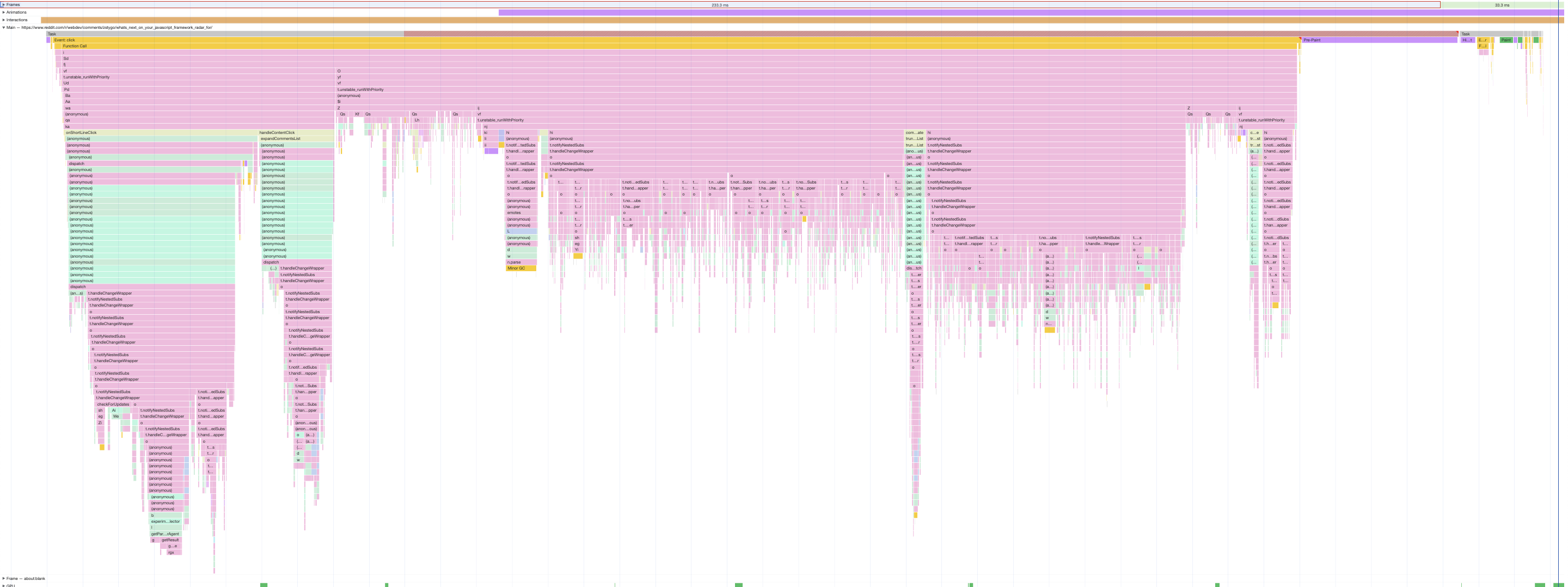
Much like stacks and stacks of badly written web frameworks made things like collapsing comments on new reddit 200 ms of JavaScript execution ( https://bvisness.me/high-level/burnitwithfire.png ) I can easily imagine people layer stuff together till token burn is beyond insane.
I mean just look at the Gastown repository. Its like literally hundreds of thousands of lines of go and md files.
They're all usage based plans. You probably wouldn't hit 10k/head for most users, but thousands is not unheard of. But it's kind of anticipating that's what they would want to charge.
If I was working for you and I heard that you spent 10k on a bullshit LLM subscription instead of paying me 10k to work harder I would look for a new job immediately.
Yup, while I like being invested in at work (sending me to learn new shit at conferences or stuff like that) I'd never agree with spending 10k on some tool where even the tool vendors say "use with caution, dont use this in production, bla bla bla".
If it really augments my output, sure, currently I just watch my tokens drop to 0 within 3-4 days of using it and then having to wait a month for them to reset because I wont pay for more parrot tokens. The output speeds up some small things but to my overall speeds its not noticeable a ton.
Do you understand that this trick no longer works? When you pretend you don't know about China [1], nobody believes you are being sincere. There are only others pretending along with you. I will not be wasting my words on this charade. Go pretend you have the knowledge of a 5-year-old somewhere else.
[1] Though the advice is generic - no country should let their local tech entirely wither, no matter where it gets moved.
Because all the smart economists in charge stood around doing nothing while industry vanished, and the only one that actually did something was a moron. If your team of doctors is letting the injured bleed out in a ditch, don't complain when someone actually tries to help, but does it wrong.
Also your question has nothing to do with my initial post. It's not even tangential.
If China is the hostile competitor, then why is Trump threatening or imposing 200% tariffs on France[1], 25% tariffs on countries such as Germany and Denmark[2], and random numbers on their friendly neighbors from the north[3]? These are the kind of tariffs the study is about: the trade wars Trump has started with friendly nations. The study is not about China. And so is my question why Denmark is treated like a hostile nation.
P.S.: If you seriously think I didn't know you were referring to China, you need to do some more thinking while reading.
I wasn’t so keen on the idea of network states, given whose floating them, but I do wonder if like could we have network states tied to certain historical times; if you wanted to be a blacksmith say.
Arguably this is what the Amish did.
It would be nice to say, use AI to bring your state some level of wealth or abundance, while abstracting it behind an environment isolated from modern technology.
I don’t want to live through the actual turmoil of the 1800s, but a simulated version? Bring it on.
“ Long-horizon tasks: We are increasingly solving tasks that take hours of human equivalent time. Agents are now able to maintain capability even as the context window fills with thousands of tool calls. The human-equivalent time-horizon continues to grow”
Because the most efficient humans don’t do this, they have short cycle times. This “agents can operate without intervention” always felt like an anti-pattern to me.
Youre right and there are some assumptions being made here around the agent having enough context to work on a task without interrupts (e.g. team review, asking questions, etc).
Typically human equivalent time is based on a single person given all the potential information they need up front (which is not today how a lot of work is done).


https://www.theregister.com/2026/01/20/pwc_ai_ceo_survey/
https://www.techspot.com/news/110983-ai-hype-meets-reality-m...
reply