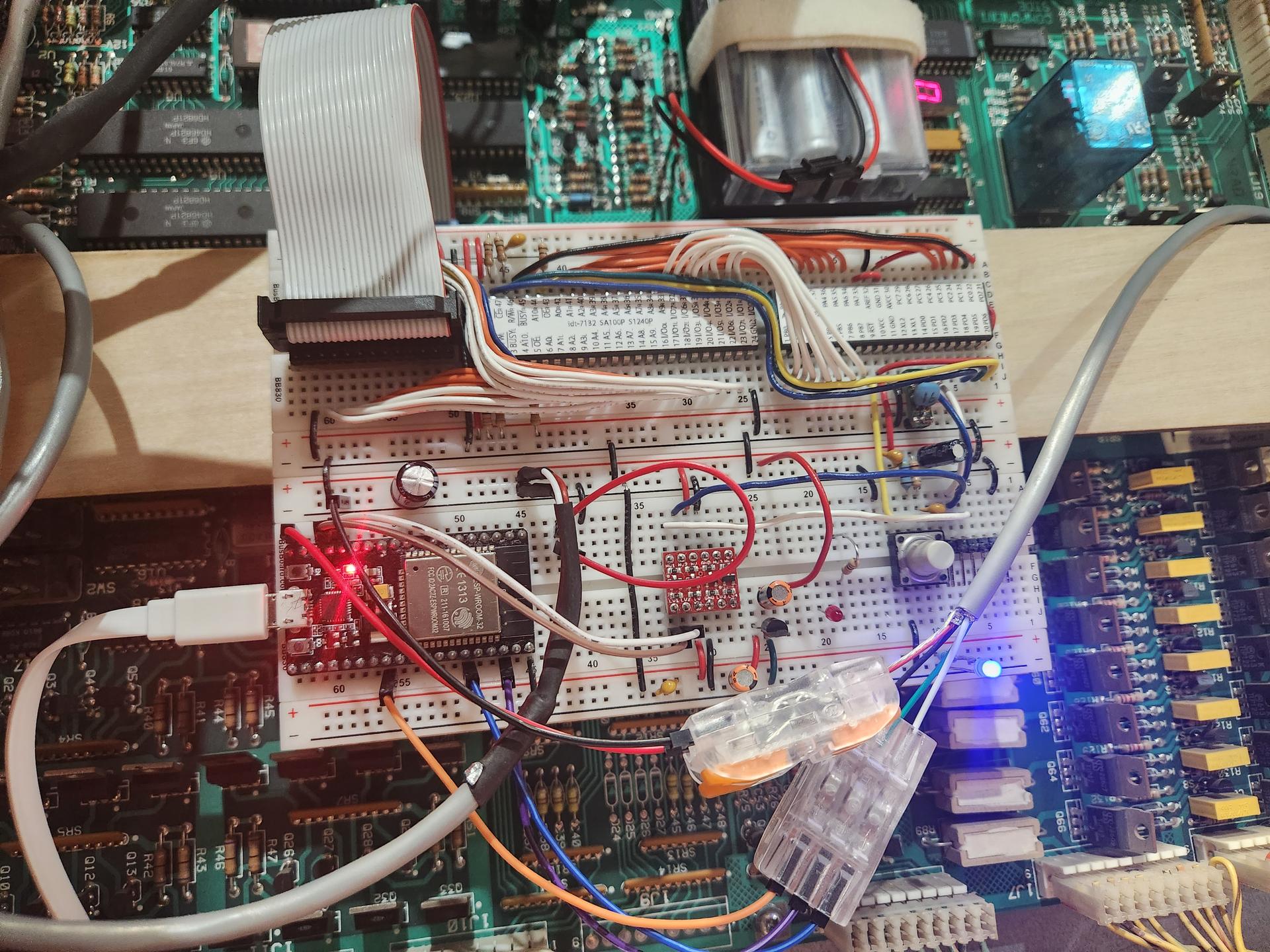
The other port is accessed by an ATmega 1284 to the left of it. Its code responds to simple serial commands and can read and write to the RAM.
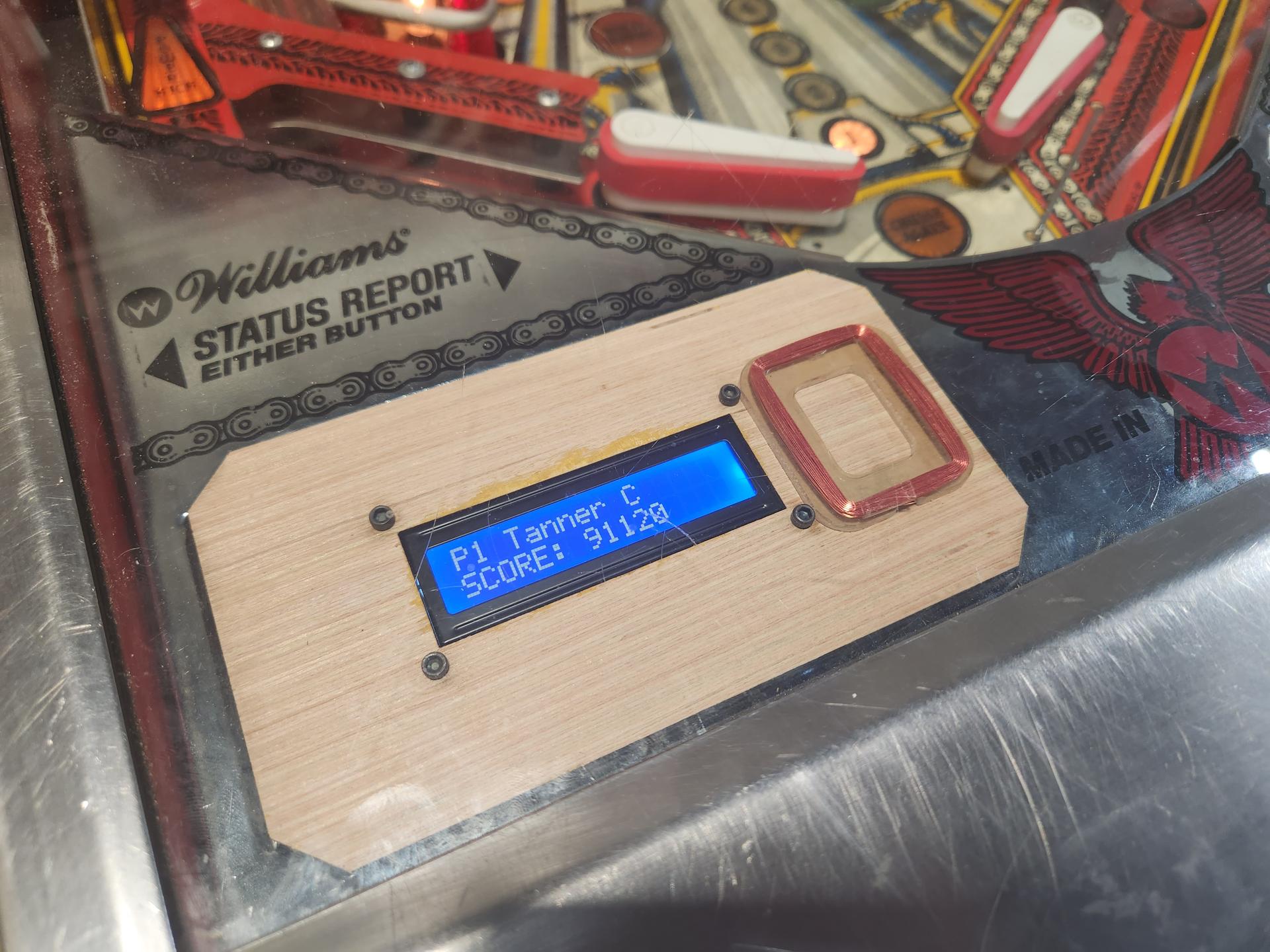
An ESP32 talks to the ATmega over UART and frequently asks it to dump 16 bytes at 0x00A0 to tell the game state and player number, and 0x0100 to get the four player scores. When it detects a new game, it offers the player a chance to scan their RFID member card and keeps track of their score:
We found there were sometimes read collisions and the ATmega would block the pinball machine from writing to RAM which would cause crashes or odd behavior. The latest version uses two RAM chips, one acting as a shadow copy -- similar to yours.
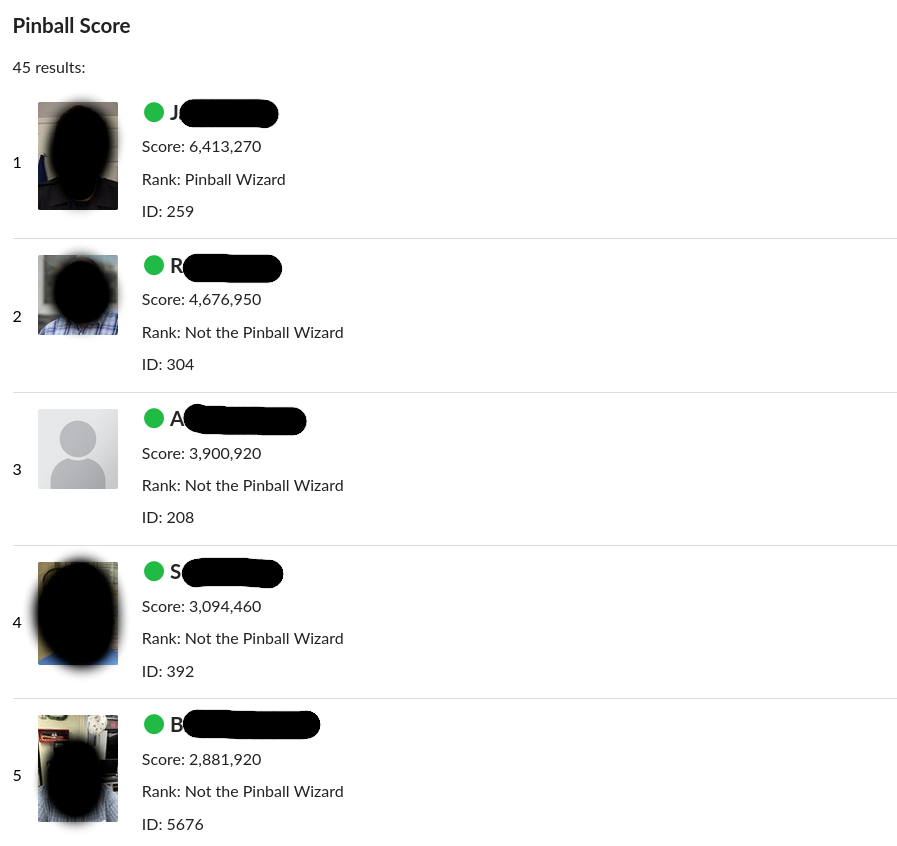
Modern pinball machines already do this (not RFID, it's an optical reader for a QR code), implemented by the major manufacturer Stern Pinball. They have internet connectivity to log scores and achievements and tournament challenges and leaderboards. It adds a pretty cool dimension to the pinball scene.
I didn't write an app, however. I rely on the browser notification API which doesn't have the best support on mobile unfortunately. It works great on desktop.
My inspiration was the same though. I do most of my work over ssh, and wanted a local desktop notification when a slow command was finished running.
Oh wow ! is quite powerful. Some of these bang commands are quite questionable, but hey... Like !12 runs the 12th command from the bash history. That's seems super dangerous to me.
I wrote Notica (https://notica.us) to do something similar. It uses web browser notifications so it works on the servers you are SSH'd into and also to your phone.
I imagine it would integrate with bash_log quite well.
Back your data up first, and I'm guessing you could just `cd` into your notes folder then use bash_log straight from there. You could also set LOG_DIRECTORY in your .bashrc to be where ever you mount Standard Notes.


https://github.com/Protospace/spaceport
This is a member portal for my local makerspace. Having a knowledge base will help other makerspace members contribute to the code.