Yep. RPi foundation lost the plot a long time ago. The original RPi was in a league of its own when it launched since nothing like it existed and it was cheap.
But now if I want some low power linux PC replacement with display output, for the price of the latest RPi 5, I can buy on the used market a ~2018 laptop with a 15W quad core CPU, 8GB RAM, 256 NVME and 1080p IPS display, that's orders of magnitude more capable. And if I want a battery powered embedded ARM device for GPIO over WIFI, I can get an ESP32 clone, that's orders of magnitude cheaper.
Now RPi at sticker price is only good for commercial users since it's still cheaper than the dedicated industrial embedded boards, which I think is the new market the RPI company caters to. I haven't seen any embedded product company that hasn't incorporate RPis in its products they ship, or at least in their lab/dev/testing stage, so if you can sell your entire production stock to industrial users who will pay top dollar, why bother making less money selling to consumers, just thank them for all the fish. Jensen Huang would approve.
I still use Pis in my 3d printers. Laptop would be too big, and a ESP could not run the software. "China clone" might work, but the nice part of the pi is the images available. It just works™
I'm also currently building a small device with 5" touchscreen that can control a midi fx padle of mine. It's just so easy to find images, code and documentation on how to use the GPIO pins.
Might be niche, but that is just what the Pi excels at. It's a board for tinkers and it works.
You can run Klipper on any Linux SBC with a USB port, RPi works but so does an old router that supports OpenWRT, a cheap Android TV box that could be flashed to run Linux, or any of the OrangePi/Banana Pi/Alliwinner H3 boards. You don't really need hardware UART because most of the printer boards you'd be using have either native USB or USB to UART converters. For that pedal, would an old Android tablet that supports USB OTG work? Because that's got to be much cheaper, and with much better SDK.
Correct. But when I looked into it a few years back fir OrangePi it was not as easy as downloading raspbian. All the images made for the pi would not work, you had to download a kernel from another place or something like that? Sorry I don't remember the details, but it was not as easy as a pi.
How much cheaper then 50 bucks can a tablet get? With the pi I can quickly in a hacky way connect rotary encoders with female-female dupon cables, use a python GPIO library made for raspberry pi.
Yeah, Pi 5 2gb is ~20% more expensive compared to pi3b on release, factoring in inflation (Both in including VAT and local prices)
It's 10 bucks more. ¯\_(ツ)_/¯ Still half the price that I see intel NUCs for sale. Which of course are way more capable. But still, I don't mind the price that much.
I could go with a cheaper alternative, but then AFAIK you might have to fiddle with images, kernel and documentation. For me that is worth 10 bucks.
>Yeah, Pi 5 2gb is ~20% more expensive compared to pi3b on release, factoring in inflation (Both in including VAT and local prices)
I don't really care how it compares to past models or inflation to justify its price tag. I was just comparing to to what you can buy on the used market today for the same price and it gets absolutely dunked on in the value proposition by notebooks since the modern full spec RPi is designed to more of a ARM PC than an cheap embedded board.
60 Euros for 2GB and 100 for 8GB models is kind of a ripoff if you don't really need it for a specific niche use case.
I think an updated Pi-zero with 2GB RAM and better CPU stripped of other bells and whistles for 30 Euros max, would be amazing value, and more back to the original roots of cheap and simple server/embedded board that made the first pi sell well.
Yeash, but not as good as an alternative to a PI back then, since 8 year old notebooks 10 years ago (so 18 year old notebooks today) were too bulky and power hungry to be a real alternative. Power bricks were all 90W and CPU TDW was 35-45W. But notebooks from the 2018 era (intel 8th gen) have quite low power chips that make a good PI alternatives nowadays.
The mobile and embedded X86 chips have closed the gap a lot in power consumption since the PI first launched.
Now you can even get laptops with broken screens for free, and just use their motherboard as a home server alternative to a PI. Power consumption will be a bit higher, but not enough to offset the money you just saved anytime soon.
I had just gotten into Arduinos when the first Raspberry Pi came out.
I noticed I can do 90% of the stuff I'd use an Arduino for with a RPi, except I had the full power of an internet connected Linux machine available. The Arduinos are still collecting dust somewhere =)
But now we have the ESP32 filling the same niche along with the Pi Zero W, so I don't really understand the purpose of RPi 4 and 5. They're not cheap compared to the price nor very powerful in any measure.
You don't even need a full laptop, any Chinese miniPC will blow the RPi5 out of the water AND some of them have expandable storage+RAM, while also having 5-20x more CPU/GPU oomph. They do consume a few watts more power, so there _might_ be a niche for the Raspberry Pi, but it's not a big one.
You don't buy the Pi for its price: performance as a desktop replacement, you buy it for the incredible stability of the platform as a target, the support, and the addon ecosystem. If you want to screw around with taking a motherboard out of a laptop, go right ahead. €160 for a 16GB Pi5 that I know for sure will be available, replaceable, and supported for the next decade is more than worth the small investment.
However I think it is way closer to their original vision than anything else, i.e. It is a lot like the 1980s computers, the magic they were trying to capture.
Not just laptops but the used enterprise micro PCs from Dell, HP, and Lenovo. All the same small form factor with very low TDP You can have up to 32 or 64 GB RAMs depending on the CPU, dual
or even triple disks if you want a NAS etc.
yeah, depends on what the used market looks like where you live. Here I see way more laptops for sale for cheap than those enterprise thin clients.
And the thin clients when they are for sale tend to have their SSDs ripped out by IT for data security, so then it's a hassle to go out and buy and extra SSD, compared to just buying a used laptop that already comes with display , keyboard, etc.
In The Netherlands the first generation RPi was only sold to users with a Chambers of Commerce registration, I figured this was always the typical end user for it. Like schools, universities, prototyping for companies. Was the RPi in the rest of the world targeted towards home users?
What? I ordered the original Pi in May 2012 from Farnell/Element14 without a Chamber of Commerce registration (KvK nummer). A couple of my colleagues did too.
What moving parts do competitors have to be less mechanically reliable?
In fact, a NUC or used laptop would be even more reliable since you can replace NVME storage and RAM sticks. If your RPI ram goes bad you're shit out of luck.
>RPi will still have lower power consumption and is far more compact.
Not that big of on an issue in most home user cases as a home server, emulator or PC replacement. For industrial users where space, power usage and heat is limited, definitely.
>I'm in the market to replace my aging Intel NUCs, but RPi is still cheaper.
Cheaper if you ignore much lower performance and versatility vs a X86_X64 NUC as a home server.
It feels like you think that the parent hasn't really considered their options and don't know what they really want.
> Not that big of on an issue in most home user cases as a home server
I don't know what "most home users" want, but I can understand wanting something more compact and efficient (also easier to keep cool in tighter or closed spaces), even at home.
> Cheaper if you ignore much lower performance and versatility vs a X86_X64 NUC as a home server.
Or maybe they noticed they don't need all the performance and versatility. Been there. It's plenty versatile and can run everything I need.
After you buy a case, and a real disk, the pi, cost savings is gone.
Meanwhile you can pick up a used 8th gen intel 1L form factor for about 100 bucks. You can pick up one that will take a PICE card for 150ish bucks, with remote management.
The 8th gen or better intel has all sorts of extra features that may make it worth while (transcoding/video support).
I agree completely - the NUC segment has a gaping hole post 2023, and faster raspberry pis can probably fill a lot of it especially for small scale commercial stuff.
There are dozens and dozens of NUC style / form factor machines available these days. Especially cheap ones from China. Not sure what you mean by gaping hole post 2023. I'm running 3 of them with N97 and N150 Cpus. All bought within the last 18 months.
>I can buy on the used market a ~2018 laptop with a 15W quad core CPU, 8GB RAM, 256 NVME and 1080p IPS display, that's orders of magnitude more capable..
But it won't be as reliable, mostly motherboards won't last long.
Don't know what your source is for that, but that's not my experience, and i've had dozens of laptops through my hands due to my hobby.
The ticking timebomb lemons with reliability or design issues, will just die in the first 2-4 years like clockwork, but if they've already survived 6+ years without any faults, they'll most likely be reliable from then on as well.
Why not 50 more years if we're just making up numbers? I still have an IBM thinkpad from 2006 in my possession with everything working. I also see people with Macbooks from the era with the light up apple logo in the wild and at DJs.
In your comment you didn't say Apple computers or Thinkpads. Those are different. I was talking about plain old vanilla business class laptop (because we are talking about raspberry alternative).
>I can buy on the used market a ~2018 laptop with a 15W quad core CPU, 8GB RAM, 256 NVME and 1080p IPS display, that's orders of magnitude more capable..
I have computers that are ~20 years or even more and still work fine. My main computer which I just replaced is ~14 years old (with some components even older than that), was used every single day, and is now a perfectly functioning server. I have stacks of SFFs and minipcs from eBay going back to 2008 but most from 2012-2015, which have been running virtually uninterrupted for a decade, and still working fine. I have several laptops from different OEMs, business and consumer lines, that are as old as 2008 and have been used regularly for at least 10 years, all still fine.
I understand what you're saying but saying it isn't enough. There's nothing to support your claim.
If it is a generic laptop, yes. 10 years is a stretch. Components used in the motherboard are probably not high quality enough to last more than 10 years. A manufacturer does not have an incentive to put high quality stuff (that is probably costlier) in a laptop who's only selling point is cheap for the "features", and not reliability or longevity..
One might get lucky with such a laptop, but I won't count on it.
One thing is that Raspberry PI have a fewer of them. So less chance of one becoming faulty.
Regarding higher quality components, I think the for the usecase (I mean the kinds of thing it is supposed to be used for) of Raspberry PI, reliability is more important.
> Regarding higher quality components, I think the for the usecase (I mean the kinds of thing it is supposed to be used for) of Raspberry PI, reliability is more important.
That you think that reliability is more important for a Raspberry Pi usecase than a laptop doesn't somehow magically make it a fact that its components are of higher quality than your average laptop. You only speculate and then speculate further on the basis of your original speculation. That's not how you arrive at a basis for a factual claim or an estimate.
Again, is that just a feeling, or do you have some data to actually show this. In my experience even old basic Acer laptops easily last more than 10 years, probably without the battery and married to the charger forever now, but they will work fine. But I don't go on the internet and tell everyone laptops last most than 10 years just because I know of a few Acers lasting that. Likewise, do you have any statistics on longevity of Raspberry Pis.
Sure, there's other numbers to find as well, but I'd suggest that they're pretty comparable in the way they handle environments. If one would fail, so would the other.
I don't think that's the only reason since the dole exists today too and there's not as much good music coming out.
Jazz and other music genres in the US came without government welfare, they came from struggle and oppression. Motivated artists will still work part time to fund their dream, they don't necessarily wait for welfare to start making art.
IF you were to give a lot of people free money today, will you get more and higher quality art in return, or will most people just drink and smoke that money while playing videogames at home?
Society, people and the world today are vastly different than back in the 1960s, so we need new polices targeting the society of today, not 1960s policies.
What do you mean there isn't much good music coming out? Maybe the genres people are creating more of don't match your personal preference, or you aren't looking for it and are just relying on major media companies to show it to you, but ive never had more high quality music of more variety than ever before.
Much of it is farther in the electronica genres that many people somehow still ignore the existence of but I haven't had to listen to the same song twice unless I wanted to in a number of years. Just on my youtube discovery feed right now I got multiple 1+ hour synthwave mixes, EBM/EDM, industrial bass, multiple forms of metal, filk, jungle and DnB, punk rock, old and new jazz styles, and more, 95% of which was made in the last 2 years.
>Just on my youtube discovery feed right now I got multiple 1+ hour synthwave mixes, EBM/EDM, industrial bass, multiple forms of metal, filk, jungle and DnB, punk rock, old and new jazz styles, and more, 95% of which was made in the last 2 years.
How is that proof of "good music"? That's just background noise.
What do you think those policies might look like? It's true that we have more screen based entertainment options today. We also have a very different music distribution system that is likely influencing things substantially. In the 1960s, I imagine getting on the radio was what it took to launch a career, now it's matching the algorithm on spotify.
I don't know what the right policies would be, but I noticed that smart, driven and disciplined driven people will always find a way to work around algorithms to get to the top, it's not something the government can legislate in order to get a desired outcome.
It's not like becoming famous back then was easy either. Plenty of good bands never got anywhere. The Mona Lisa wasn't a famous painting until someone stole it in 1911, before that nobody gave damn and now it's the most famous of them all. Survivorship bias and randomness in art is real.
Sorry but I don't consider WhatsApp to be in the social media category since it's just a chat app for your contacts, not an A/B algorithmically driven carousel of media to keep you hooked in and for strangers to hit you up (unless they have your phone number). However I do think Meta will try to slowly make it a social media app.
It's not just for your contacts though, in other countries WhatsApp is used like Facebook pages for your local town too. There's all sorts of group chats on WhatsApp.
Kids in 5th grade use WhatsApp for entertainment to send hundreds of messages per day filled with memes and slop. From the perspective of one kid in a class chat, this is indistinguishable from an algorithmically curated feed.
> this is indistinguishable from an algorithmically curated feed
If a classmate is sending you slop memes, then it's human curated content from an acquaintance, and not algorithmically driven, unless you consider your friends bots.
Is it? If kids grab the top result of a massively A/B tested algorithmic feed trying hook people and/or maximize the controversy / engagement, then arbitrage it onto another simpler less gamified platform... is that really human curated? There's some truth to the idea that, as long as there is any social media, everything is social media.
Yes. Apart from the countries which live off of foreign direct investment, taxes are generally pretty high.
Also, in many EU states, companies contribute to social security. In some this is indexed to profits, but on others this is indexed directly to wages, so if you count that bit, taxes directly attributable to your income can easily exceed 60% of what a company pays out.
I don't know if Belgium is using that loophole when counting the 60%, though.
>Apart from the countries which live off of foreign direct investment, taxes are generally pretty high.
I have no idea about this. Can you explain what you mean and give some examples of such countries ?
>Also, in many EU states, companies contribute to social security. In some this is indexed to profits, but on others this is indexed into wages, so if you count that bit, taxes directly attributable to your income can easily exceed 60% of what a company pays out.
True. Some EU countries also tax the gross salary the employer has to give you before it gets to you, which is in bad faith not included in payslips. So when you negotiate your 60k gross wage, it's actually costing your employer something like 72k Euros. I hate this shady practice.
Their inward FDI stock to GDP ratio is around 250%, which is about 4× the EU average; and Ireland does this with a decently sized economy.
And then there's Luxembourg (1400%) and Malta (2000%) which arguably do much “worse” but are comparatively tiny.
I didn't do the math for every EU country. Those were just some of the few that came to mind. For instance, Cyprus has similar values to Ireland, but the Irish economy is 15× bigger.
When there's a lot of foreign money going through your economy and you can tax it to moderate amounts, you get to offer lower rates to your own citizens.
Which is great, but obviously doesn't scale if every country tries to do the same.
> I have no idea about this. Can you explain what you mean and give some examples of such countries ?
Probably countries like Ireland, Montenegro, Belize, etc which act as tax havens for foreign corporations. Or Singapore, while also a tax haven, acts as a center for regional trade.
They could also mean resource rich countries that sell mineral rights to foreign corporations, who made investments in infrastructure in order to facilitate their operations, and they pay back dividends to the state, which offset the tax burden of the local population.
If an American factored in the totality of their tax burden, it would be pretty high. The USA has the benefit of higher incomes and a gigantic population, so there's some economies of scale. But even so, add up all of income tax (federal, state, city, county), sales taxes, property taxes, tariffs, tolls, etc and the % is already pretty high. After factoring the cost of benefits that are free/subsidized in other countries, and the cost probably averages out to the same.
Of course, European countries can also have those same consumption taxes. But I'm not sure if OP factored that in.
> sales taxes, property taxes, tariffs, tolls, etc and the % is already pretty high.
These taxes you mentioned (ignoring income taxes) are even higher in many EU countries than the US, especially sales tax. Same for tolls, tariffs, etc. they're all higher here and they're increasing them and adding new taxes on top, because EU coffers are being bled dry right now with the economy, trade wars, and actual wars going on.
Also, commodity products and services are generally more expensive here than in the US too. Like, I see on youtube the hobby stuff Americans do in their garage with home labs, electronic measuring equipment, power tools and stuff, all gotten nearly for free on craigslist, but if I want to replicate their setups it would cost way more here(from a smaller wage too), not to mention buying a house with a garage in Europe is very much of out of budget to most working class in Europe to begin with.
All this stuff being so cheap and readily available is probably why Americans in their garages have been so much more inventive and entrepreneurial than Europeans.
>After factoring the cost of benefits that are free/subsidized in other countries, and the cost probably averages out to the same.
True, but a lot of free stuff you get back from the government is sometimes of low quality compared to what you pay for in taxes on a high income, due to never being enough money for everything everyone needs, and not being able to attract and keep qualified and motivated workers to stay in the public system when they can earn more privately, and it's only been getting worse and worse since Covid and Ukraine, with no signs of improving.
For example, I am now paying ~1000 Euros for private physiotherapy after my accident, since the free government one is abysmal, which I am forced to pay for anyway out of my salary even though it's useless.
Another example, after my jaw surgery at the public hospital here they just strap cold packs to your face like in WW2, while in the US, my ex-boss who went through a similar procedure at a hospital there they had specialized head cooling devices for your post-op recovery, instead of medieval ice packs, while also being free of charge from his employer insurance. So you might pay more in the US for health insurance, but you also get more in return.
Overall I think I'd still prefer living here than in the US, but there's valid reasons why immigration to the US, and especially the success of immigrants there from an integration and financial perspective, is so high compared to here despite all the issues the US has.
>Well on a positive note, it may eventually lead to a union or works council for technologists.
Good luck fighting offshoring.
> It shows that people are slowly chipping away at the capital class and sooner or later they will have to throw us some breadcrumbs.
That means nothing.
I'd be surprised if he can implement 10% of what he promised in his campaign or if he's just gonna be another plant of the capital class that promises impossible things but then ends up doing nothing when the finances hit the road.
I always wondered why they don't try tariffs on this? American companies that produce overseas get tariffed regardless of origin. It changes incentives and forces production closer to areas of consumption. I suspect we are going to get there eventually, leadership needs to become more left progressive like Mamdani.
>That means nothing. I'd be surprised if he can implement 10% of what he promised in his campaign or if he's just gonna be another plant of the capital class that promises impossible things but then ends up doing nothing when the finances hit the road.
His ideas were not that radical. The fast and free busses came on the heel of a successful pilot they did with one line in each borough so its not like they are starting from scratch. They have an existing model and data from that trial to build on top of.
The grocery stores consist of one store in each borough. That is not an impossible task and it does not risk really affecting bodegas since the majority of income from most bodegas are lotto tickets and cigarettes/vapes.
Universal child care...well that have already passed this in his first week.
> that have already passed this in his first week.
It's always easy to pass laws to give people free stuff and it works well initially ... until you run out of money of course. That's how Venezuelan leadership also got popular. Who doesn't want more free stuff? It's how elections are won is most of Eastern/Southern Europe too. Until the bill is due and the next generation has to pay.
I do agree that the bill has to be paid. I don't what we are going to do with the trillions of dollars of debt as a result of tax cuts for the rich, handouts to countries like Israel and so much more that does not directly help regular people. The US has been a piggybank for all the world to just loot and take advantage of. Given that this is the environment we are in, I am all for providing these breadcrumbs that Mamdani is proposing to regular people.
Sooner or later there will be a reckoning with all the money that has been stolen by the upper class. Without these small programs, that help people that reckoning will come faster but it will come either way.
Except the new perks of New Yorkers voted for, will not come from the pockets of the super wealthy elite, but from debt and taxes paid by working class new yorkers themselves. Mandani won't tax the super wealthy more to pay for it.
Mamdani plans to tax the wealthiest New Yorkers less than they spent on propaganda to try and defeat him but him not taxing the super wealthy at all is not true.
>Why the fuck would an union cap anyones salary? Is this an American thing?
No, it's a thing in most of Europe like France or Germany for unionized trades. All trades there have publicly documented salary bands based on education and YoE per job, where the negotiations starting point for a wage for a position must not be below the minimum threshold but also can't exceed a certain upper threshold. In some cases, the company can decide to place you outside the union agreed tariff/band range to give you a higher wage, but then you might be exempt from some strict union rules like 35h/week working hours and such.
And they cap the top end of the salary bands because the yearly budget for wage increases is a fixed pie for most companies, and so to have money left to give entry level workers the great wage increases as mandated for by unions, they need to cap the increases to the top wages to prevent bleeding/bankruptcy. Do you think all European companies have unlimited money to give all their workers X% wage increases?
In Finland we have salary bands for some jobs, but it's usually just the minimum. Some have a maximum, but there are always "personal bonuses" the employer can give on top of that. But these are usually "old" professions like teachers, nurses, factory workers.
For IT jobs I haven't seen an official salary band anywhere and there basically is no union mandated maximum and the minimum is mostly a suggestion.
We also get universally negotiated percentage raises every now and then, but it's like 1-2%. Personal raises are on top of that and can be a LOT more.
The maximum cap sounds just stupid. When you hit the limit, why would you do anything past the absolute minimum to stay at that level?
Conceptually unions are a democracy and people are selfish. Why should I let some other worker make 10x what I do when I can instead have them make 1x and spread out the other 9x around including to me?
This "spread it around" sounds like some trickle down ecodomics madness to me =)
If the company can't pay more to a high performer they surely won't just give thast money to the average folks. It'll just go to C-staff bonuses and conference trips to exotic countries.
(Provided that the average performers are above the union minimum already)
The likely two outcomes are -- 1) the upper limit of salary band for everyone in the same role is raised high enough or 2) the high performing person is leaving to a place that pays it with a band or without.
>Forcing it by spreading it around instead of paying him is more like socialism or communism.
THat's how a lot of companies in Austria apply wage increases per union mandates. Take a budget and spread it around so that workers bicker amongst themselves for not receiving what they think they deserve.
> No, it's a thing in most of Europe like France or Germany for unionized trades.
This is how it often works even without unions. Everywhere I worked there were salary ranges you can't go out of without changing the role, and I was never in a union.
The minimum wage thing in France is true but it's so low for developers that it doesn't play any role in salary négociation.
Never seen any upper threshold except just what the company décides.
By law people with the same job and same qualification etc in a company must earn the same thing but that's theory more than practice, except maybe large companies.
Also being in an union or not does not change anything.
In Austria, salary is absolutely NOT capped by collective agreements. At a certain cap salaries are just not valorized anymore, that's all.
We here live in an eco-social free-market economy, where a company can pay an employee however much they want. In union terms, the collective agreements only regulates the minimum an employer has to do.
Stockholm is not representative of entire Europe same how SF isn't representative of entire NA. There's too many variables and shades of gray to give a simple answer, with closest to a correct answer being "it depends" based on where you live, how good you are and how in demand your skill set is to the demand of your local market, but the market is pretty much fucked in many high-CoL locations worldwide due to offshoring to cheaper locations and many businesses in Europe seeing orders fall.
I deliberately chose to compare two tech-heavy locations to avoid weird and difficult comparisons like the tech industry in rural Nebraska Vs Moldavia.
Stockholm was a natural point of comparison for me given that I used to live there until very recently.i have a decent picture of the dev market in Stockholm. Silicon valley is the most mentioned tech centre on here, and is therefore the American tech market I know the most about (even if my knowledge is very limited in this front)
Sure but then you still can't extrapolate the comparison beyond SF and Stockholm. I'm also in Europe but the job market where I live don't give a shit about what it looks like in Stockholm but they can diverge massively.
I second this. On paper Austria has below average working hours in EU statistics but I've seen a lot of overwork in the tech companies I've been at by some people, but which was never officially reported because the workers themselves just went along with it.
Scandals in the papers around the crazy hours workers at big-4 consultancies in Vienna typically do, which again went unpunished by labor agencies, since there were no written orders from management imposing those long hours but workers just tactilely accepted it as part of the work culture there.
Similarly, a mate of mine at major finance gig in Frankfurt noticed that they were working longer hours than their colleagues from NY. Heard similar stories from colleagues from Italy and France.
So work hours are super dependent on local culture and industry. The meme about everyone in the EU being paid to slack off all day is not as common as people imagine, unless maybe you work for the government or got lucky to score a great gig in some dysfunctional monopolistic megacorp.
Depends what one considers “work”; if you’re only counting focused, active coding work then there are places where 4 hours is the max you’re going to achieve of that anyway.
I count work the contracted time I need to be available/tied to my employer. Doesn't matter if I'm doing focused coding or not, it's still work because I can't be paragliding or swimming in that time, I need to be at the office or near my laptop, so it's not leisure, it's still work time.
But let's say it's only counting "focused work", 4h/week is huge stretch, unless we're competing in slacker olympics.


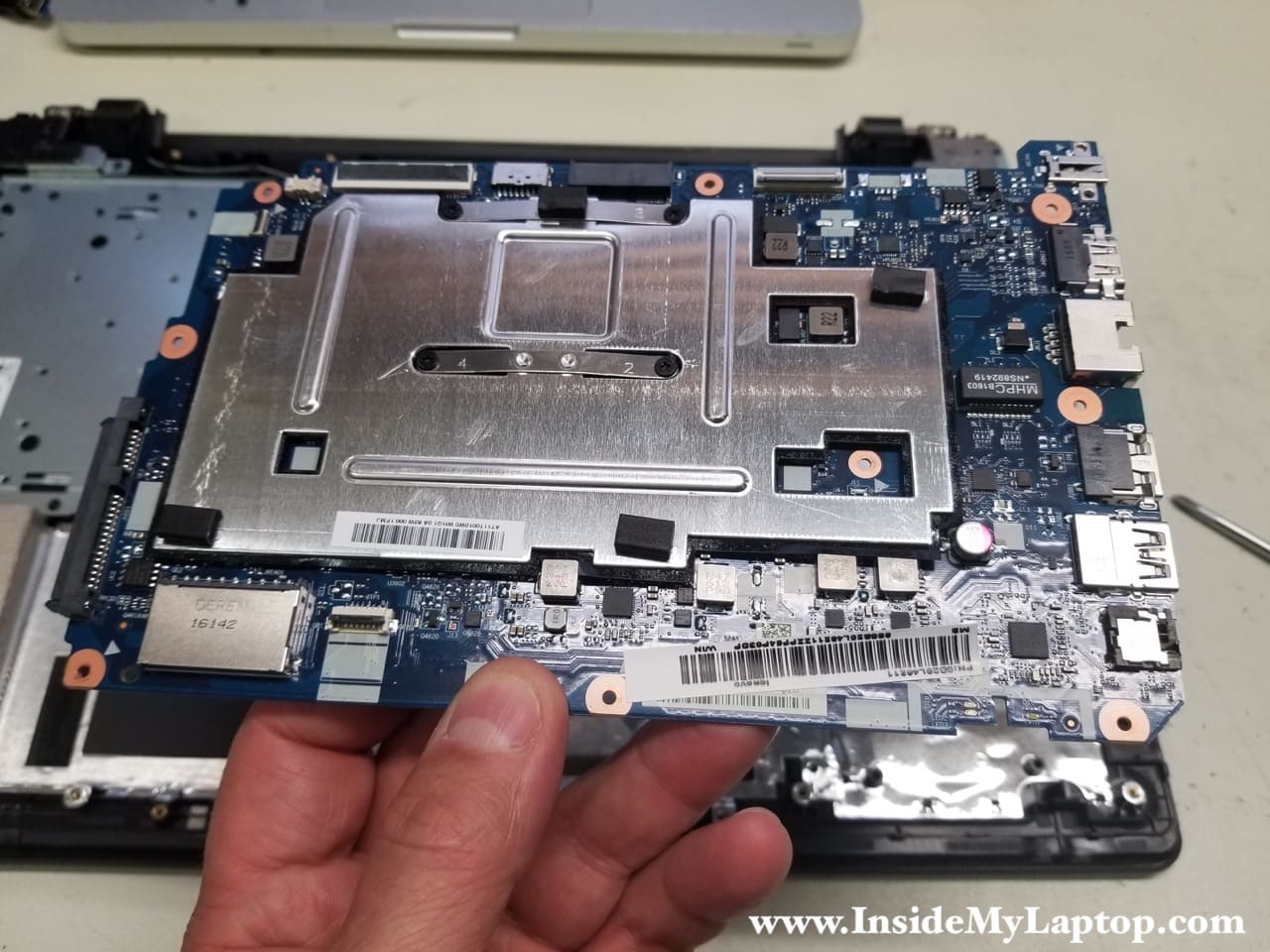
But now if I want some low power linux PC replacement with display output, for the price of the latest RPi 5, I can buy on the used market a ~2018 laptop with a 15W quad core CPU, 8GB RAM, 256 NVME and 1080p IPS display, that's orders of magnitude more capable. And if I want a battery powered embedded ARM device for GPIO over WIFI, I can get an ESP32 clone, that's orders of magnitude cheaper.
Now RPi at sticker price is only good for commercial users since it's still cheaper than the dedicated industrial embedded boards, which I think is the new market the RPI company caters to. I haven't seen any embedded product company that hasn't incorporate RPis in its products they ship, or at least in their lab/dev/testing stage, so if you can sell your entire production stock to industrial users who will pay top dollar, why bother making less money selling to consumers, just thank them for all the fish. Jensen Huang would approve.
reply