DS9 and B5 came out at roughly the same time and shared a similar concept: The (mis)adventures of the crew of a bustling space station. The divergence from there is extreme.
DS9 very quickly brought in the Defiant so that its characters could escape the station and go on more traditional Star Trek adventures. The station was home base, but the crew got out a lot. It typically felt like the station was well under control, with only minor differences between it and a star-fleet vessel. (Toss Quark and Garak out an airlock and you'd pretty much have a standard starship.)
B5 did send its characters on excursions, but they were fewer and far between. The station was not a safe home base. It was a bigger and wilder place than DS9 ever was. It always felt like some crisis or another was ready to spiral out of control and the staff generally needed all hands on deck to deal with whatever was happening. DS9 had the occasional crowd scene, but B5 had bigger crowds (in record shattering amounts of alien makeup) every episode. DS9 felt like a sleepy frontier fort. B5 felt like a city.
Then there's the continuity. There just wasn't a lot of continuity in anything other than soap operas in the mid 90's. TNG occasionally had multi-part episodes and sometimes referenced earlier episodes, but it was always careful to explain things so you could jump in anywhere and not be lost. DS9 was initially episodic, but had some larger arcs in later seasons, perhaps as a response to what B5 was doing. B5 broke the mold. The first season seemed episodic at first glance, but each episode advanced the central story-line. You could jump into Season 1 at any point and be a little confused, but figure things out. That swiftly changed. Later seasons became completely continuous, and frequently relied on bits of story that happened in earlier seasons without any kind of hand-holding. This caused big problems that probably prevented B5 from being as well received as it should have been.
This is for the young whippersnappers out there who grew up with the internet, streaming, and home video: Today, if you decide to jump into a show, you can call up every episode on demand. If it's not on a streaming service, it's on DVD or VHS. Failing that, there's always piracy. When B5 came out, it was not a given that a TV series would be released on VHS or DVD. The internet was there, but it wasn't yet up to distributing video. There was no such thing as streaming. The era of Netflix mailing you physical discs was years in the future. If you wanted to watch a TV show, you had to tune in when it was broadcast. It was, essentially, live TV.
The kicker is that most broadcasters were utterly irresponsible in how they aired shows. Episodes would frequently be pre-empted or aired out of order. Broadcasters were used to purely episodic content. Who cared if people saw episode 5 before episode 2, or missed episode 3 until it got reran the following year? This royally fubar'd people's ability to follow B5. My personal memory of B5 when it first aired was fragmentary and frustrating. I'd watch an episode and really enjoy it, try to tune in next week only for it to be pre-empted by golf, and then be lost when an episode from much later in the season was aired the week after that. It wasn't until B5 came out on DVD (years later) that I was finally able to watch the show in order and finally appreciate how special it was.
Continuity between episodes is normal now. Everyone is used to shows that play out as one long narrative instead of hitting the reset button every week. B5 blazed the trail for them before TV distribution was really ready for continuity. There are a lot of warts to overlook. CG was in its infancy back then. DS9 was still using physical models in its first few seasons. B5 looks like it came out of somebody's Amiga because it literally came out of somebody's Amiga. There probably won't ever be a quality up-scaling of the special effects because a lot of the files from that Amiga were lost. The set design is clever, but stagy. The budget of B5 doesn't even add up to half a shoestring by modern standards for a show with 10 episodes a season, and B5 had 22 episodes a season! The story is so grand and detailed that it still feels rushed at times. (They thought the show would be cancelled at the end of S4, so they crammed most of S5's plot into S4. The result is fantastically dense and frenetic!)
In the end, DS9 was a fantastic show but felt a lot like the station featured in it. It was always well under control and its creators got everything they needed to deliver a compelling show. They knew how far to reach and chose their battles wisely. B5 feels like a wild and overreaching fever dream by comparison. It nearly span out of control, much like its titular station was always threatening to. If they decided to re-make B5 today, they'd probably simplify it immensely. It's story still seems too ambitious for a single TV series to tell. If you can get past the warts, B5 is still a unique and rewarding series to experience. Nothing quite like it has come along since.
1. Given the bad press, they may reverse their decision to do this.
2. If they don't about-face, there's a lot about the implementation that remains to be seen.
Personally, I use discord for things that should be completely unaffected by this. I will not verify my age if there are surprises. I'll leave. If the communities I'm a part of decide to move, I'll support them and move even if I don't run into surprises.
There is absolutely no way we should support giving identifying information to a U.S. company given what's going on right now. The trust is no longer there. If you verify your identity, anything you say on Discord could be used against you if you ever pass through American borders.
They've done this because AU, NZ, and the UK all require this today. At least 5 EU countries are voting on it [0] with several led by Denmark encouraging it to be an EU-wide law. Most US states have a law in some part of the process as well, with at least a handful with laws on the books [1].
At some point every social media service is going to have to do this. Discord got a ton of bad press by being the first to say it out loud (and ask for feedback about it!) and give a timeline for worldwide roll out (early May). Discord isn't going to be the last to announce it. I think we all expect Meta (Facebook, Instagram, WhatsApp) to roll out whatever their solution will be under the cover of darkness (and dark patterns), just shows up one day with no easy opt-out and worse than what Discord is currently planning.
> There is absolutely no way we should support giving identifying information to a U.S. company given what's going on right now.
For what little it is worth, so far Discord has been using a third-party vendor for handling this information called k-ID [2]. k-ID looks like it is fully remote and has a globally distributed workforce including many in the US, but its press kit and job posting imply it is a company registered and based out of the Republic of Singapore.
Corporations do whatever is in their financial interest, provided it is legal. They're neither good or evil. (If they were DnD characters their alignment would be "lawful greedy".) What is legal is determined by governments, who are elected by individuals like you.
This is why people need to be reminded of the impact and causes of climate change. You can't just say, "Oil corporations are evil" and absolve yourself of responsibility. That's how nothing gets done. Corporations are not going to stop being "evil" of their own accord. They're going to obey the laws and regulations set forth by the governments they operate under.
Americans elected a president who openly campaigned on bringing back coal and said, "Drill baby drill!". Oil executives made campaign donations but, ultimately, this is the fault of Americans. They're not educated enough and they tolerate too much money in their politics. Scapegoating oil companies does nothing to solve these problems.
This is very true whether the source of the water is outside or inside your clothing.
Unfortunately, this warning is immediately preceded by the recommendation that you should use rain-gear in winter. A lot of rain gear is very lacking in breathability. If you go out and do something physical in raingear, you will likely wind up drenched in sweat. i.e. Wet. The moment you stop being physical, you will get cold. i.e. Cold and wet. This is a recipe for hypothermia.
Implement campaign spending limits, regulate or ban PAC's, and commit to an ongoing effort to stomp whatever new methods big-money comes up with to influence politics.
We do most of this in Canada and our leaders seem to be less influenced by big money. (Nevermind that we recently elected a billionaire PM...) The vast expense of running a U.S. style election campaign virtually guarantees that U.S. politicians are all bought and paid for.
It's worth questioning how much of the polarized rhetoric out there is rooted in reality, and how much of it is just social media selecting and promoting extreme views. The answer seems to be that it really depends on where you are.
As a Canadian, I feel that people on opposite ends of the spectrum, although they might literally call for the deaths of those on the other end, have a huge amount in common with each other. Canada has problems, but its still a pretty great country. If people would step outside of the hyper-partisan identities they've been constructing for themselves online and try to see the concerns of the other side, they'd probably find they're not as horrible or misguided as they might think while reading facebook or reddit. If the reasonable centre that dominates public policy can continue to ween itself off of American social media, there's hope for a strong, unified country that's capable of having adult political discourse between people who disagree on finer points. We clearly have some challenges to face (e.g. separatism) in getting there though.
If you're in the U.S. though, things appear very different. While both political parties seem to have been co-opted by billionaire interests, one party has fallen into what can be described as, if we're being charitable, a cult of personality. Unfortunately, that personality has been doing things that are impossible to dismiss as the online hysteria of the other side. Threatening allies with military invasion. High seas piracy. Kidnapping of a foreign leader (admittedly a not very nice one) from his nation. Betraying allies to cozy up to dictators like Putin. Torching global markets with constantly changing tariffs. The list goes on. Then there's what's going on within U.S. borders. If you're in the U.S., the polarization isn't just online. It's something very real. I feel that somebody opposing what ICE is doing in Minnesota and a die-hard Trump supporter really don't have a lot in common and I don't think removing them from online social media will result in civil discourse between the two. There are very real differences there that are coming to a head.
The U.S. government has long looked out for U.S. companies, even to the point of staging coups (e.g. United Fruit Company). The Trump administration has been threatening direct invasions while also levying tariff's and other actions when other countries try to enact taxation or legislation of American tech companies operating in their jurisdictions. U.S. tech execs have applauded and lined up to bend the knee. Now they're finding out that their products are replaceable.
The replacements aren't perfect, but an injection of new users and funding could allow them to improve rapidly. Meanwhile, American companies like MS and Google seem determined to enshitify their products and force AI adoption because they're financially entangled with OpenAI.
Is this bad for the U.S.? It depends on how fast Americans smarten up. MS needs to start putting their products first again. Meta needs to stop relying on their government links to coerce other jurisdictions into accepting utterly irresponsible products that cause social harm while producing no tax revenue to mitigate that harm. All Americans need to stand up to their government and force it to back down from imperialist aggression.
The U.S. and U.S. software have lost international trust and are now losing out to competitors because of it. Those competitors no longer need to be better or cheaper. Just trustworthy. It is possible to mitigate this loss of trust with prompt action, but every delay causes permanent harm. The world is watching.
It may be that successful mean people just hide it well enough to seem nice and the "x-ray vision" of the author's wife doesn't work on everyone. Once a mean person's position is unassailable, the velvet gloves come off. Alternatively, money is power and power corrupts.
The current crop of billionaires are at the pinnacle of success (depending on how you define it), but most sure don't seem very nice, and that's with a large PR team working overtime to hide the meanness.
Right. Highly successful people are rarely mean in the crudest and most obvious ways, like punching somebody unprovoked. But there's nothing stopping them from being broadly callous, or screwing over people who are in no position to fight back.
Space is a vacuum. i.e. The lack-of-a-thing that makes a thermos great at keeping your drink hot. A satellite is, if nothing else, a fantastic thermos. A data center in space would necessarily rely completely on cooling by radiation, unlike a terrestrial data center that can make use of convection and conduction. You can't just pipe heat out into the atmosphere or build a heat exchanger. You can't exchange heat with vacuum. You can only radiate heat into it.
Heat is going to limit the compute that can be done in a satellite data centre and radiative cooling solutions are going to massively increase weight. It makes far more sense to build data centers in the arctic.
Musk is up to something here. This could be another hyperloop (i.e. A distracting promise meant to sabotage competition). It could be a legal dodge. It could be a power grab. What it will not be is a useful source of computing power. Anyone who takes this venture seriously is probably going to be burned.
I'm confused about the level of conversation here. Can we actually run the math on heat dissipation and feasibility?
A Starlink satellite uses about 5K Watts of solar power. It needs to dissipate around that amount (+ the sun power on it) just to operate. There are around 10K starlink satellites already in orbit, which means that the Starlink constellation is already effectively equivalent to a 50 Mega-watt (in a rough, back of the envelope feasibility way).
Isn't 50MW already by itself equivalent to the energy consumption of a typical hyperscaler cloud?
Why is starlink possible and other computations are not? Starlink is also already financially viable. Wouldn't it also become significantly cheaper as we improve our orbital launch vehicles?
Simply put no, 50MW is not the typical hyperscaler cloud size. It's not even the typical single datacenter size.
A single AI rack consumes 60kW, and there is apparently a single DC that alone consumes 650MW.
When Microsoft puts in a DC, the machines are done in units of a "stamp", ie a couple racks together. These aren't scaled by dollar or sqft, but by the MW.
And on top of that... That's a bunch of satellites not even trying to crunch data at top speed. No where near the right order of magnitude.
Could this be about bypassing government regulation and taxation? Silkroad only needed a tiny server, not 150kW.
The Outer Space Treaty (1967) has a loophole. If you launch from international waters (planned by SpaceX) and the equipment is not owned by a US-company or other legal entity there is significant legal ambiguity. This is Dogecoin with AI. Exploiting this accountability gap and creating a Grok AI plus free-speech platform in space sounds like a typical Elon endeavour.
For the sake of an argument, let’s assume "The Outer Space Treaty (1967) has a loophole. If you launch from international waters (planned by SpaceX) and the equipment is not owned by a US-company or other legal entity there is significant legal ambiguity” is 100% true.
To use that loophole, the rockets launched by SpaceX would have to be “not owned by a US-company”. Do you think the US government would allow that to happen?
You cannot escape national regulations like that, at least until a maritime-like situation develops, where rockets will be registered in Liberia for a few dollars and Liberia will not even pretend to care what they are doing.
It may happen one day, but we are very, very far from that. As of now, big countries watch their space corporations very closely and won't let them do this.
Nevertheless, as an American, you can escape state and regional authorities this way. IIRC The Californian Coastal Commission voted against expansion of SpaceX activities from Vandenberg [1], and even in Texas, which is more SpaceX-friendly, there are still regulations to comply with.
If you launch from international waters, these lower authority tiers do not apply.
Untrue. Responsible for any spacefaring vessel is in all cases the state the entity operating the vessel is registered in. If it's not SpaceX directly but a shell company in Ecuador carrying out the launch, Ecuador will be completely responsible for anything happening with and around the vessel, period. There are no loopholes in this system.
This could simply be done by hosting in the Tor hidden service cloud. Accessing illegal material hosted on a satellite is still exactly as risky for the user (if the user is on earth) as accessing that same illegal material through the Tor network, but hosting it through the Tor network can be done for 1/1000th the cost compared to an orbital solution.
So there's no regulatory or tax benefit to hosting in space.
In addition to all the sibling comments explaining why this wouldn't work, the money's not there.
A grift the size of Dogecoin, or the size of "free speech" enthusiast computing, or even the size of the criminal enterprises that run on the dark web, is tiny in comparison to the footer cost and upkeep of a datacenter in space. It'd also need to be funded by investments (since criminal funds and crypto assets are quite famously not available in up-front volumes for a huge enterprise), which implies a market presence in some country's economy, which implies regulators and risk management, and so on.
Good point - the comms satellites are not even "keeping" some of the energy, while a DC would. I _am_ now curious about the connection between bandwidth and wattage, but I'm willing to bet that less than 1% of the total energy dissipation on one of these DC satellites would be in the form of satellite-to-earth broadcast (keeping in mind that s2s broadcast would presumably be something of a wash).
I am willing to bet that more than 10% of the electrical energy consumed by the satellite is converted into transmitted microwaves.
There must be many power consumers in the satellite, e.g. radio receivers, lasers, computers and motors, where the consumed energy eventually is converted into heat, but the radio transmitter of a communication satellite must take a big fraction of the average consumed power.
The radio transmitter itself has a great efficiency, much greater than 50%, possibly greater than 90%, so only a small fraction of the electrical power consumed by the transmitter is converted into heat and most is radiated in the microwave signal that goes to Earth's surface.
Unfortunately this is not the case. The amplifiers on the transmit-side phased arrays are about 10% efficient (perhaps 12% on a good day), but the amps represent only ~half the power consumption of the transmit phased arrays. The beamformers and processors are 0% efficient. The receive-side phased arrays are of course 0% efficient as well.
I'm curious. I think the whole thing (space-based compute) is infeasible and stupid for a bunch of reasons, but even a class-A amplifier has a theoretical limit of 50% efficiency, and I thought we used class-C amplifiers (with practical efficiencies above 50%) in FM/FSK/etc. applications in which amplitude distortion can be filtered away. What makes these systems be down at 10%?
Nowadays such microwave power amplifiers should be made with gallium nitride transistors, which should allow better efficiencies than the ancient amplifiers using LDMOS or travelling-wave tubes, and even those had efficiencies over 50%.
For beamformers, there have been research papers in recent years claiming a great reduction in losses, but presumably the Starlink satellites are still using some mature technology, with greater losses.
Is the SpaceX thin-foil cooling based on graphene real? Can experts check this out?
"SmartIR’s graphene-based radiator launches on SpaceX Falcon 9" [1]. This could be the magic behind this bet on heat radiation through exotic material. Lot of blog posts say impossible, expensive, stock pump, etc. Could this be the underlying technology breakthrough? Along with avoiding complex self-assembly in space through decentralization (1 million AI constellation, laser-grid comms).
This coating looks like it can selectively make parts of the satellite radiators or insulators, as to regulate temperature. But I don't think it can change the fundamental physics of radiating unwanted heat and that you can't do better than black body radiation.
Indeed, graphene seems capable of .99 of black body radiation limit.
Quote: "emissivity higher than 0.99 over a wide range of wavelengths". Article title "Perfect blackbody radiation from a graphene nanostructure" [1]. So several rolls of 10 x 50 meters graphene-coated aluminium foil could have significant cooling capability. No science-fiction needed anymore (see the 4km x 4km NVIDIA fantasy)
It's not as exciting as you think it is. "emissivity higher than 0.99 over a wide range of wavelengths" is basically code for "it's, like, super black"
The limiting factor isn't the emissivity, it's that you're having to rely on radiation as your only cooling mechanism. It's super slow and inefficient and it limits how much heat you can dissipate.
Like the other person said, you can't do any better than blackbody radiation (emissivity=1).
Lets assume an electrical consumption of 1 MW which turned into heat and a concommitant 3 MW which was a byproduct of acquiring 1 MW of electrical energy.
So the total heat load if 4 MW (of which 1 MW was temporarily electrical energy before it was used by the datacenter or whatever).
Let's assume a single planar radiator, with emissivity ~1 over the thermal infrared range.
Let's assume the target temperature of the radiator is 300 K (~27 deg C).
What size radiator did you need?
4 MW / (5.67 * 10 ^ -8 W / ( m ^2 K ^4 ) * 300 K ^4) = 8710 m ^2 = (94 m) ^2
so basically 100m x 100m. Thats not insanely large.
The solar panels would have to be about 3000 m ^2 = 55m x 55m
The radiator could be aluminum foil, and something amounting to a remote controlled toy car could drive around with a small roll of aluminum wire and locally weld shut small holes due to micrometeorites. the wheels are rubberized but have a magnetic rim, on the outside theres complementary steel spheres so the radiator foil is sandwiched between wheel and steel sphere. Then the wheels have traction. The radiator could easily weigh less than the solar panels, and expand to much larger areas. Better divide the entire radiator up into a few inflatable surfaces, so that you can activate a spare while a sever leak is being solved.
It may be more elegant to have rovers on both inside and outside of the radiator: the inner one can drop a heat resistant silicone rubber disc / sheet over the hole, while the outside rover could do the welding of the hole without obstruction of the hole by a stopgap measure.
As I've pointed it out to you elsewhere -- how do you couple the 4MW of heat to the aluminum foil? You need to spread the power somewhat evenly over this massive surface area.
Low pressure gas doesn't convect heat well and heat doesn't conduct down the foil well.
It's just like how on Earth we can't cool datacenters by hoping that free convection will transfer heat to the outer walls.
Lets assume you truly believe the difficulty is the heat transport, then you correct me, but I never see you correct people who believe the thermal radiation step is the issue. It's a very selective form of correcting.
Lets assume you truly believe the difficulty is the heat transport to the radiator, how is it solved on earth?
> Lets assume you truly believe the difficulty is the heat transport, then you correct me, but I never see you correct people who believe the thermal radiation step is the issue
It's both. You have to spread a lot of heat very evenly over a very large surface area. This makes a big, high-mass structure.
> how is it solved on earth?
We pump fluids (including air) around to move large amounts of heat both on Earth and in space. The problem is, in space, you need to pump them much further and cover larger areas, because they only way the heat leaves the system is radiation. As a result, you end up proposing a system that is larger than the cooling tower for many nuclear power plants on Earth to move 1/5th of the energy.
The problem is, pumping fluids in space around has 3 ways it sucks compared to Earth:
1. Managing fluids in space is a pain.
2. We have to pump fluids much longer distances to cover the large area of radiators. So the systems tend to get orders of magnitude physically larger. In practice, this means we need to pump a lot more fluid, too, to keep a larger thing close to isothermal.
3. The mass of fluids and all their hardware matters more in space. Even if launch gets cheaper, this will still be true compared to Earth.
I explained this all to you 15 hours ago:
> If this wasn't a concern, you could fly a big inflated-and-then-rigidized structure and getting lots of area wouldn't be scary. But since you need to think about circulating fluids and actively conducting heat this is much less pleasant.
You may notice that the areas, etc, we come up with here to reject 70kW are similar to those of the ISS's EATCS, which rejects 70kW using white-colored radiators and ammonia loops. Despite the use of a lot of exotic and expensive techniques to reduce mass, the radiators mass about 10 tonnes-- and this doesn't count all the hardware to drive heat to them on the other end.
So, to reject 105W on Earth, I spend about 500g of mass; if I'm as efficient as EATCS, it would be about 15000g of mass.
By saying that something is impossible to do cost-effectivey, one is implicitly claiming they have rigorously combed through the whole problem space, all possible configurations and materials, and exhaustively concluded it is not possible cost-effectively.
Imagine now instead of a pyramid, a cone. Imagine the cone is spinning along its symmetry axis. One now has a local radial pseudoforce, a fake gravitational force along the radial direction (away from the symmetry axis).
Now any fluid with a liquid-gas phase transition above the desired radiator temperature but below the intended maximum compute operating temperature (and there is a lot of room for play for fluid choice because the pressure is a free parameter) can be chosen to operate in heat-pipe fashion. Suppose you place the compute at a certain point along the outer rim of the cone, and fluid that condenses on the cone wall will flow to the circular rim at the base. the compute is inside a kind of "chimney" and the lower half of the chimney (and the compute in it) are submerged by the fluid. The fluid boils and vaporizes, and rises up the chimney and is piped to the central axis and flows out in a controlled distributed fashion. all of the pipes could be floppy aluminum foil (or mylar etc.) pipes, since they are all pressurized during normal operation.
Some of the liquid phase could be pumped up to the central axis at the base and cool the rear side of the solar panels as well. I don't see the problem. The power density of solar panel heating (and thus power density on the cone surface) are very similar and perfectly manageable with phase-transition cooling /condensing.
At some point you are just prodding until people hand you working designs on a silver platter.
Yes, graphene appears to offer a negligible improvement over other kinds of paints based on black carbon, e.g. Vantablack.
The research article linked above does not claim a better emissivity than Vantablack, but a resistance to higher temperatures, which is useful for high temperature sensors (used with pyrometers), but irrelevant for a satellite that will never be hotter than 100 Celsius degrees, in order to not damage the electronic equipment.
Well acttshually, it's 100% efficient. If you put 1W in, you will get exactly one watt out, steady state. The resulting steady state temperature would be close to watts * steady state thermal resistance of the system. ;)
I don't think you could use "efficiency" here? The math would be based on thermal resistance. How do you get a percentage from that? If you have a maximum operating temperature, you end up with a maximum operating wattage. Using actual operating wattage/desired operating wattage doesn't seem right for "efficiency".
What radiators look like is foil or sheet covering fluid loops to spread the heat, control the color, and add surface area.
They are usually white, because things in a spacecraft are not hot enough to glow in visible light and you'd rather they not get super hot if the sun shines on them.
The practical emittance of both black paint and white paint are very close to the same at any reasonable temperature-- and both are quite good, >90% of this magical material that you cite ;)
Better materials -- with less visible absorption and more infrared emittance -- can make a difference, but you still need to convect or conduct the heat to them, and heat doesn't move very well in thin materials as my sibling comment says.
The graphene radiator you cite is more about active thermal control than being super black. Cheap ways to change how much heat you are dumping are very useful for space missions that use variable amounts of power or have very long eclipse periods, or what move from geospace to deep space, etc. Usually you solve it on bigger satellites with louvers that change what color they're exposing to the outside, but those are mechanical parts and annoying.
Aluminum foil of great surface will not work very well, because the limited conductivity of a thin foil will create a great temperature gradient through it.
Thus the extremities of the foil, which are far from the satellite body, will be much cooler than the body, so they will have negligible contribution to the radiated power.
The ideal heatsink has fins that are thick close to the body and they become thinner towards extremities, but a heatsink made for radiation instead of convection needs a different shape, to avoid a part of it shadowing other parts.
I do not believe that you can make an efficient radiation heatsink with metallic foil. You can increase the radiating surface by not having a flat surface, but one covered with long fins or cones or pyramids, but the more the surface is increased, the greater the thermal resistance between base and tip becomes, and also the tips limit the solid angle through which the bases radiate, so there must be some optimum shape that has only a limited surface increasing factor over the radiation of a flat body.
> I do not believe that you can make an efficient radiation heatsink with metallic foil.
What radiators look like is foil or sheet covering fluid loops to spread the heat, control the color, and add surface area.
In general, radiators are white because there's no reason for them to absorb visible light, and they're not hot enough to radiate visible light. You want them to be reflective in the visible spectrum (and strongly absorptive/emissive in the infrared).
A white surface pointing at the sun can be quite cool in LEO, < -40C.
If you need linearity for spectral efficiency, you pay for it.
30% power added efficiency is the state of the art up in Ku band if you need a low compression budget. And it's important to note that this doesn't include the substantial power spent in modulation of complex signals or the power conversion, etc, before the transmitter. Or, the power lost in the connection to the antenna and its matching-- can easily exceed 2dB.
I think you missed the point. If you have a 100 MW communicstion satellite and a 100 MW compute satellite those are very different beasts. The first might send 50% of the energy away as radio communication making it effectively a 50 MW satellitefor cooling purposes.
No, they didn't. You can't "send away" thermal energy via radio waves. At the temperatures we're talking about, thermal energy is in the infrared. That's blackbody radiation.
Nobody describes a satellite by specifying the amount of heat that it produces, but by the amount of electrical energy that it consumes.
In a communication satellite, a large fraction of the consumed electrical energy goes into the radio transmitter. Radio transmitters are very efficient and most of the consumed power is emitted as radio waves and only a very small part is converted into heat, which must be handled by the cooling system.
So in any communication satellite, a significant fraction of the consumed energy does not become heat.
Your answer makes it seem like you too missed the point. If a Starlink sends a 1000W signal to Earth, that is 1000W of power that does not heat the satellite.
The creation of that 1000W requires additional hardware and power, and only a part will be available for the transmission. The rest will be additional heat that has to be gotten rid of.
But the focus on building giant monolithic datacenters comes from the practicalities of ground based construction. There are huge overheads involved with obtaining permits, grid connections, leveling land, pouring concrete foundations, building roads and increasingly often now, building a power plant on site. So it makes sense to amortize these overheads by building massive facilities, which is why they get so big.
That doesn't mean you need a gigawatt of power before achieving anything useful. For training, maybe, but not for inference which scales horizontally.
With satellites you need an orbital slot and launch time, and I honestly don't know how hard it is to get those, but space is pretty big and the only reasons for denying them would be safety. Once those are obtained done you can make satellite inferencing cubes in a factory and just keep launching them on a cadence.
I also strongly suspect, given some background reading, that radiator tech is very far from optimized. Most stuff we put into space so far just doesn't have big cooling needs, so there wasn't a market for advanced space radiator tech. If now there is, there's probably a lot of low hanging fruit (droplet radiators maybe).
* Everything is being irradiated all the time. Things need to be radiation hardened or shielded.
* Putting even 1kg into space takes vast amounts of energy. A Falcon 9 burns 260 MJ of fuel per kg into LEO. I imagine the embodied energy in the disposable rocket and liquid oxygen make the total number 2-3x that at least.
* Cooling is a nightmare. The side of the satellite in the sun is very hot, while the side facing space is incredibly cold. No fans or heat sinks - all the heat has to be conducted from the electronics and radiated into space.
* Orbit keeping requires continuous effort. You need some sort of hypergolic rocket, which has the nasty effect of coating all your stuff in horrible corrosive chemicals
* You can't fix anything. Even a tiny failure means writing off the entire system.
* Everything has to be able to operate in a vacuum. No electrolytic capacitors for you!
So I guess the question is - why bother? The only benefit I can think of is very short "days" and "nights" - so you don't need as much solar or as big a battery to power the thing. But that benefit is surely outweighed by the fact you have to blast it all into space? Why not just overbuild the solar and batteries on earth?
The main reason is that generating energy in space is very cheap and easy due to how ridiculously effective solar panels are.
Someone mentioned in the comments on a similar article that sun synchronous orbits are a thing. This was a new one to me. Apparently there's a trick that takes advantage of the Earth not being a perfect sphere to cause an orbit to precess at the right rate that it matches the Earth's orbit around the sun. So, you can put a satellite into a low-Earth orbit that has continuous sunlight.
Is this worth all the cost and complexity of lobbing a bunch of data centers into orbit? I have no idea. If electricity costs are what's dominating the datacenter costs that AI companies are currently paying, then I'm willing to at least concede that it might be plausible.
If I were being asked to invest in this scheme, I would want to hear a convincing argument why just deploying more solar panels and batteries on Earth to get cheap power isn't a better solution. But since it's not my money, then if Elon is convinced that this is a great idea then he's welcome to prove that he (or more importantly, the people who work for him) have actually got this figured out.
Let's assume your space solar panel is always in sun - so 8760 kWh per year from 1kWp.
In Spain, 1kWp of solar can expect to generate about 1800 kWh per year. There's a complication because seasonal difference is quite large - if we assume worst case generation (ie what happens in December), we get more like 65% of that, or 1170 kWh per year.
That means we need to overbuild our solar generation by about 7.5x to get the same amount of generation per year. Or 7.5kWp.
We then need some storage, because that generation shuts off at night. In December in Madrid the shortest day is about 9 hours, so we need 15 hours of storage. Assuming a 1kW load, that means 15kWh.
European wholesale solar panels are about €0.1/W - €100/kW. So our 7.5kWp is €750. A conservative estimate for batteries is €100/kWh. So our 15kWh is €1500. There's obviously other costs - inverters etc. But perhaps the total hardware cost is €3k for 1kW of off-grid solar.
A communications satellite like the Eurostar Neo satellite has a payload power of 22 kW and a launch mass of 4,500 kg. Assuming that's a reasonable assumption, that means about 204kg per kW. Current SpaceX launch costs are circa $1500 per kg - but they're targeting $100/kg or lower. That would give a launch cost of between $300k and $20k per kW of satellite power. That doesn't include the actual cost of the satellite itself - just the launch.
I just don't see how it will make sense for a long time. Even if SpaceX manage to drastically lower launch costs. Battery and solar costs have also been plummeting.
Is it reasonable to use Neo as a baseline? Modern Starlink satellites can weigh 800kg, or less than 20% of Neo. I see discussions suggesting they generate ~73kw for that mass. I guess because they aren't trying to blanket an entire continent in signal? Or, why are they so much more efficient than Neo?
Interestingly the idea of doing compute in space isn't a new one, it came up a few years ago pre-ChatGPT amongst people discussing the v2 satellite:
Still, you make good points. Even if you assume much lighter satellites, the GPUs alone are very heavy. 700kg or so for a rack. Just the payload would be as heavy as the entire Starlink satellite.
You can't increase the size of the radiator and reduce the mass of the satellite. How is that supposed to work?
You're also forgetting that Starlink satellites aren't in a sun synchronous orbit which means they have to overbuild the energy generation capacity (low capacity factor) and can simultaneously take advantage of earth's shadow to cool down.
Droplet radiators can theoretically do this. The radiator is made up of extremely fine liquid droplets expelled from what is basically a big space shower head. The droplet cloud has a big surface area so more heat can radiate. The droplets are collected in a sort of drain the other side. The idea has been around for decades but there are lots of practical problems to work out, like minimizing losses due to splashes or droplets heading in the wrong direction (e.g. using ferrofluids and magnetic containment). It's never been worked on seriously because conventional radiators were always enough.
With droplet radiators increasing the effective size means using a bigger head/drain and longer booms to expand the distance between them, so the scaling properties are different to pipe based radiators.
That could be one reason they want to do it. Maybe by using data from Palantir or harvested from Elon's work with DOGE, along with twitter user data and whatever else they can get, they want their AI to be the all-seeing eye of Sauron. (Which isn't too far from what the whole ad-tech industry is about in the first place.) Or they want to make sexually explicit deepfakes of everyone Elon doesn't like. Or they want to flood the internet with AI generated right-wing propaganda.
If one kilogram of stuff consumes just 100Wt, then in one month it consumes about 300 MJ. So as long as things works for a year or more energy cost to put them into orbit becomes irrelevant.
To keep things in orbit ion thrusters work nicely and require just inert gases to keep them functioning. Plus on a low Earth orbit there are suggestions that a ramjet that capture few atoms of atmosphere and accelerates them could work.
Radiative cooling scales by 4th power temperature. So if one can design electronics to run at, say, 100 C, then calling would be much less problematic.
But radiation is the real problem. Dealing with that would require entirely different architecture/design.
Because the permitting process is much easier and there are way, way fewer authorities that can potentially shut you down.
I think this is the entire difference. Space is very, very lightly regulated, especially when it comes to labor, construction and environmental law. You need to be able to launch from somewhere and you need to automate a lot of things. But once you can do this, you escaped all but a few authorities that would hold power over you down on Earth.
No one will be able to complain that your data center is taking their water or making their electricity more expensive, for example.
The satellite is built on Earth, so I’m not sure how it dodges any of those regulations practically. Why not just build a fully autonomous, solar powered datacenter on Earth? I guess in space Elon might think that no one can ban Grok for distributing CSAM?
There’s some truly magical thinking behind the idea that government regulations have somehow made it cheaper to launch a rocket than build a building. Rockets are fantastically expensive even with the major leaps SpaceX made and will be even with Starship. Everything about a space launch is expensive, dangerous, and highly regulated. Your datacenter on Earth can’t go boom.
Truly magical thinking, you say? OK, let's rewind the clock to 2008. In that year two things happened:
- SpaceX launched its first rocket successfully.
- California voted to build high speed rail.
Eighteen years later:
- SpaceX has taken over the space industry with reusable rockets and a global satcom network, which by itself contains more than half of all satellites in orbit.
- Californian HSR has spent over thirteen billion dollars and laid zero miles of track. That's more than 2x the cost of the Starship programme so far.
Building stuff on Earth can be difficult. People live there, they have opinions and power. Their governments can be dysfunctional. Trains are 19th century technology, it should be easier to build a railway than a global satellite network. It may seem truly magical but putting things into orbit can, apparently, be easier.
That’s a strange comparison to make. Those are entirely different sectors and sorts of engineering projects. In this example, also, SpaceX built all of that on Earth.
Why not do the obvious comparison with terrestrial data centers?
Now how about procuring half a gigawatt when nearby residents are annoyed about their heating bills doubling, and are highly motivated to block you? This is already happening in some areas.
From individual POV yes, but already Falcons are not that expensive. In the sense that it is feasible for a relatively unimportant entity to buy their launch services.
"The satellite is built on Earth, so I’m not sure how it dodges any of those regulations practically."
It is easier to shop for jurisdiction when it comes to manufacturing, especially if your design is simple enough - which it has to be in order to run unattended for years. If you outsource the manufacturing to N chosen factories in different locations, you can always respond to local pressure by moving out of that particular country. In effect, you just rent time and services of a factory that can produce tons of other products.
A data center is much more expensive to build and move around. Once you build it in some location, you are committed quite seriously to staying there.
It would make more sense to develop power beaming technology. Use the knowledge from Starlink constellations to beam solar power via microwaves onto the rooftops of data centers
I guess in terms of the relative level of stupidity on display, it would be slightly less stupid to build huge reflectors in space than it is to try to build space datacenters, where the electricity can only power specific pieces of equipment that are virtually impossible to maintain (and are typically obsolete within a few years).
Almost none of the parent’s bullet points are solved by building on the Moon instead of in Earth orbit.
The energy demands of getting to the 240k mile Moon are IMMENSE compared to 100 mile orbit.
Ultimately, when comparing the 3 general locations, Earth is still BY FAR the most hospitable and affordable location until some manufacturing innovations drop costs by orders of magnitude. But those manufacturing improvements have to be made in the same jurisdiction that SpaceXAI is trying to avoid building data centers in.
This whole things screams a solution in search of a problem. We have to solve the traditional data center issues (power supply, temperature, hazard resilience, etc) wherever the data centers are, whether on the ground or in space. None of these are solved for the theoretical space data centers, but they are all already solved for terrestrial data centers.
But none of those are usable, right? It will take decades of work at least to get a commercial grade mining operation going and even then the iron, titanium, aluminum would need to be fashioned...
Ah, I see the idea now. It is to get people to talk about robotics and how robots will be able to do all this on the moon or wherever.
That's a hard problem to solve. Invest enough in solving that problem and you might get the ability to manufacture a radiator out of it, but you're still going to have to transport the majority of your datacenter to the moon. That probably works out more expensive than launching the whole thing to LEO
Sounds more difficult. Not only is the moon further, you also need to use more fuel to land on it and you also have fine, abrasive dust to deal with. There’s no wind of course, but surely material will be stirred up and resettle based on all the landing activity.
And it’s still a vacuum with many of the same cooling issues. I suppose one upside is you could use the moon itself as a heat sink (maybe).
And 2.5s is best case. Signal strength issues, antenna alignment issues, and all sorts of unknown unknowns conspire to make high-integrity/high-throughput digital signal transmissions from a moon-based compute system have a latency much worse than that on average.
Yeah, carrying stuff 380k km and still deploying in vacuum (and super dusty ground) doesn't solve anything but adds cost and overhead. One day maybe, but not these next decades nor probably this century.
Still a vacuum so the same heat dissipation issues, adding to it that the lunar dust makes solar panels less usable, and the lunar surface on the solar side gets really hot.
> I also strongly suspect, given some background reading, that radiator tech is very far from optimized. Most stuff we put into space so far just doesn't have big cooling needs, so there wasn't a market for advanced space radiator tech. If now there is, there's probably a lot of low hanging fruit (droplet radiators maybe).
You'd be wrong. There's a huge incentive to optimized radiator tech because of things like the international space station and MIR. It's a huge part of the deployment due to life having pretty narrow thermal bands. The added cost to deploy that tech also incentivizes hyper optimization.
Making bigger structures doesn't make that problem easier.
Fun fact, heat pipes were invented by NASA in the 60s to help address this very problem.
ISS and MIR combined are not a "large market". How many radiators they require? Probably a single space dc will demand a whole orders of magnitude more cooling
ISS cost $150B and a large factor driving that cost was the payload weight.
Minimizing payload at any point was easily worth a billion dollars. And given how heavy and nessisary the radiators are (look them up), you can bet a decent bit of research was invested in making them lightweight.
Heck, one bit of research that lasted the entire lifetime of the shuttle was improving the radiative heat system [1]. Multiple contractors and agencies invested a huge amount of money to make that system better.
Removing heat is one of the most researched problems of all space programs. They all have to do it, and every gram of reduction means big savings. Simply saying "well a DC will need more of it, therefore there must be low hanging fruit" is naive.
The ISS is a government project that's heading towards EOL, it has no incentive to heavily optimize anything because the people who built it don't get rich by doing so. SpaceX is what optimization looks like, not the ISS.
> has no incentive to heavily optimize anything because the people who built it don't get rich by doing so.
Optimization is literally how contractors working for the government got rich. Every hour they spent on research was directly billed to the government. Weight reduction being one of the most important and consistent points of research.
Heck, R&D is how some of the biggest government contractors make all their dough.
SpaceX is built on the billions in research NASA has invested over the decades. It looks like it's more innovative simply because the USG decided to nearly completely defund public spending in favor of spending money on private contractors like SpaceX. That's been happening since the 90s.
It's a private company, is profit motivated, and thus has reason to optimize. That was the parent poster's point.
Starship isn't largely a government project. It was planned a decade before the government was ever involved, they came along later and said "Hey, this even more incredible launch platform you're building? Maybe we can hire SpaceX to launch some things with it?"
Realistically, SpaceX launches far more payload than any government.
Lockheed, Boeing, Northrop, Raytheon, and all the others are private companies, too. NASA and others generally go through contractors to build things. SpaceX is on the dole just like them.
A puzzling statement, could you explain? Most of their revenue now comes Starlink which is mostly private clients. Also it's trivial to look at their launch history and see they have plenty of private clients. For sure the USG is their most important client but "entirely" is flat out wrong.
All of those “huge overheads” you cite are nothing compared to the huge overhead of building and fueling rockets to launch the vibration- and radiation-hardened versions of the solar panels and GPUs and cooling equipment that you could use much cheaper versions of on Earth. How many permitted, regulated launches would it take to get around the one-time permitting and predictable regulation of a ground-based datacenter?
Are Earth-based datacenters actually bound by some bottleneck that space-based datacenters would not be? Grid connections or on-site power plants take time to build, yes. How long does it take to build the rocket fleet required to launch a space “datacenter” in a reasonable time window?
This is not a problem that needs to be solved. Certainly not worth investing billions in, and definitely not when run by the biggest scam artist of the 21st century.
There is a lot of hand waiving away of the orders of magnitude more manufacturing, more launches, and more satellites that have to navigate around each other.
We still don’t have any plan I’ve heard of for avoiding a cascade of space debris when satellites collide and turn into lots of fast moving shrapnel. Yes, space is big, but low Earth orbit is a very tiny subset of all space.
The amount of propulsion satellites have before they become unable to maneuver is relatively small and the more satellite traffic there is, the faster each satellite will exhaust their propulsion gasses.
> We still don’t have any plan I’ve heard of for avoiding a cascade of space debris when satellites collide and turn into lots of fast moving shrapnel.
What do you mean we don’t have any plans to avoid that? It is a super well studied topic of satelite management. Full books have been written on the topic.
I am very aware that the US Air Force / Space Force monitor’s trajectories and calls satellite owners when there is an anticipated collision but that method doesn’t scale, especially with orders of magnitude more satellites in the same LEO shells.
And it still doesn’t solve the problem of a cascade causing shrapnel density to increase in an orbit shell which then causes satellites to use some of their scarce maneuver budget to avoid collision. But as soon as a satellite exhausts that budget, it becomes fodder for the shrapnel cascade.
>There is a lot of hand waiving away of the orders of magnitude more manufacturing, more launches, and more satellites that have to navigate around each other.
This is exactly like the Boring Company plans to "speed up" boring. Lots of hand waving away decades of commercial boring, sure that their "great minds" can do 10x or 100x better than modern commercial applications. Elon probably said "they could just run the machines faster! I'm brilliant".
Output from radiating heat scales with area it can dissipate from. Lots of small satellites have a much higher ratio than fewer larger satellites. Cooling 10k separate objects is orders of magnitude easier than 10 objects at 1000x the power use, even if the total power output is the same.
Distributing useful work over so many small objects is a very hard problem, and not even shown to be possible at useful scales for many of the things AI datacenters are doing today. And that's with direct cables - using wireless communication means even less bandwidth between nodes, more noise as the number of nodes grows, and significantly higher power use and complexity for the communication in the first place.
Building data centres in the middle of the sahara desert is still much better in pretty much every metric than in space, be it price, performance, maintainance, efficiency, ease of cooling, pollution/"trash" disposal etc. Even things like communication network connectivity would be easier, as at the amounts of money this constellation mesh would cost you could lay new fibre optic cables to build an entire new global network to anywhere on earth and have new trunk connections to every major hub.
There are advantages to being in space - normally around increased visibility for wireless signals, allowing great distances to be covered at (relatively) low bandwidth. But that comes at an extreme cost. Paying that cost for a use case that simply doesn't get much advantages from those benefits is nonsense.
Whatever sat datacenter they biuld, it would run better/easier/faster/cheaper sitting on the ground in antarctica than it would in space, or floating on the ocean, without the launch costs. Space is useful for those activities that can only be done from space. For general computing? Not until all the empty parts of the globe are full.
This is a pump-and-dump bid for investor money. They will line up to give it to him.
Yup - my example of the Sahara wasn't really a specific suggestion, so much as an example of "The Most Inconvenient Inhospitable part of the earth's surface is still much better than space for these use cases". This isn't star trek, the world doesn't match sci-fi.
It's like his "Mars Colony" junk - and people lap it up, keeping him in the news (in a not explicitly negative light - unlike some recent stories....)
Space is so expensive that you can power it pretty much any way you want and it will be cheaper. Nuclear reactor, LNG, batteries (truck them in and out if you have to). Hell, space based solar and beam it down. Why would there ever be an advantage to putting the compute in space?
Or burn them in a furnace. Pretty much any way you can think of to accomplish something on earth, is vastly cheaper, easier, and faster than doing it in space.
Why would they bother to build space data center in such monolithic massive structures at all? Direct cables between semi-independent units the size of a star link v2 satellite. That satellite size is large enough to encompass a typical 42U server rack even without much physical reconfiguration. It doesn't need to be "warehouse sized building, but in space", and neither does it have to be countless objects kilometers apart from each other beaming data wirelessly. A few dozen wired as a cluster is much more than sufficient to avoid incurring any more bandwidth penalties on server-to-server communication with correlated work loads than we already have on earth for most needs.
Of course this doesn't solve the myriad problems, but it does put dissipation squarely in the category of "we've solved similar problems". I agree there's still no good reason to actually do this unless there's a use for all that compute out there in orbit, but that too is happening with immense growth and demand expected for increased pharmaceutical research and various manufacturing capabilities that require low/no gravity.
Not just a 42U rack, but a 42U rack that needs one hundred thousand watts of power, and it also needs to be able to remove one hundred thousand watts of heat out of the rack, and then it needs to dump that one hundred thousand watts of heat into space.
And it needs to communicate the data to and from a ground-based location. It’s all of the problems with satellite internet, but in your production environment!
Attach heat-pipes with that stuff to the chips as is common now, or go the direct route via substrate-embedded microfluidics, as is thought of at the moment.
Radiate the shit out of it by spraying it into the vacuum, dispersing into the finest mist with highest possible surface, funnel the frozen mist back in after some distance, by electrostatic and/or electromagnetic means. Repeat. Flow as you go.
This is sort of where I think he is going with it. Run the compute part super cold (-60C) in a dielectric fluid. Maybe even at a low pressure. It boils off, gets collected, and is then condensed into something way hotter. Like boiling water hot. This is sent through a high temperature radiator for heat dispersion (because Stefan-Boltzmann has a damned 4), and then pumped back into the common storage area. Cycle indefinitely. Beyond the simple space whatever non-sense, there is a nugget of a good idea in there. Cold things are going to have less internal resistance - so they will produce less waste heat. If you can keep them at a constant temperature via submerged cooling they are also going to suffer less thermal stress due to heat fluctuations. So the vacuum of space becomes the perfect insulator. You can’t have humans getting into them anyways because then you have to reheat and recool, causing stress on the system. Just have to accept your slow component losses. Microsoft and IBM have been working the same basic concept for a while (decade plus), Elon is just throwing ‘Space!!’ into the equation because of who he is. I think it’s 50% hype and 50% this is where the industry is going regardless. I always assumed they would just find an abandoned mine or something. But the always-cold, thermally-stable, no-humans-allowed data center is coming. We are hitting the point where the upfront cost of doing it is overshadowed by the tail cost savings.
> Radiate the shit out of it by spraying it into the vacuum, dispersing into the finest mist with highest possible surface, funnel the frozen mist back in after some distance, by electrostatic and/or electromagnetic means. Repeat. Flow as you go.
Even if that worked, you don’t gain much. It’s not the local surface area that matters — it’s the global surface. A device confined within a 20m radius sphere can radiate no more heat than a plain black sphere of the same radius.
There are only two ways to cheat this. First, you can run hotter. But a heat pump needs power, and you need to get that power from somewhere, and you need to dissipate that power too. But you can at least run your chips as hot as they will tolerate. Second is things like lasers or radio transmitters, but those are producing non-thermal output, which is actually worse at cooling.
At the end of the day, you have only two variables to play with: the effective radiating surface temperature and the temperature of the blackbody radiation you emit.
hits crack pipe used by elon but only after washing it thoroughly What if we used the waste heat to power a perpetual motion device that generated electricity?
> using wireless communication means even less bandwidth between nodes, more noise as the number of nodes grows, and significantly higher power use
Space changes this. Laser based optical links offer bandwidth of 100 - 1000 Gbps with much lower power consumption than radio based links. They are more feasible in orbit due to the lack of interference and fogging.
> Building data centres in the middle of the sahara desert is still much better in pretty much every metric
This is not true for the power generation aspect (which is the main motivation for orbital TPUs). Desert solar is a hard problem due to the need for a water supply to keep the panels clear of dust. Also the cooling problem is greatly exacerbated.
You don’t need to do anything to keep panels with a significant angle clear of dust in deserts. The Sahara is near the equator but you can stow panels at night and let the wind do its thing.
The lack of launch costs more than offset the need for extra panels and batteries.
“The reason I concentrate my research on these urban environments is because the composition of soiling is completely different,” said Toth, a Ph.D. candidate in environmental engineering at the University of Colorado who has worked at NREL since 2017. “We have more fine particles that are these stickier particles that could contribute to much different surface chemistry on the module and different soiling. In the desert, you don’t have as much of the surface chemistry come into play.”
You’re not summarizing the article fairly. She is saying the soiling mechanisms are environmentally dependent, not that there is no soiling in the desert. Again, it cites an efficiency hit of 50% in the ME. The article later notes that they’ve experimented with autonomous robots for daily panel cleaning, but it’s not a generally solved problem and it’s not true that “the wind takes care of it.”
And you still haven’t provided a source for your claim.
I’m saying the same thing she is, that soiling isn’t as severe in the desert not that it doesn’t exist.
The article itself said the maximum was 50% and it was significantly less of a problem in the desert. Even 50% still beats space by miles, that only increases per kWh cost by ~2c the need for batteries is still far more expensive.
So sure I could bring up other sources but I don’t want to get into a debate about the relative validity of sources etc because it just isn’t needed when the comparison point is solar on satellites.
You are again misquoting the article. She did not say soiling was "significantly less of a problem" in the desert. She in fact said it "requires you to clean them off every day or every other day or so" to prevent cement formation.
You claimed it was already a solved problem thanks to wind, which is false. You are unable to provide any source at all, not even a controversial one.
And that's just generation. Desert solar, energy storage and data center cooling at scale all remain massive engineering challenges that have not yet been generally solved. This is crucial to understand properly when comparing it to the engineering challenges of orbital computing.
Now you make me want to come up with a controversial source. The Martian rovers continued to operate at useful power level for decades without cleaning.
Thank you for providing a source. That’s an early stage research paper, not the proven solution you originally implied. There are tons of early stage research papers on all these problems on earth and in space. Often we encounter a bunch of complications in applying them at scale such as dew-related cementation[1], which is a key reason why they haven’t been deployed at sufficient scale.
That you point to the Mars rover, a mission with extremely budgeted power requirements, as proof of how soiling doesn’t pose an impediment to mega scale desert solar farms, only underscores the flaw in your reasoning.
“I don’t want to get into a debate about the relative validity of sources etc”
> Not the proven solution
Yet you quote a paper saying it can work. “This impact can have a positive or negative effect depending on the climatic conditions and the surface properties.”
I have no interest in debating with you because I don’t believe you are capable of a honest debate here. The physics doesn’t change and the physics is what matters.
> doesn’t pose an impediment
Nope. I said it beats “space” not that soiling doesn’t exist. That’s what you have to demonstrate here and you have provided zero evidence whatsoever supporting that viewpoint. Hell they could replace the entire array every 5 years and it would still beat space.. Even if what you said was completely true, you still lose the argument.
The argument here is simply over your false claim that "You don’t need to do anything to keep panels with a significant angle clear of dust in deserts." Your only source does not, in fact, establish that, and cementation is in fact a challenge with desert solar -- something that happens much faster than every five years.
Repeating unsupported claims and declaring yourself the winner does not, it turns out, actually help you win an argument.
Indeed, that seems unnecessarily complex for what is actually needed. I don't understand why the great grandparent comment seems to suggest it's an "unsolved" problem - as if grid-scale solar buildouts don't already have examples of things like motorized brushes on rails for exactly this already.
And it's always a numbers game - sure they're not /perfect/, but a few % efficiency loss is fine when it's competing against strapping every kilo of weight to tons of liquid hydrogen and oxygen and firing it into space. How much "extra" headroom to buffer those losses would that equivalent cost pay for?
And solar panels in space degrade over time too - between 1-5% per year depending on coatings/protections.
The same panel produces much more electricity in space than at the bottom of the atmosphere, because the atmosphere already reflects most of the light. Additionally, the panel needs less glass or no glass in space, which makes it lighter and cheaper.
Launch costs have shrunk significantly thanks to SpaceX, and they are projected to shrink further with the Super Heavy Booster and Starship.
Space doesn't really change it though because the effective bandwidth between nodes is reduced by the overall size of the network and how much data they need to relay between each other.
It's like this. Everything about operating a datacenter in space is more difficult than it is to operate one on earth.
1. The capital costs are higher, you have to expend tons of energy to put it into orbit
2. The maintenance costs are higher because the lifetime of satellites is pretty low
3. Refurbishment is next to impossible
4. Networking is harder, either you are ok with a relatively small datacenter or you have to deal with radio or laser links between satellites
For starlink this isn't as important. Starlink provides something that can't really be provided any other way, but even so just the US uses 176 terawatt-hours of power for data centers so starlink is 1/400th of that assuming your estimate is accurate (and I'm not sure it is, does it account for the night cycle?)
What about sourcing and the cost of energy? Solar Panels more efficient, no bad weather, and 100% in sunlight (depending on orbit) in space. Not that it makes up for the items you listed, but it may not be true that everything is more difficult in space.
Let's say with no atmosphere and no night cycle, a space solar panel is 5x better. Deploying 5x as many solar panels on the ground is still going to come in way under the budget of the space equivalent.
And it's not the same at all. 5x the solar panels on the ground means 5x the power output in the day, still 0 at night. So you'd need batteries. If you add in bad weather and winter, you may need battery capacity for days, weeks or even months, shifting the cost to batteries while still relying on nuclear of fossil backups in case your battery dies or some 3/4/5-sigma weather event outside what you designed for occurs.
> Or you put the data centers at different points on earth?
> Or you float them on the ocean circumnavigating the earth?
What that does have to do with anything? If you want to solar-power them, you still are subject to terrestrial effects. You can't just shut off a data center at night.
> Or we put the datacenters on giant Zeppelins orbiting above the clouds?
They'd have to fly at 50,000+ ft to be clear of clouds, I doubt you can lift heavy payloads this high using bouyancy given the low air density. High risk to people on the ground in case of failure because no re-entry.
> If we are doing fantasy tech solutions to space problems, why not for a million other more sensible options?
How is this a fantasy? With Starlink operational, this hardly seems a mere 'fantasy'.
A capacity problem can be solved by having another data center the other side of the earth.
If it's that the power cycling causes equipment to fail earlier, then that can be addressed far more easily than radiation hardening all equipment so that it can function in space.
Because GPUs are expensive, much more expensive than launch costs if they get starship to the low end of the range they’re aiming for, and you want your expensive equipment running as much as possible to amortize the cost down?
But the GPUs on the ground will be a lot cheaper to manufacture as they don't have to deal with space conditions.
It seems a real stretch to me to assume that costs for putting GPUs into space can ever come within a factor of 2-3 of putting them on the ground, even neglecting launch costs.
just take cost of getting kg in space and compare it to how much solar panel will generate
Current satellites get around 150W/kg from solar panels. Cost of launching 1kg to space is ~$2000. So we're at $13.3(3)/Watt. We need to double it because same amount need to be dissipated so let's round it to $27
One NVidia GB200 rack is ~120kW. To just power it, you need to send $3 240 000 worth of payload into space. Then you need to send additional $3 106 000 (rack of them is 1553kg) worth of servers. Plus some extra for piping
Over 10 years ago, the best satellites had 500W/kg [2]. Modern solar panels that are designed to be light are at 200g per sqm [1]. That's 5sqm per kg. One sqm generates ca. 500W. So we're at 2.5kW per kg. Some people claim 4.3kW/kg possible.
Starship launch costs have a $100/kg goal, so we'd be at $40 / kW, or $4800 for a 120kW cluster.
120kW is 1GWh annually, costs you around $130k in Europe per year to operate. ROI 14 days. Even if launch costs aren't that low in the beginning and there's a lot more stuff to send up, your ROI might be a year or so, which is still good.
Solar panels in space are more efficient, but on the ground we have dead dinosaurs we can burn. The efficiency gain is also more than offset by the fact that you can't replace a worn out panel. A few years into the life of your satellite its power production drops.
Terrestrial data centers save money and recoup costs by salvaging and recycling components, so what you're saying here is that space-based datacenters are even less competitive than we previously estimated.
No idea how quickly they wear out in space with 24x7 irradiance and space temps, but on the earth, they’re at something like 80% capacity after 25 years. So seems like you could control how long they have via overpanelling?
... if you completely ignore the difficulty of getting them up there. I'd be interested to see a comparison between the amount of energy required to get a solar panel into space, and the amount of energy it produces during its lifetime there. I wouldn't be surprised if it were a net negative; getting mass into orbit requires a tremendous amount of energy, and putting it there with a rocket is not an efficient process.
The cost might be the draw (if there is one). Big tech isn't afraid of throwing money at problems, but the AI folk and financiers are afraid of waiting and uncertainty. A satellite is crazy expensive but throwing more money at it gets you more satellites.
At the end of the day I don't really care either way. It ain't my money, and their money isn't going to get back into the economy by sitting in a brokerage portfolio. To get them to spend money this is as good a way as any other, I guess. At least it helps fund a little spaceflight and satellite R&D on the way.
> The maintenance costs are higher because the lifetime of satellites is pretty low
Presumably they're planning on doing in-orbit propellant transfer to reboost the satellites so that they don't have to let their GPUs crash into the ocean...
If anything, considering this + limited satellite lifetime, it almost looks like a ploy to deal with the current issue of warehouses full of GPUs and the questions about overbuild with just the currently actively installed GPUs (which is a fraction of the total that Nvidia has promised to deliver within a year or two).
Just shoot it into space where it's all inaccessible and will burn out within 5 years, forcing a continuous replacement scheme and steady contracts with Nvidia and the like to deliver the next generation at the exact same scale, forever
> Presumably they're planning on doing in-orbit propellant transfer to reboost the satellites so that they don't have to let their GPUs crash into the ocean
Hell, you're going to lose some fraction of chips to entropy every year. What if you could process those into reaction mass?
I believe that a modern GPU will burn out immediately. Chips for space are using ancient process nodes with chunky sized components so that they are more resilient to radiation. Deploying a 3nm process into space seems unlikely to work unless you surround it with a foot of lead.
Hah, kill three birds with one stone? The satellites double up as propellant depots for other space missions, that just happen to have GPUs inside? And maybe use droplet radiators to expel the low grade heat from the propellant. I wonder if that can be made safe at all. They use propellant to cool the engine skins so... maybe?
You're describing cryogenic fuels there and dumping heat into them. Dumping heat (sparks, electricity) into liquid oxygen would not necessarily be the best of ideas.
Dumping heat into liquid hydrogen wouldn't be explosive, but rather exacerbate the problem of boil off that is already one of the "this isn't going to work well" problems that needs to be solved for space fuel depots.
> Large upper-stage rocket engines generally use a cryogenic fuel like liquid hydrogen and liquid oxygen (LOX) as an oxidizer because of the large specific impulse possible, but must carefully consider a problem called "boil off", or the evaporation of the cryogenic propellant. The boil off from only a few days of delay may not allow sufficient fuel for higher orbit injection, potentially resulting in a mission abort.
They've already got the problem of that the fuel is boiled off in a matter of days. This is not a long term solution for a place to dump waste heat. Furthermore, it needs to be at cryogenic temperatures for it to be used by the spacecraft that the fuel depot is going to refuel.
> In a 2010 NASA study, an additional flight of an Ares V heavy launch vehicle was required to stage a US government Mars reference mission due to 70 tons of boiloff, assuming 0.1% boiloff/day for hydrolox propellant. The study identified the need to decrease the design boiloff rate by an order of magnitude or more.
0.1% boiloff/day is considered an order of magnitude to large now. That's not a place to shunt waste heat.
This brings a whole new dimension to that joke about how our software used to leak memory, then file descriptors, then ec2 instances, and soon we'll be leaking entire data centers. So essentially you're saying - let's convert this into a feature.
Reminds me of the proposal to deorbit end of life satellites by puncturing their lithium batteries :)
The physics of consuming bits of old chip in an inefficient plasma thruster probably work, as do the crawling robots and crushers needed for orbital disassembly, but we're a few years away yet. And whilst on orbit chip replacement is much more mass efficient than replacing the whole spacecraft, radiators and all, it's also a nontrivial undertaking
>1. The capital costs are higher, you have to expend tons of energy to put it into orbit
putting 1KW of solar on land - $2K, putting it into orbit on Starship (current ground-based heavy solar panels, 40kg for 4m2 of 1KW in space) - anywhere between $400 and $4K.
Add to that that the costs on Earth will only be growing, while costs in space will be falling.
Ultimately Starship's costs will come down to the bare cost of fuel + oxidizer, 20kg per 1kg in LEO, i.e. less than $10. And if they manage streamlined operations and high reuse. Yet even with $100/kg, it is still better in space than on the ground.
>That would make your solar panel (40kg) around $60K to put into space.
with the GPU costing the same, it would only double the capex.
>Even being generous and assuming you could get it to $100 per kg that's still $4000
noise compare to the main cost - GPUs.
>There's a lot of land in the middle of nowhere that is going to be cheaper than sending shit to space.
Cheapness of location of your major investment - GPUs - may as well happen to be secondary to other considerations - power/cooling capacity stable availability, jurisdiction, etc.
This is the big thing, but Elon's child porn generator in orbit will be subject to US jurisdiction, just as much as if they were in Alaska. I guess he can avoid state law.
If jurisdiction is key, you can float a DC in international waters on a barge flying the flag of Panama or similar flag of convenience which you can pretty much buy at this scale. Pick a tin-pot country, fling a few million to the dictator, and you're set - with far less jurisdiction problems than a US, Russia, France launched satellite.
Can only speculate out of thin air - B200 and Ryzen 9950x made on the same process and have 11x difference in die size. 11 Ryzens would cost $6K, and with 200Gb RAM - $8K. Googling brings that the B200 cost or production is $6400. That matches the numbers from the Ryzen based estimate above (Ryzen numbers is retail, yet it has higher yield, so balance). So, i'd guess that given Google scale a TPU similar to B200 should be $6K-$10K.
I think the disconnect is that with starship they’re targeting >200 tons/200,000 kg and $2m-$10m/launch, so the very optimistic case is more like $10/kg. Also, the production of a panel in sun sync orbit is many times one on the ground, doesn’t suffer seasonality/weather, and doesn’t require battery storage for smoothing/time shifting, so you’d need to deploy many times the number of panels on earth. Our home array in North America over the course of the year generates something like 1/7th of its theoretical capacity, overproduces in the summer, and underproduces in the winter.
> putting 1KW of solar on land - $2K, putting it into orbit on Starship (current ground-based heavy solar panels, 40kg for 4m2 of 1KW in space) - anywhere between $400 and $4K.
What starship? The fantasy rocket Musk has been promising for 10 years or the real one that has thus far delivered only one banana worth of payload into orbit?
You are presented with a factual, verifiable, statement that starship has been promised for years and that all that's been delivered is something capable of sending a banana to LEO. Wayyyy overdue too.
You meet this with "well, once it works, it'll be amazing and you'll be queuing up"? How very very musky!
I have no idea if SpaceX will ever make the upper stage fully reusable. The space shuttle having existed isn't an existence proof, given the cost of repairs needed between missions.
However, with Starship SpaceX has both done more and less than putting a banana in orbit. Less, because it's never once been a true orbit; more, because these are learn-by-doing tests, all the reporting seems to be in agreement that it could already deliver useful mass to orbit if they wanted it to.
But without actually solving full reusability for the upper stage, this doesn't really have legs. Starship is cheap enough to build they can waste loads of them for this kind of testing, but not cheap enough for plans such as these to make sense if they're disposable.
It is SpaceX/Elon who bet billions on that yadda-yadda, not me. I wrote "If" for $10/kg. I'm sure though that they would easily yadda-yadda under sub-$100/kg - which is $15M per flight. And even with those $100/kg the datacenters in space still make sense as comparable to ground based and providing the demand for the huge Starship launch capacity.
A datacenter costs ~$1000/ft^2. How much equipment per square foot is there? say 100kg (1 ton per rack plus hallway). Which is $1000 to put into orbit on Starship at $100/kg. At sub-$50/kg, you can put into orbit all the equipment plus solar panels and it would still be cheaper than on the ground.
It looks like you’re comparing the cost of installing solar panels on the ground with the cost of just transporting them to orbit. You can’t just toss raw solar panels out of a cargo bay.
The bean counters at NVidia recently upped the expected lifecycle from 5 years to 6. On paper, you are expected now to get 6 years out of a GPU for datacenter use, not 3-5.
Compare the cost of a RAD750 (the processor on the JWST) to its non rad hardened variant. Additionally, consider the processing power of that system to modern AI demands.
I just calculated the potential weight of solar cells in space. Can't say about cost. Idea is mot of the weight of panel is because of glass/plastic protection on top and frame, these are there to protect from rain, hail, wind and dust. In space the elements it will need protection from will be different. I could be completely off but have no claims on cost and feasibility of this.
A solar panel deployed to space isn't deployed in its open / unframed configuration. Rather, it's sent in a way that is folded up into a compact volume and then unfolds into the full size.
You'll note that there is still a frame that it gets unfolded with and that you've got the additional mechanical apparatus to do the unfurling (and the human there to fix it if there are problems.
> Starting with the Enhanced variant, the solar panels were also upgraded to the UltraFlex, an accordion fanfold array, and the fuel load was increased to 1,218 kilograms (2,685 lb).
> In 2011, Orbital replaced Dutch Space on the project and gave ATK’s space components division, which was already supplying the substrates for Dutch Space’s Orion solar panels, a $20 million deal to provide UltraFlex arrays for later Cygnus flights.
> Everything about operating a datacenter in space is more difficult than it is to operate one on earth
Minus one big one: permitting. Every datacentre I know going up right now is spending 90% of their bullshit budget on battlig state and local governments.
But since building a datacenter almost anywhere on the planet is more convenient than outer space, surely you can find some suitable location/government. Or put it on a boat, which is still 100 times more sensible than outer space.
> since building a datacenter almost anywhere on the planet is more convenient than outer space, surely you can find some suitable location/government
More convenient. But I'm balancing the cost equation. There are regimes where this balances. I don't think we're there yet. But it's irrational to reject it completely.
> Or put it on a boat, which is still 100 times more sensible than outer space
Surely given starlinks 5ish year deorbit plan, you could design a platform to hold up for that long... And instead of burning the whole thing up you could just refurbish it when you swap out the actual rack contents, considering that those probably have an even shorter edge lifespan.
Starlinks are built to safely burn up on re-entry. A big reusable platform will have to work quite differently to never uncontrollably re-enter, or it might kill someone by high velocity debris on impact.
This adds weight and complexity and likely also forces a much higher orbit.
I can’t wait for all the heavy metals that are put into GPUs and other electronics showering down on us constantly. Wonder why the billionaires have their bunkers.
> If you think there is no papework necessary for launching satellites, you are very very wrong
I would be. And granted, I know a lot more about launching satellites than building anything. But it would take me longer to get a satellite in the air than the weeks it will take me to fix a broken shelf in my kitchen. And hyperscalers are connecting in months, not weeks.
> when he talks about subject outside of his domain
Hate to burst your bubble. But I have a background in aerospace engineering. I’ve financed stuff in this field, from launch vehicles to satellites. And I own stakes in a decent chunk of the plays in this field. Both for and against this hypothesis.
So yeah, I’ll hold my ground on having reasonable basis for being sceptical of blanket dismissals of this idea as much as I dismiss certainty in its success.
There are a lot of cheap shots around AI and aerospace. Some are coming from Musk. A lot are coming from one-liner pros. HN is pretty good at filtering those to get the good stuff, which is anyone doing real math.
That actually confirms what the other commenter said.
Your assertion was "Every datacentre I know going up right now is spending 90% of their bullshit budget on battlig state and local governments" and you haven't demonstrated any expertise is building data centers.
You've given a very extraordinary claim about DC costs, with no evidence presented, nor expertise cited to sway our priors.
> Your assertion was "Every datacentre I know going up right now is spending 90% of their bullshit budget on battlig state and local governments" and you haven't demonstrated any expertise is building data centers
I confirmed "I’ve financed stuff in this field, from launch vehicles to satellites. And I own stakes in a decent chunk of the plays in this field."
We're pseudonymous. But I've put more of my personal money to work around hyperscalers, by a mean multiplier of 10 ^ 9, over the troll who's a walking Gell-Mann syndrome.
I'm engaging because I want to challenge my views. Reddit-style hot takes are not that.
So what? Why is it important to have 24/7 solar, that you cannot have on the ground? On the ground level you have fossil fuels.
I wonder if you were thinking about muh emissions for a chemical rocket launched piece of machinery containing many toxic metals to be burnt up in the air in 3-5 years... It doesn't sound more environmentally friendly.
So what? Just build some nuclear power plants if AI data centers are so important. It can even work at night when it is infinitely as effective as solar on the ground!
Also I'm astounded how important AI data centers are when we are running out of freshwater, to mention a thing we could easily solve with focusing our efforts on it instead of this. But yeah, surely the Space AI Data Centers (aka. "SkyNet") is the most important we must build...
that may have been the case before but it is not anymore. I live in Northern VA, the capital of the data centers and it is easier to build one permit-wise than a tree house. also see provisions in OBBB
I mean, you don't have zoning in space, but you have things like international agreements to avoid, you know, catastrophic human development situations like kessler syndrome.
All satellites launched into orbit these days are required to have de-orbiting capabilities to "clean up" after EOL.
I dunno, two years ago I would have said municipal zoning probably ain't as hard to ignore as international treaties, but who the hell knows these days.
Parent just means "a lot" and is using 90% to convey their opinion. The actual numbers are closer to 0.083%[1][2][3][4] and parent thinks they should be 0.01-0.1% of the total build cost.
1. Assuming 500,000 USD in permitting costs. See 2.
2. Permits and approvals: Building permits, environmental assessments, and utility connection fees add extra expenses. In some jurisdictions, the approval process alone costs hundreds of thousands of dollars. https://www.truelook.com/blog/data-center-construction-costs
3. Assuming a 60MW facility at $10M/MW. See 4.
4. As a general rule, it costs between $600 to $1,100 per gross square foot or $7 million to $12 million per megawatt of commissioned IT load to build a data center. Therefore, if a 700,000-square foot, 60-megawatt data center were to be built in Northern Virginia, the world’s largest data center market, it would cost between $420 million and $770 million to construct the facility, including its powered shell and equipping the building with the appropriate electrical systems and HVAC components. https://dgtlinfra.com/how-much-does-it-cost-to-build-a-data-...
He said bullshit budget, not budget. He's thinking about opportunity and attention costs, not saying that permits literally have a higher price tag than GPUs.
This is a huge one. What Musk is looking for is freedom from land acquisition. Everything else is an engineering and physics problem that he will somehow solve. The land acquisition problem is out of his hands and he doesn't want to deal with politicians. He learned from building out the Memphis DC.
Maybe, but I'm skeptical, because current DCs are not designed to minimize footprint. Has anyone even built a two-story DC? Obviously cooling is always an issue, but not, directly, land.
Now that I think of it, a big hydro dam would be perfect: power and cooling in one place.
Downtown Los Angeles: The One Wilshire building, which is the worlds most connected building. There are over twenty floors of data centers. I used Corporate Colo which was a block or two away. That building had at least 10 floors of Data Centers.
I think Downtown Seattle has a bunch too (including near Amazon campus). I just looked up one random one and they have about half the total reported building square footage of a 10-story building used for a datacenter: https://www.datacenters.com/equinix-se3-seattle
So why does he not build here in Europe then? Getting a permit for building a data center in Sweden is just normal industrial zoning that anyone can get for cheap, there is plenty of it. Only challenge is getting enough electricity.
I meant Europe is an example of how not to do regulation. The problem you just mentioned. If you get land easily electricity won't be available and vice versa.
Then maybe you should move here. We have in most cases well functioning regulations. Of course there are counter examples where it has been bad but data centers is not one of them. It is easy to get permits to build one.
There's also a bunch of countries pretty much begging companies to come and build solar arrays. If you rocked up in Australia and said "I'm building a zero-emission data center we'll power from PV" we'd pretty much fall over ourselves to let you do it. Plus you know, we have just a bonkers amount of land.
There is already a Tesla grid levelling battery in South Australia. If what you're really worried about is regulations making putting in the renewable energu expensive, then boy have I got a geopolitically stable, tectonically stable, first-world country where you can do it.
Where a random malicious president can't just hijack the government and giga-companies can't trivially lobby lawmakers for profits at the expense of citizens?
I'm confused, wouldn't this be just using the power of the government to enforce short-sighted, tech-hostile regulations like "datacenters should not poison people"?
Amazon’s new campus in Indiana is expected to use 2.2GW when complete. 50Mw is nothing, and that’s ignoring the fact that most of that power wouldn't actually be used for compute.
> Isn't 50MW already by itself equivalent to the energy consumption of a typical hyperscaler cloud?
xAI’s first data center buildout was in the 300MW range and their second is in the Gigawatt range. There are planned buildouts from other companies even bigger than that.
So data center buildouts in the AI era need 1-2 orders of magnitude more power and cooling than your 50MW estimate.
Even a single NVL72 rack, just one rack, needs 120kW.
This is the main point I think. I am very much convinced that SpaceX is capbable to put a datacenter into space. I am not convinced they can do it cheaper than building a datacenter on earth.
I would be a lot more convinced they had found a way to solve the unit economics if it was being used to secure billion dollar deposits from other companies rather than as the narrative for rolling a couple of Elon's loss making companies into SpaceX and IPOing...
> A Starlink satellite uses about 5K Watts of solar power. It needs to dissipate around that amount (+ the sun power on it) just to operate.
The “+ solar power” part is the majority of the energy. Solar panel efficiency is only about 25-30% at beginning-of-life whereas typical albedos are effectively 100%. So your estimate is off by at least a factor of three.
Also, I’m not sure where you got 5 kw from. The area of the satellite is ~100 m2, which means they are intercepting over 100 kw of bolometric solar power.
The temperature of space datacenters will be limited to 100 Celsius degrees, because otherwise the electronic equipment will be destroyed.
So your huge metal plate would radiate (1673/374)^4 = 400 times less heat, i.e. only 125 kW.
In reality, it would radiate much less than that, even if made of copper or silver covered with Vantablack, because the limited thermal conductivity will reduce the temperature for the parts distant from the body.
I would assume such a setup involves multiple stages of heat pumps to from GPU to 1400C radiatoe. Obviously that's going to impact efficiency.
Also I'm not seriously suggesting that 1400C radiators is a reasonable approach to cooling a space data centre. It's just intended to demonstrate how infeasible the idea is.
The idea of using heat pumps to increase the temperature of the radiator is unlikely to allow an increase of the fraction of the original amount of heat that is radiated per heatsink surface, i.e. the added heat may be higher than the additionally radiated heat, though I am too lazy to compute now whether this is possible.
Moreover, a heat pump would add an equipment with moving parts that can fail, requiring maintenance.
50MW is on the small side for an AI cluster - probably less than 50k gpus.
if the current satellite model dissipates 5kW, you can't just add a GPU (+1kW). maybe removing most of the downlink stuff lets you put in 2 GPUs? so if you had 10k of these, you'd have a pretty high-latency cluster of 20k GPUs.
I'm not saying I'd turn down free access to it, but it's also very cracked. you know, sort of Howard Hughesy.
> Why is starlink possible and other computations are not?
Aside from the point others have made that 50 MW is small in the context of hyperscalers, if you want to do things like SOTA LLM training, you can't feasibly do it with large numbers of small devices.
Density is key because of latency - you need the nodes to be in close physical proximity to communicate with each other at very high speeds.
For training an LLM, you're ideally going to want individual satellites with power delivery on the order of at least about 20 MW, and that's just for training previous-generation SOTA models. That's nearly 5,000 times more power than a single current Starlink satellite, and nearly 300 times that of the ISS.
You'd need radiator areas in the range of tens of thousands of square meters to handle that. Is it theoretically technically possible? Sure. But it's a long-term project, the kind of thing that Musk will say takes "5 years" that will actually take many decades. And making it economically viable is another story - the OP article points out other issues with that, such as handling hardware upgrades. Starlink's current model relies on many cheap satellites - the equation changes when each one is going to be very, very expensive, large, and difficult to deploy.
Not related to heat, but a com satellite is built from extremely durable HW/SW that's been battle-tested to run flawlessly over years with massive MTBF numbers.
A data center is nowhere near that and requires constant physical interventions. How do they suggest to address this?
A Starlink satellite is mainly just receiving and sending data, the bare minimum of a data center-satellite's abilities; everything else comes on top and would be the real power drain.
> A Starlink satellite uses about 5K Watts of solar power. It needs to dissipate around that amount (+ the sun power on it) just to operate.
This isn't quite true. It's very possible that the majority of that power is going into the antennas/lasers which technically means that the energy is being dissipated, but it never became heat in the first place. Also, 5KW solar power likely only means ~3kw of actual electrical consumption (you will over-provision a bit both for when you're behind the earth and also just for safety margin).
Because 10K satellites have a FAR greater combined surface area than a single space-borne DC would. Stefan-Boltzman law: ability to radiate heat increase to the 4th power of surface area.
Also worth noting that if computing power scales with volume then surface area (and thus radiation) scales like p^2/3. In other words, for a fixed geometry, the required heat dissipation per unit area goes like p^1/3. This is why smaller things can just dissipate heat from their surface, whereas larger things require active cooling.
I'm not a space engineer but I'd imagine that smaller satellites can make due with a lot of passive cooling on the exterior of the housing, whereas a shopping-mall sized computer in space would will require a lot of extra plumbing.
Sure, we can run the math on heat dissipation. The law of Stefan-Boltzman is free and open source and it application is high school level physics. You talk about 50 MW. You are going to need a lot of surface area to radiate that off at somewhere close to reasonable temperatures.
Openrouter is a decent proxy for real world use and Grok is currently 8% of the market: https://openrouter.ai/rankings (and is less than 7% of TypeScript programming)
5th place company or better in every chart on that page except 'fastest models' suggests that parent is still right to criticize the 10th place characterization.
They sure are right to criticize but not by this specific evidence: "text is dominating the market share right now and Grok is the #2 model for that in arena rankings"
Grok has the 2nd best text model based on arena rankings (which is a "blind taste test"). The fact that nobody is using it doesn't affect it's score and shouldn't.
Grok is losing pretty spectacularly on the user / subscriber side of things.
They have no path to paying for their existence unless they drastically increase usage. There aren't going to be very many big winners in this segment and xAI's expenses are really really big.
I really wonder what will happen when the AI companies can no longer set fire to piles of investor money, and have to transition to profitability or at least revenue neutrality - as that would entail dramatically increasing prices.
Is the plan to have everyone so hopelessly dependent on their product that they grit their teeth and keep on paying?
Think about the stock return over a period - its composed of capital gains and dividends.
Now what happens capital gains disappears and perhaps turns into capital losses? Dividends have to go higher.
What does this mean? Less retained earnings / cashflows that can be re-invested.
Apple is the only one that will come out of this OK. The others will be destroyed for if they dont return cash, the cash balance will be discounted leading to a further reduction in the value of equity. The same thing that happened to Zuckerberg and Meta with the Metaverse fiasco.
Firms in the private sphere will go bust/acquired.
> Now what happens capital gains disappears and perhaps turns into capital losses? Dividends have to go higher
This is not how corporate finance works. Capital gains and losses apply to assets. And only the most disciplined companies boost dividends in the face of decline—most double down and try to spend their way back to greatness.
It'll be a combination of advertising and subscription fees, and there will only be a few big winners.
Gemini is practically guaranteed. With the ad model already primed, their financial resources, their traffic to endlessly promote Gemini (ala Chrome), their R&D capabilities around AI, their own chips, crazy access to training data, and so on - they'd have to pull the ultimate goof to mess up here.
Microsoft is toast, short of a miracle. I'd bet against Office and Windows here. As Office goes down, it's going to take Windows down with it. The great Office moat is about to end. The company struggles, the stock struggles, Azure gets spun off (unlock value, institutional pressure), Office + Windows get spun off - the company splits into pieces. The LLMs are an inflection point for Office and Microsoft is super at risk, backwards regarding AI and they're slow. The OpenAI pursuit as it was done, was a gigantic mistake for Microsoft - one of the dumbest strategies in the history of tech, it left them with their pants down. Altman may have killed a king by getting him to be complacent.
Grok is very unlikely to make it (as is). The merger with SpaceX guarantees its death as a competitor to GPT/Gemini/Claude, it's over. Maybe they'll turn Grok into something useful to SpaceX. More likely they'll slip behind and it'll die rapidly like Llama. The merger is because they see the writing on the wall, this is a bailout to the investors (not named Elon) of xAI, as the forced Twitter rollup was a bailout for the investors of Twitter.
Claude is in a weird spot. What they have is not worth $300-$500 billion. Can they figure out how to build a lot more value out of what they have today (and get their finances sustainable), before the clock runs out? Or do they get purchased by Meta, Microsoft, etc.
OpenAI has to rapidly roll out the advertising model and get the burn rate down to meaningless levels, so they're no longer dependent on capital markets for financing (that party is going to end suddenly).
Meta is permanently on the outside looking in. They will never field an in-house competitor to GPT or Gemini that can persistently keep up. Meta doesn't know what it is or why it should be trying to compete with GPT/Gemini/Claude. Their failure (at this) is already guaranteed. They should just acquire GPT 4o and let their aging userbase on FB endlessly talk itself into the grave for the next 30 years while clicking ads.
If Amazon knew what they were doing (they don't right now), they would: immediately split retail + ads and AWS. The ad business ensures that the retail business will continue to thrive and would be highly lucrative. Then have AWS purchase Anthropic when valuations drop, bolt it on to AWS everything. Far less of an anti-trust issue than if what is presently known as Amazon attempted it here and now. Anthropic needs to build a lot on to itself to sustain itself and justify its valuation, AWS already has the answer to that.
If valuations plunge, and OpenAI is not yet sustainable, Microsoft should split itself into pieces and have the Windows-Office division purchase OpenAI as their AI option. It'd be their only path to avoiding anti-trust blocking that acquisition. As is Microsoft would not be allowed to buy OpenAI. Alternatively Microsoft can take a shot at acquiring Anthropic at some point - this seems likely given the internal usage going on at Redmond, the primary question is anti-trust (but in this case, Anthropic is viewed as the #3, so Microsoft would argue it bolsters competition with GPT & Gemini).
"Gemini is practically guaranteed. With the ad model already primed, their financial resources, their traffic to endlessly promote Gemini (ala Chrome), their R&D capabilities around AI, their own chips, crazy access to training data, and so on - they'd have to pull the ultimate goof to mess up here"
Im not convinced on this TBH in the long-run. Google is seemingly a pure play technology firm that has to make products for the sake of it, else the technology is not accessible/usable. Does that mean they are at their core a product firm? Nah. Thats always been Apple's core thing, along side superior marketing.
One only has to compare Google's marketing of the Pixel phone to Apple - it does not come close. Nobody connects with Google's ads, the way they do with Apple. Google has a mountain to climb and has to compensate the user tremendously for switching.
Apple will watch the developments keenly and figure out where they can take advantage of the investments others have made. Hence the partnerships et al with Google.
*Altman may have killed a king by getting him to be complacent.*
I still think a lot about the failed OpenAI coup, and how different things would be now if Microsoft hadn't backed Altman. Would this hype cycle and bubble grown so ridiculous if there were more conscientious people in charge at the front-runner? We will unfortunately never know. I really wish that board had planned out their coup better.
Why do you say Amazon doesn't know what they are doing? I think among those mentioned, they are the best positioned alongside Apple in the grander schema of things.
Also you say meta will never field a competitor to GPT - but they did llama; not as a commercial product, but probably an attempt at it (and failed). Otherwise agreed.
Merging with SpaceX means they don't have to pay for their existence. Anyway they're probably positioned better than any other AI player except maybe Gemini.
I don’t follow why merging with SpaceX means they don’t have to pay for their existence. Someone does. Presumably now that is SpaceX. What is SpaceX’s revenue?
Maybe the idea is that SpaceX has access to effectively unlimited money through the US Government, either via ongoing lucrative contracts, or likely bailouts if needed. The US Govt wouldn't bail out xAI but they would bail out SpaceX if they are in financial trouble.
Bingo! Elon's main life mission now is to roll back social progress via the anti-woke combination of xAI and Twitter. That's why he's tying them to the now rather-essential SpaceX, despite possibly hurting its IPO. He can now keep pumping money into them without a worry.
Off on a tangent here but I'd love for anyone to seriously explain how they believe the "AI race" is economically winnable in any meaningful way.
Like what is the believed inflection point that changes us from the current situation (where all of the state-of-the-art models are roughly equal if you squint, and the open models are only like one release cycle behind) to one where someone achieves a clear advantage that won't be reproduced by everyone else in the "race" virtually immediately.
I _think_ the idea is that the first one to hit self improving AGI will, in a short period of time, pull _so_ far ahead that competition will quickly die out, no longer having any chance to compete economically.
At the same time, it'd give the country controlling it so much economic, political and military power that it becomes impossible to challenge.
I find that all to be a bit of a stretch, but I think that's roughly what people talking about "the AI race" have in mind.
They ultimately want to own everyone's business processes, is my guess. You can only jack up the subscription prices on coding models and chatbots by so much, as everyone has already noted... but if OpenAI runs your "smart" CRM and ERP flows, they can really tighten the screws.
If you have the greatest coding agent under your thumb, eventually you orient it toward eating everything else instead of letting everybody else use your agent to build software & make money. Go forward ten years, it's highly likely GPT, Gemini, maybe Claude - they'll have consumed a very large amount of the software ecosystem. Why should MS Office exist at all as a separate piece of software? The various pieces of Office will be trivial for the GPT (etc) of ten years out to fully recreate & maintain internally for OpenAI. There's no scenario where they don't do what the platforms always do: eat the ecosystem, anything they can. If a platform can consume a thing that touches it, it will.
Office? Dead. Box? Dead. DropBox? Dead. And so on. They'll move on anything that touches users (from productivity software to storage). You're not going to pay $20-$30 for GPT and then pay for DropBox too, OpenAI will just do an Amazon Prime maneuver and stack more onto what you get to try to kill everyone else.
Google of course has a huge lead on this move already with their various prominent apps.
Dropbox is actually a great example of why this isn't likely to happen. Deeper pocketed competition with tons of cloud storage and the ability to build easy upload workflows (including directly into software with massive install base) exists, and showed an active interest in competing with them. Still doing OK
Office's moat is much bigger (and its competition already free). "New vibe coded features every week" isn't an obvious reason for Office users to switch away from the platform their financial models and all their clients rely on to a new upstart software suite
> Off on a tangent here but I'd love for anyone to seriously explain how they believe the "AI race" is economically winnable in any meaningful way.
Because the first company to have a full functioning AGI will most likely be the most valuable in the world. So it is worth all the effort to be the first.
> Because the first company to have a full functioning AGI will most likely be the most valuable in the world.
This may be what they are going for, but there are two effectively religious beliefs with this line of thinking, IMO.
The first is that LLMs lead to AGI.
The second is that even if the first did turn out to be true that they wouldn't all stumble into AGI at the same time, which given how relatively lockstep all of the models have been for the past couple of years seems far more likely to me than any single company having a breakthrough the others don't immediately reproduce.
There's a synergy effect here - Tesla sells you a solar roof and car bundle, the roof comes without a battery (making it cheaper) and the car now gets a free recharge whenever you're home (making it cheaper in the long term).
Of course that didn't work out with this specific acquisition, but overall it's at least a somewhat reasonable idea.
In comparison to datacenters in space yes. Solar roofs are already a profitable business, just not likely to be high growth. Datacenters in space are unlikely to ever make financial sense, and even if they did, they are very unlikely to show high growth due to continuing ongoing high capital expenses inherent in the model.
I think a better critique of space-based data centres is not that they never become high growth, it's just that when they do it implies the economy is radically different from the one we live in to the degree that all our current ideas about wealth and nations and ownership and morality and crime & punishment seem quaint and out-dated.
The "put 500 to 1000 TW/year of AI satellites into deep space" for example, that's as far ahead of the entire planet Earth today as the entire planet Earth today is from specifically just Europe right after the fall of Rome. Multiplicatively, not additively.
There's no reason to expect any current business (or nation, or any given asset) to survive that kind of transition intact.
It's obviously a pretty weird thing for a car company to do, and is probably just a silly idea in general (it has little obvious benefit over normal solar panels, and is vastly more expensive and messy to install), but in principle it could at least work, FSOV work. The space datacenter thing is a nonsensical fantasy.
Big tech businesses are convinced that there must be some profitable business model for AI, and are undeterred by the fact that none has yet been found. They want to be the first to get there, raking in that sweet sweet money (even though there's no evidence yet that there is money to be made here). It's industry-wide FOMO, nothing more.
Typically in capitalism, if there is any profit, the race is towards zero profit. The alternative is a race to bankrupt all competitors at enormous cost in order to jack up prices and recoup the losses as a monopoly (or duopoly, or some other stable arrangement). I assume the latter is the goal, but that means burning through like 50%+ of american gdp growth just to be undercut by china.
Imo I would be extremely angry if I owned any spacex equity. At least nvidia might be selling to china in the short term... what's the upside for spacex?
Again, different markets, because I'm not going to do either of those things—if I'm ordering online amazon has better selection, and if I want to walk somewhere to pick something up I'm not going to wait for shipping.
taxi apps, delivery apps, social media apps—all of these require a market that's extremely expensive to build but is also extremely lucrative to exploit and difficult to unseat. You see this same model with big-box stores displacing local stores. The secret to making a lot of money under capitalism is to have a lot of money to begin with.
Taxi apps—uber & lyft. They moved into an area (often illegally); spent a shit-ton of money to displace local legal taxis, and then jacked up prices when the competition ceased to exist. Now I can't hail a taxi anymore if I don't have a phone.
> None of the big-box stores have created a monopoly.
They do in my region. Mom and pop shops are gone.
> Amazon unseated behemoth Walmart with a mere $300,000 startup capital.
We've been over this—they occupy different markets.
> Musk founded his empire with $28,000.
Sure. It would have been far easier to do with more capital.
People keep saying this but it's simply untrue. AI inference is profitable. Openai and Anthropic have 40-60% gross margins. If they stopped training and building out future capacity they would already be raking in cash.
They're losing money now because they're making massive bets on future capacity needs. If those bets are wrong, they're going to be in very big trouble when demand levels off lower than expected. But that's not the same as demand being zero.
those gross profit margins aren't that useful since training at fixed capacity is continually getting cheaper, so there's a treadmill effect where staying in business requires training new models constantly to not fall behind. If the big companies stop training models, they only have a year before someone else catches up with way less debt and puts them out of business.
Only if training new models leads to better models. If the newly trained models are just a bit cheaper but not better most users wont switch. Then the entrenched labs can stop training so much and focus on profitable inference
Well thats why the labs are building these app level products like claude code/codex to lock their users in. Most of the money here is in business subscriptions I think, how much savings would be required for businesses to switch to products that arent better, just cheaper?
Stop this trope please. We (1) don't really know what their margins are and (2) because of the hard tie-in to GPU costs/maintenance we don't know (yet) what the useful life (and therefore associated OPEX) is of GPUs.
> If they stopped training and building out future capacity they would already be raking in cash.
That's like saying "if car companies stopped researching how to make their cars more efficient, safer, more reliable they'd be more profitable"
A significant number of AI companies and investors are hoping to build a machine god. This is batshit insane, but I suppose it might be possible. Which wouldn't make it any more sane.
But when they say, "Win the AI race," they mean, "Build the machine god first." Make of this what you will.
I’m not certain spacex is generating much cash right now ?
Starship development is consuming billions. F9 & Starlink are probably profitable ?
I’d say this is more shifting of the future burden of xAI to one of his companies he knows will be a hit stonk when it goes public, where enthusiasm is unlikely to be dampened by another massive cash drain on the books.
That may be the plan, but this is also a great way for GDPR's maximum fine, based on global revenue, to bite on SpaceX's much higher revenue. And without any real room for argument.
The energy economics in space are also a bit more complicated than usually thought. I think Starlink has been using Si cells instead of III-V-based ones, but in addition to lower output they also tend to degrade faster under radiation. I guess that's ok if the GPU is going to be toast in a few years anyway so you might as well de-orbit the whole thing. But that same solar cell on Earth will happily be producing for 40+ years.
Also the same issue with radiative cooling pops up for space solar cells - they tend to run way hotter than on Earth and that lowers their efficiency relative to what you could get terrestrially.
> As conduction and convection to the environment are not available in space, this means the data center will require radiators capable of radiatively dissipating gigawatts of thermal load. To achieve this, Starcloud is developing a lightweight deployable radiator design with a very large area - by far the largest radiators deployed in space - radiating primarily towards deep space...
They claim they can radiate "633.08 W / m^2". At that rate, they're looking at square kilometers of radiators to dissipate gigawatts of thermal load, perhaps hectares of radiators.
They also claim that they can "dramatically increase" heat dissipation with heat pumps.
So, there you have it: "all you have to do" is deploy a few hectares of radiators in space, combined with heat pumps that can dissipate gigawatts of thermal load with no maintenance at all over a lifetime of decades.
This seems like the sort of "not technically impossible" problem that can attract a large amount of VC funding, as VCs buy lottery tickets that the problem can be solved.
Yes, on the face of it, the plan is workable. Heat radiation scales linearly with area and exponentially (IIRC) with temperature.
It really is as simple as just adding kilometers of radiatiors. That is, if you ignore the incredible cost of transporting all that mass to orbit and assembly in space. Because there is quite simply no way to fold up kilometer-scale thermal arrays and launch in a single vehicle. There will be assembly required in space.
All in all, if you ignore all practical reality, yes, you can put a datacenter in space!
Once you engage a single brain cell, it becomes obvious that it is actually so impractical as to be literally impossible.
I kind of want to play it out though... if someone did do this (for whatever reasons), what would the real benefits even be? Something terrestrial operations wouldn't be able to catch up to in 5-10 years?
It has been worked out. Just look at how big are ISS radiators and that they dissipate around 100kW then calculate cost of sending all that to space. And by that I mean it would be even more expensive that some of the estimates flying around
While personally I think it's another AI cash grab and he just wants to find some more customers for spacex, other thing is "you can't copyright infringe in space" so it might be perfect place to load that terabytes of stolen copyrighted material to train data sets, if some country suddenly decides corporation stealing copyright content is not okay any more
DGX H200 is 10,2 kW. So that like 10 of them. Or only 80 H200. Doesn’t sound like a big data center. More like a server room.
ISS radiators are huge 13.6x3.1 m. Each radiates 35 kW. So you need 3 of them to have your 100 kW target. They are also filled with gas that needs pumping so not exactly a passive system and as such can break down for a whole lot of reasons.
You also need to collect that power so you need about the same amount of power coming from solar panels. ISS solar array wings are 35x12 m and can generate about 31 kW of power. So we’ll need at least 3 of them. BTW each weighs a ton, a literal metric ton.
It hardly seems feasible. Huge infrastructure costs for small AI server rooms in space.
if I may add, you can't really launch a station three times the size of ISS with a single rocket so there will be multiple launches. Just the launch costs alone could likely finance multiple similarly sized server rooms on land.
It should be smaller than ISS. IIRC, ISS has three solar arrays and two radiators. DGX is about the size of a fridge. Let’s add two more fridges worth of infra for solar and radiator. Maybe another fridge for comms. But these three fridges replace all the modules of ISS. It’s still gonna be about 6 (maybe up to 10?) tons of mass to lift. But Starship can do 100-150 tons to LEO so might be doable.
What is the power budget for that DGX. The power budget for ISS is 75–90 kW. If your DGX fridge needs more power, it will need similar capacity of solar and radiators.
> In 2027, the unified approach will almost certainly be taken to new levels as NVIDIA's “Kyber” system will launch, with 576 GPUs in a single rack requiring a whopping 600 kW, equivalent to delivering enough power for 500 US homes into the space of a filing cabinet.
That fridge needs 600 kW of power. That will require 6x more solar panel space than the ISS and 6x more radiators. It's not about the volume of the object but rather its power and heat budgets.
If that fridge can reject all of the heat from the rack in space, it will work much better on earth and all the data centers would be using that fridge instead of their cooling towers and AC.
DGX is only 10,2 kW. But also only 8 H200s. Kyber seems a bit more power efficient (per-GPU) but requires much more power for a single unit. With that power requirement it doesn’t seem like it will fly.
10 kW is something that could be household load (a backup generator for a home when there's a power outage).
If one could put a DGX in my basement without issue (there's an idea - would you trust me with a DGX rack in my basement for six months for winter heating? https://www.cnbc.com/2026/01/27/data-centers-ai-district-hea... ), what is the value of shipping it into space? Granted, I couldn't afford a DGX in my basement... but it's not one DGX that you're putting in a datacenter, but rather racks upon racks of aisles upon aisles.
the result is the result. If you look at it and use it for something, you have moved the result. Its not a physical object that exists in a place, its an idea. Hence IP. Intellectual property.
(DTC) Datacentres take electricity and turn it into low grade heat e.g 60c water. Put them anywhere where you've either got excess (cheap) energy or where you can use the heat. Either is fine, both is great, but neither is both bad and current standard practice.
It's perfectly possible to put small data centres in city centres and pipe the heat around town, they take up very very little space and if you're consuming the heat, you don't need the noisy cooling towers (Ok maybe a little in summer).
Similarly if you stick your datacentre right next to a big nuclear power plant, nobody is even going to notice let alone care.
- You have to size your cooling towers for your hottest hour. Doing this saves you no capital costs.
- You barely have to run the fans on your cooling towers in the winter because the air is so cold. So often this also won’t save you much operating costs.
- Already there is an essentially unlimited amount of so called “waste heat” from power plants and factories. Building district heating systems is extremely capital intensive, which is why this isn’t done more.
- As a municipality it’s just a horrible idea to make the heating system of your whole city rely on a random company continuing to operate (even worse if said company is in a potential bubble). This is why most district heating systems work with power plants - they already have the government involved in ensuring their continuing operations.
I don't think I ever said it reduced capital cost. I agree (though you might be willing to take more risk on reducing redundancy e.g instead of 2+1 cooling towers you may be more willing to just buy 2).
You cannot put a power station in the middle of a city centre, you can put a datacentre there. The main reason this isn't done more is that it's expensive to build heat network between the 'far out of town industrial area' where they put the heat sources and the city centre where the heat consumers are.
I don't know why a municipality is involved, but regardless you can simply install a backup heat source and/or add a mix of heat suppliers to the network. Backup gas boiler or similar is not that problematic or expensive to add particularly because you don't need to add redundancy as it's just there for a backup scenario.
While I still do believe this concept is not scalable for the reasons I stated, I did find a company actually doing it: https://www.wemasto.fi/heatchain
I brought up capex because that is essentially the only thing that matters to datacenter customers. They want to comply with certain (very stringent) green standards, and any opex savings beyond that are just not a big deal to them.
You can't actually reduce redundancy because the loop can't reject any heat during the summer.
Let's say municipality or utility company, if it's privately owned. Either way, you are making an investment that will take decades to pay off (all those pipes) and it is completely worthless unless one particular datacenter continues to operate.
Resistive heating is a tremendously inefficient way to generate heat. Sometimes it's worth it if you get something useful in exchange (such as full spectrum light in the winter). But it's not all upsides.
Heat pumps are magic. They're something like 300% efficient. Each watt generates 3 watts of useful heat.
I share your enthusiasm about heat pumps, but I wonder what the efficiency of using waste heat is. Couldn't it be competitive with heat pumps? As it's a waste product, isn't it reasonable to also expect it to be more than 100% efficient?
As a rule of thumb (obviously it varies) you spend about 1% pumping water round a heat network. So your CoP is around 99 if you consider heat truly free. It's actually higher as pump energy largely is converted to friction/heat.
You can’t extract energy from heat by itself. Only from a heat delta.
Think of heat like flowing water or charge. Only an altitude or voltage delta creates the flow needed to harvest energy.
You get no useful energy from heat you are already trying to shed because you have no delta to work with. (The entire problem exists because there is no surrounding environment with high heat capacity and lower heat.)
Yes, because there is a heat delta. A heat difference.
Using higher heat to raise lower heat is just the most simple case.
But purpose isn't relevant to this constraint, it is a physics constraint. Regardless of purpose, you can't extract useful energy from heat without a heat difference to work with. (And without a heat difference, even "heating" with heat doesn't do anything.)
Yes you can, that is exactly what heat pumps do. As long as the total entropy increases it is not in violation of the laws of thermodynamics.
But I don't really see how that is relevant to the question of using waste energy to heat homes. We don't have ideal Carnot machines so there's always energy wasted, which most of the time is still good enough for residential heating.
The conversation was about harnessing energy, from heat, in orbit.
Heat pumps take energy to move energy. But you can't power the heat pump from the heat it is already pushing against the heat gradient.
Waste heat can be used, if there is a difference in heat to work across, but not if there isn't. A datacenter in Antarctica could recover energy from waste heat, against the freezing outdoor temperatures.
In orbital systems, the problem is getting rid of heat, so there isn't some cold place to use to create a heat gradient and harvest energy. Space is cold, but particles are so diffuse they have little heat energy capacity, so essentially a heat insulator, and not useful to create a gradient. Thus the use of radiators.
However, TFA's purpose in assuming cooling (and other difficulties) have been worked out (even though they most definitely have not) was to talk about other things that make orbital datacenters in space economically dubious. As mentioned:
But even if we stipulate that radiation, cooling, latency, and launch costs are all solved, other fundamental issues still make orbital data centers, at least as SpaceX understands them, a complete fantasy. Three in particular come to mind:
Starlink and Falcon 9 have been an excellent pairing, Falcon 9 partially reusable rockets created a lot launch capacity and starlink filled the demand. Starship if it meets its goals will create more launch fully reusable supply by orders of magnitude, but there is not the demand for all that launch capacity. Starlink can take some of it but probably not all so they need to find a customer to fill it in order to build up enough to have the volume to eventually colonize mars.
We can tell because it’s not being treated as a serious goal. 100% of the focus is on the big vroom vroom part that’s really exciting to kids who get particularly excited by things that go vroom, and approximately 0% of the focus is on developing all the less glamorous but equally essential components of a successful Mars mission, like making sure the crew stays healthy.
As much as I'd like to see boots on the ground on Mars this is where I'm at. In my uneducated opinion, while building the massive rocket is incredibly difficult, its probably the easiest part of a Mars mission.
Correct, and this is meant to attract the same investors and Bulls that already think Mars colonies is a solved problem, just need a few more years to run some tests. As with all, it is only about making himself richer.
How can the solar panel itself radiate heat when it's being heated up generating supplying power? Looking at pictures of the ISS there's radiators that look like they're there specifically to cool the solar panels.
And even if viable, why would you just not cool using air down on earth? Water is used for cooling because it increases effectiveness significantly, but even a closed loop system with simple dry air heat exchangers is quite a lot more effective than radiative cooling
You take the amount of energy absorbed by the solar panels and subtract the amount they radiate. Most things in physics are linear systems that work like this.
It would be way more productive for you to ask these questions to ChatGPT or similar AI with reasoning. Equations are quite simple. But I'm not going to dump it into a HN comment.
You don't have experience of being in space, so your "intuition" about cooling is worth literally nothing without formulas / numbers
> It could be a legal dodge. It could be a power grab. What it will not be is a useful source of computing power
It's a way to get cheap capital to get cool tech. (Personal opinion.)
Like dark fibre in the 1990s, there will absolutely–someday–be a need for liquid-droplet radiators [1]. Nobody is funding it today. But if you stick a GPU on one end, maybe they will let you build a space station.
They are more popular than ever, actually. Pretty much all those fancy cups and bottles (like Stanley, other brands available) sold to keep your coffee hot/drink cold on the go are vaccum ones. It's just updated and more robust design compared to the older thermos flasks.
> It makes far more sense to build data centers in the arctic.
What (literally) on earth makes you say this? The arctic has excellent cooling and extremely poor sun exposure. Where would the energy come from?
A satellite in sun-synchronous orbit would have approximately 3-5X more energy generation than a terrestrial solar panel in the arctic. Additionally anything terrestrial needs maintenance for e.g. clearing dust and snow off of the panels (a major concern in deserts which would otherwise seem to be ideal locations).
There are so many more considerations that go into terrestrial generation. This is not to deny the criticism of orbital panels, but rather to encourage a real and apolitical engineering discussion.
> A satellite in sun-synchronous orbit would have approximately 3-5X more energy generation than a terrestrial solar panel in the arctic.
Building 3-5x more solar plants in the Arctic, would still be cheaper than travelling to space. And that's ignoring that there are other, more efficient plants possible. Even just building a long powerline around the globe to fetch it from warmer regions would be cheaper.
> Even just building a long powerline around the globe to fetch it from warmer regions would be cheaper.
Deserts have good sun exposure and land availability but extremely poor water resources, which is necessary for washing the sand off the panels. There are many challenges with scaling both terrestrial and orbital solar.
I wasn't thinking of going THAT far. Northern Canada/Alaska is in the arctic region, so build the line some thousand miles down to the sunny parts of Canada/USA and call it done. Not like this is particularly hard, probably not even that expensive, compared to a million satellites/future space-debris. Greenland would probably be also a good location.
In Table 1, the cost of cooling of a terrestrial data centre is listed as $7M. The cost of cooling in space is assigned a value of $0 with the claim:
"More efficient cooling architecture taking advantage of higher ΔT in space"
My bold claim: The cost of cooling will not be $0. The cost of launching that cooling into space will also not be $0. The cost of maintaining that mechanically complex cooling in space will not be $0.
They then throw in enough unrealistic calculations later in the "paper" to show that they thought about the actual cost at least a little bit. Apparently just enough to conclude that it's so massive there's no way they're going to list it in the table. Table 1 is pure fantasy.
I will not re-read them, but from what I recall from those threads is numbers don't make sense. Something like:
- radiators the multiple square kilometers in size, in space;
- lifting necessary payloads to space is multiples of magnitudes more than we have technology/capacity as the whole world now;
- maintanence nightmare. yeah you can have redundancy, but no feasable way to maintain;
- compare how much effort/energy/maintenance is required to have ISS or Tiangong space stations - these space datacenters sound ridiculous;
NB: I would be happy to be proven wrong. There are many things that are possible if we would invest effort (and money) into it, akin to JFK's "We choose to go to the Moon" talk. Sounded incredible, but it was done from nearly zero to Moon landing in ~7 years. Though as much as I udnerstand - napkin math for such scale of space data centers seem to need efforts that are orders or magnitude more than Apollo mission, i.e. launching Saturn V for years multiple times per day. Even with booster reuse technology this seems literally incredible (not to mention fuel/material costs).
A giant space datacenter with square kilometers of solar panels doesn't make sense. A cluster of Starlink-sized satellites, which orbit near each other(1) and which are connected using laser-links might make sense.
(1) There are orbital arrangements that allow satellites to stay close together with minimal orbital corrections. Scott Manley mentioned this in one of his videos.
They do not at any point outline how cooling will be done, they simply say "it will be more efficient than chillers due to the larger delta T" which is incorrect because it's about dT not delta T
I don’t believe you’ve considered the possibility of a data center on Pluto…
But in all seriousness, if there is a possibility of building industrial centers outside of the Earth’s atmosphere, it is surely not here yet. Lots of areas would need improvement.
This is widely believed (especially in the US, where, other than the Leaf, most early electric cars never launched), but honestly pretty dubious. The first real electric cars, with significant production:
2010 - Mitsubishi i-MiEV, Nissan Leaf
2011 - Smart electric, Volvo C30 electric, Ford Focus electric, BYD e6.
2012 - Renault Zoe (Renault launched a couple of other vehicles on the same platform ~2010, but they never saw significant production), Tesla Model S (Tesla had a prior car, the Roadster, but it never saw significant production).
2013 - VW eUP, eGolf (VW occasionally put out an electric Golf historically, going back to 1992, but again those were never produced in large quantities).
The big change ~2010 was around the economics of lithium ion batteries; they finally got cheap enough that everyone started pulling their concept designs and small-scale demonstration models into full production.
I think you under appreciate him a bit here. No he's not a super genius. He's probably not even a good engineer. But he is a) a total a.hole and b) a tremendous bullshitter. There are circumstances in which you need such a person to succeed (see also Steve Jobs). He yelled at people for 10 years straight and he was crucial in facilitating capital to build these very capital intensive products. A regular smart person would absolutely not have succeeded, for these reasons.
I've always thought that outlier kinds of people are very valuable.
For example - richard stallman is pedantically correct about many things regarding licenses or privacy or any number of related subjects. But nobody can wholeheartedly accept and adopt his viewpoint and behave as he does (no phone, doesn't use non-free software, etc)
Musk is similar in his promises and predictions. Nobody can wholeheartedly accept his views.
But the reason these folks are valuable are - they move the goalposts. Moving the goalposts moves the thoughts and behavior of people close to their viewpoints, and can eventually unseat the complacent middle.
imho :)
EDIT: I think nobody is immune to this. Lots of people will understand the bullshit is deep when someone comes up to them and relentlessly over-the-top flatters them. But they are likely to listen to and accept the person, logic be damned.
"A satellite is, if nothing else, a fantastic thermos."
A satellite is quite unlike a thermos in the sense that it is carefully tuned to keep its temperature within a relatively narrow band around room temperature.[1]
during all operational phases.
This is because, despite intended space usage, devices and parts are usually tested and qualified for temperature limits around room temperature.
[1] "Room temperature" is actually a technical term meaning 20°C (exceptions in some fields and industries confirm the rule).
> Space is a vacuum. i.e. The lack-of-a-thing that makes a thermos great at keeping your drink hot.
1) The heat can be transported by a heat carrier conducting heat standing still.
2) The heat can be transported by a heat carrier in motion.
3) The heat can be transported by thermal radiation.
The first 2 require massive particles, the latter are spontaneous photons.
A thermos bottle does not simply work by eliminating the motile mass particles.
Lets consider room temperature as the outer thermos temperature and boiling hot water as the inner temperature, that is roughly 300 K and 400 K.
Thermal radiation is proportional to the fourth power of temperature and proportional to emissivity (which is between 0 and 1).
Lets pretend you are correct and thus thermally blackened glass (emissivity 1) inside the vacuum flask would be fine according to you. That would mean that the radiation from your tea to the room temperature side would be proportional to 400^4 while the thermal radiation from room temperature to the tea would be proportional to 300^4. Since (400/300) ^ 4 = 3.16 that means the heat transport from hot tea to room temperature is about 3 times higher.
If on the other hand the glass was aluminized before being pulled vacuum the heat transports are proportional to 0 * 400 K ^ 4 and 0 * 300 K ^ 4 . So the heat transport in either direction would be 0 and no net heat transport remains.
If you believe the shiny inside of your thermos flask is an aesthetic gimmick, think again.
You are making a non-comparison.
Imagine comparing a diesel engine car to an electric car, but first removing the electric motor. Does that make a fair comparison???
I literally quote a person attributing the thermal insulation capabilities of vacuum flasks mono-causally to the lack of gas. I didn't imagine this, its right there to verify. Reminding people of laws of nature that have been known for 150 years and have withstood the test of time of investigation by physicists isn't "dunking on" anything, just reminding people of how the universe works.
The original vacuum flasks were made of glass, and a lot of laboratory grade vacuum flasks and Dewars are still made of glass. The consumer level Thermoses eventually switched to stainless steel.
AI sovereignty, not AI efficiency. Redesign AI chips with lower power density and higher thermal tolerances and you get more efficient radiation with some sacrifice in compute power. But you are outside the jurisdiction of every country.
Then you get people paying much more money to use less-tightly-moderated space-based AI rather than heavily moderated AI.
This is mistaken. In space a radiator can radiate to cold (2.7K) deep space. A thermos on earth cannot. The temperature difference between the inner and outer walls of the thermos is much lower and it’s the temperature difference which determines the rate of cooling.
Basically you concentrate the heat into a high emissivity high temperature material that’s facing deep space and is shaded. Radiators get dramatically smaller as temperature goes up because radiation scales as T⁴ (Stefan–Boltzmann). There are many cases in space where you need to radiate heat - see Kerbal Space Program
"High emissivity, high temperature" sounds good on paper, but to create that temperature gradient within your spacecraft the way you want costs a lot of energy. What you actually do is add a shit load of surface area to your spacecraft, give that whole thing a coating that improves its emissivity, and try your hardest to minimize the thermal gradient from the heat source (the hot part) throughout the radiator. Emissivity isn't going past 1 in that equation, and you're going to have a very hard time getting your radiator to be hotter than your heat source.
Note that KSP is a game that fictionalizes a lot of things, and sizes of solar panels and radiators are one of those things.
I’m not sure I understand why creating the gradient is hard - use a phase transitioning heat pump to a high surface area radiator. The radiator doesn’t have to be hotter than the heat source the radiator just has to be hot, but given the fact we are talking about a space data center, you can certainly use the heat pump to make the radiator much hotter than any single GPU, and even use the energy from the heat cycle to power the pumps, but I imagine such a data center the power draw of the heat pump would be tiny compared to the GPUs.
To be clear I’m not advocating KSP as a reality simulator, or that data centers in space isn’t totally bonkers. However the reality is the hotter the radiator the smaller the surface area for pure radiance dissipation of heat.
I am referring to the "using a heat pump to make the radiator hotter than the GPU" as "creating a thermal gradient." No matter the technology, moving heat like this is always pretty expensive in power terms, and the price goes way up if you want the radiator hotter that the thing it's cooling.
Can you point to a terrestrial system similar to what you are proposing? Liquid cooling and phase change cooling in computers always has a radiator that is cooler than the component it is chilling.
You can do this in theory, but it takes so much power you are better off with some heat pumping to much bigger passive radiators that are cooler than your silicon (like everything else in space).
Yah but the key is that it’s not the power draw that’s the issue is the dissipation of thermal energy through pure radiation. The heat of the radiator is really important because it reduces the required surface area immensely as it scales up.
However the radiators you’re discussing are not pure radiance radiators. They transfer most heat to some other material like forced air. This is why they are cooler - they aren’t relying on the heat of the material to radiate rapidly enough.
I would note an obvious terrestrial example though is a home heat pump. The typical radiator is actually hotter than the home itself, and especially the heads and material being circulated. Another is any adiabatic refrigerator where the coils are much hotter than the refrigerated space. Peltier coolers even more so where you can freeze the nitrogen in the air with a peltier tower but the hot surface is intensely hot and unless you can move the heat from it rapidly the peltier effect collapses. (I went through a period of trying to freeze air at home for fun so there you go)
For radiation of heat the equation is
P = \varepsilon \sigma A T^4
P = radiated power
• A = surface area
• T = absolute temperature (Kelvin)
• \varepsilon = emissivity
• \sigma = Stefan–Boltzmann constant
This means the temperature of the material increases radiation by the fourth power of its value. This is a dramatic amount of variance at it scales. If you can expend the power to double the heat it emits 16x the heat. You can use a much lower mass and surface area.
This is why space based nuclear reactors are invariably high temperature radiators. The idea radiators are effectively carbon radiators in that they have nearly perfect emissivity and extraordinarily high temperature tolerances and even get harder at very high temperatures. They’re just delicate and hard to manufacture. This is very different than conduction based radiators where metals are ideal.
Making your radiator hotter than the thing you're pulling heat out of is very, very expensive in energy terms. This is why home AC is so expensive and why nobody uses systems like this to cool computers. All that energy has to come from a solar panel you fly, too, so you're not saving mass by doing this. You're just shifting it from cooling to power. If you need 200W to cool 100W of compute, you're tripling the amount of power you need to do that work.
Also, peltiers are less energy-efficient than compressors. That is why no home AC uses a peltier.
Stupid question: Why not transfer the heat to some kind of material and then jettison that out to space? Maybe something that can burn itself out and leave little material behind?
Consider your own computer... how often does it get hot under a regular load and the fans kick on? That "fans kick on" is transferring the heat to air and jettisoning it into the room... and you're dealing with 100 watts there. Scale that up to kilowatts that are always running.
There is a lot of energy that is being consumed for computation and being converted into heat.
The other part if that is... its a lot easier to do that transfer heat into some other material and jettison it on earth, without having to ship the rack into space and also deal with the additional mechanics of getting rid of hot things. You've got advantages of things like "cold things sink in gravity" and "you can push heat around and sink it into other things (like phase change of water)" and "you don't need to be sitting on top of a power plant in order to use the power."
Radiative cooling scales with surface area, compute scales with volume and density. That mismatch is brutal for high-density workloads like AI training
Yes, but you need energy to pump heat, and that has an efficiency maximum (thx ~~Obama~~ Carnot), and radiative cooling scales with the ~4th power of the temperature, so it has to be really hot, and so it requires a lot of energy to "cool down" the already relatively cool side and use that "heat" to heat up the other side that's a thousand degree hotter.
All in all, the cooling system would likely consume more energy than the compute parts.
yes. it is how sats currently handle this. its actually exponentially effective too P = E S A T^4
requires a lot of weight (cooling fluid). requires a lot of materials science (dont want to burn out radiator). requires a lot of moving parts (sun shutters if your orbit ever faces the sun - radiator is going to be both ways).
so that sounds all well and good (wow! 4th power efficiency!) but it's still insanely expensive and if your radiator solution fucks up in any way (in famously easy to service environment space) then your entire investment is toast
now i havent run the math on cost or what elon thinks the cost is, but my extremely favorable back of hand math suggests he's full of it
Be careful with the math there. While a 4th power is awesome you got the Stefan-Boltzman constant to consider and that's on the order of 10^-8
Radiative power is really efficient for hot things but not so great when you're trying to keep things down to normal levels. Efficient for shedding heat from a sun but not so much for keeping a cpu from overheating...
You can. This is how it is currently done, but it is not easy. It needs to have a large enough surface area to radiate the heat, and also be protected from the sun (as to not collect extra heat). For a data centre, think of an at least 1000m2 heat exchange panel (likely more to train a frontier model).
You can, but the heat needs to go somewhere, and now you're back to square one, with "how do I get rid of all this heat". Earth refrigerators have a large heat exchanger on the back for this purpose. In fact now you need to get rid of both of the heat your compute generates and the energy your refrigerator pump uses - an example people often give is that a fridge with an open door actually heats the room, as it spends energy on moving heat around pointlessly.
You definitely _can_ the question is, can you do it by enough for a reasonable amount of money. There are a few techniques to this but at the end of the day you need to radiate away, the heat otherwise it will just keep growing. You cannot keep pumping energy into the satellite without distributing the same amount back out again.
My guess is it’s just another example of his habit of trying to use one of his companies to manufacture demand for another of his companies’ products.
Specifically: Starship makes no economic sense. There simply isn’t any pre-existing demand for the kind of heavy lift capacity and cadence that Starship is designed to deliver. Nor is there anyone who isn’t currently launching heavy payloads to LEO but the only thing holding them back is that they need weekly launches because their use case demands a whole lot of heavy stuff in space on a tight schedule and that’s an all-or-nothing thing for them.
So nobody else has a reason to buy 50 Starship launches per year. And the planned Starlink satellites are already mostly in orbit. So what do you do? Just sell Starship to xAI, the same way he fixed Cybertruck’s demand problem by selling heaps of them to SpaceX.
If (as seems to be the case) nobody can identify a specific source of latent demand that is large enough to soak up the two order of magnitude increase in the supply of heavy lift launch capacity that Elon wants to deliver, then that strongly suggests that SpaceX does not actually have a business plan for Starship. Or at least, not a business plan that’s been thought through as clearly as a $5 billion (and counting) investment would warrant.
“Defense” is not nearly specific enough to count as an answer. What kind of defense application, specifically, do you have in mind, and why does it need specifically this kind of heavy lift capacity to be viable?
I have noticed that there are two radically different approaches to assessing Starship.
One is based on boring old analysis, hard numbers, and, worst of all, continually updating the analysis as more information (e.g., Raptor’s severe expectations vs reality shortfall) becomes available. People who use this approach don’t seem to have an opinion of Starship that is trending upward.
The other approach seems to be based on vibes, and trusting that Starship will meet its original design goals despite the fact that no rocket project has ever come close to such an achievement. If there’s ever any introspection about why Starship should be the exceptional project that actually does meet its performance goals, the conclusion tends to be something about how Starship is special because it’s being developed by a private company. And I’ve noticed that, if the conversation does get to this point, you can send it in all sorts of unpredictable and fascinating directions by saying words like “OTRAG” and “Conestoga.”
No, that's not how any of this works. Try to think for a moment why we still overwhelmingly use non-jumbo jets for aviation in a world where jumbo jets exist.
Not to mention that making the upper stage and payload fairing much bigger and heavier juat so you can recover them is not an automatic win. You can recover it, but you’ve also made it much more expensive in the first place. And the booster needs to be bigger, heavier and more expensive, too.
It’s not an automatic deal breaker, of course. Falcon 9 is obviously a promising success. But Starship is also working with some new challenges that Falcon 9 didn’t have to worry about.
Many of these stem from design compromises that were forced by Starship’s secondary goal of being capable of a trip to Mars. In that respect, it very much resembles another major project to produce a heavy launch vehicle with a reusable combination payload fairing and upper stage that is also capable of carrying a human crew: the Space Shuttle.
I think their point might have been more that there just wasn’t as much need for jets that big in the first place. The jumbo jets are meant for a business model that pushes consumers into making extra compromises on their plans (like more and longer layovers) to accommodate the operator’s need to fill bigger planes with more people to make things economical. It turns out that many consumers are happy to spend a bit more on a direct flight instead of a 3 leg journey with one long flight on an widebody sandwiched between two “last mile” hops on a CRJ700.
The rocketry analogy would be choosing between (possibly - we can’t know numbers until Starship is commercially operational) paying a bit more but waiting less time for a Falcon 9 launch that puts you right into the orbit you want, or waiting for a bus ride on a Starship launch that only gets everyone to a compromise orbit in the general area of where they want to be and requires them to pack an extra motor and fuel for transferring the spacecraft to its final destination.
Thermos has 2 parts responsible for thermal isolation: vacuum and some coating that reflects heat radiation
Also in earth conditions, most of thermal radiation goes to surrounding air, heating it. This is not the case with vacuum, so thermal radiation will be even more efficient
The only way I see this actually working given the resource requirement is delta-v style with in orbit resource extraction using robots. By transferring heat to asteroids in the shade of the solar panels at L1 or something.
Not disagreeing with you at all: that physics fact always come up. My honest question is: if it's a perfect thermos, what does, for example, the ISS do with the heat generated by computers and humans burning calories? The ISS is equipped with a mechanism to radiate excess heat into space? Or is the ISS slowly heating up but it's not a problem?
Massive radiators. In this photo[0], all of the light gray panels are thermal radiators. Note how they are nearly as large as the solar panels, which gives you an idea about the scale needed to radiate away 3-12 people's worth of heat (~1200 watts) + the heat generated by equipment.
The ISS has giant heat sinks[1]. Those heat sinks are necessary for just the modest heat generated on the ISS, and should give an idea of what a sattelite full of GPU's might require...
"But even if we stipulate that radiation, cooling, latency, and launch costs are all solved, other fundamental issues still make orbital data centers, at least as SpaceX understands them, a complete fantasy. "
I'm pretty his point is that while cooling is an impossibility, it is not the only one!
You're thinking of outer space. At any distance away from earth where space is so thin that heat dissipation is impossible, then the speed of light will be prohibitive of any workloads to/from space. there is plenty of altitude above the karman line where there is enough atmosphere to dissipate heat. Furthermore, i don't know if they figured it out, but radiation can dissipate heat, that's how we get heat from the sun. Also, given enough input energy (the sun), active closed-cooling systems might be feasible.
But I really hope posts like this don't discourage whoever is investing in this. The problems are solvable, and someone is trying to solve them, that's all that matters. My only concern is the latency, but starlink seems to manage somehow.
Also, a matter of technicality (or so I've heard it said) is that the earth itself doesn't dissipate heat, it transforms or transfers entropy.
> At any distance away from earth where space is so thin that heat dissipation is impossible, then the speed of light will be prohibitive of any workloads to/from space.
Why would they need to get data back to earth for near real time workloads? What we should be thinking about is how these things will operate in space and communicate with each other and whoever else is in space. The Earth is just ancient history
I wasn’t responding to the original announcement, I was responding to someone who presumed that these data centers need to send data back to earth.
I was making a snide comment that certain ultra wealthy people don’t need these data centers to send data to earth, because they don’t plan on being here.
The 4-5nm gpu will break from high energy protons from the sun.
Lag for roundtrip: 35ms. But when satelite needs to pass through other satellites as has no ground coverage you add more lag and reduce bandwidth of the whole network.
The best part is jurisdiction safety. Very hard to get raided by govs.
The materialist take is that his plan is to eventually over-value and then trade on his company valuations, and also have another merger lined up for future personal financial bailouts.
I want to nitpick you here but a thermos is specifically good at insulating because not only does it have a vacuum gap, it's also got two layers of metal (inner and outer) to absorb and reflect thermal radiation.
That specific aspect is NOT true in space because there's nothing stopping thermal radiation.
Now you're correct that you can't remove heat by conduction or convection in space, but it's not that hard to radiate away energy in space. In fact rocket engine nozzle extensions of rocket upper stages depend on thermal radiation to avoid melting. They glow cherry red and emit a lot of energy.
By Stefan–Boltzmann law, thermal radiation goes up with temperature to the 4th power. If you use a coolant that lets your radiator glow you can conduct heat away very efficiently. This is generally problematic to do on Earth because of the danger of such a thing and also because such heat would cause significant chemical reactions of the radiator with our corrosive oxygen atmosphere.
Even without making them super hot, there's already significant energy density on SpaceX's satellites. They're at around 75 kW of energy generation that needs to be radiated away.
And on your final statement, hyperloop was not used as a "distraction" as he never even funded it. He had been talking about it for years and years until fanboys on twitter finally talked him into releasing that hastily put together white paper. The various hyperloop companies out there never had any investment from him.
> a thermos is specifically good at insulating because not only does it have a vacuum gap, it's also got two layers of metal (inner and outer) to absorb and reflect thermal radiation.
It is well known that Musk primary reason to push Hyperloop was because he didn’t want them to build a high speed rail for some reason:
> Musk admitted to his biographer Ashlee Vance that Hyperloop was all about trying to get legislators to cancel plans for high-speed rail in California—even though he had no plans to build it.
Yeah the Space Data Center companies completely gloss over this fact by saying "oh yeah and we'll need radiators 10x the size of our solar panels. NBD."
Because it's not 10x. If you cool the solar panels (which aren't black body absorbers for longer wavelengths) and GPUs to 80C through a heatpump and have the blackbody radiator at 120C it will approximately work out, 1:1.
Then they also don't get the only advantage of being in space, namely free solar energy.
You'd need to have solar collectors in a sunny spot, beaming energy to the shady spot, or something. (Beaming because they don't get to be in the lagrange point, so cables aren't going to work.) But then you're just inefficiently moving sunlight around (and shifting/narrowing its frequencies, but still).
That’s not true, solar energy still reaches the lagrange point, these tiny machines don’t need that much of it
solar energy reaches the Earth-Sun Lagrange point 2 (\(L_{2}\)), even though it is located behind the Earth, because it sits slightly beyond the reach of Earth's full shadow (umbra). Here is a breakdown of how this works: Location of \(L_{2}\): The \(L_{2}\) point is located approximately 1.5 million kilometers away from Earth on the side opposite the Sun.Earth's Umbra Length: The tip of Earth's main, total shadow (the umbra) ends before it reaches the \(L_{2}\) point, usually around 92% of the distance to \(L_{2}\).Solar Exposure: Because \(L_{2}\) is outside the full umbra, a satellite at this location (like the James Webb Space Telescope) is never in total darkness.Halo Orbits: Spacecraft at \(L_{2}\) usually do not sit exactly at the point but in a "halo" orbit, which keeps them in constant, direct sunlight to power their solar panels.Penumbra: While the Earth may block some sunlight, the region is technically in a partial shadow (penumbra) or outside of it entirely, allowing for consistent solar energy harvesting. In summary, \(L_{2}\) is not in permanent darkness, and solar power is fully functional there.*
The other two methods of heat transfer apart from radiation are conduction (through “touch”, adjacent molecules, eg from the outside of a chicken on the BBQ to the inside) and convection (through movement, eg cold air or water flowing past).
> Musk is up to something here. This could be another hyperloop (i.e. A distracting promise meant to sabotage competition). It could be a legal dodge. It could be a power grab. What it will not be is a useful source of computing power. Anyone who takes this venture seriously is probably going to be burned.
That.
Also, am I the only one to remember when SpaceX was supposed to pivot to transporting people from cities to cities, given how cheap and reusable and sure BFF/Starship was going to be ?
Or how we were all going to earn money by pooling our full self driving cars in a network of robo taxis ?
In all seriousness, what is the number of "unrealized sci-fi pipe dreams" that is acceptable from the owner a company ? Or, to be fair, what is the acceptable ratio of "pipe dreams" / "actually impressive stuff actually delivered (reusable rockets, starlink, decent EVs, etc...)" ?
I think it's actually the other way around, satellites need to be specifically designed to burn up fast in the atmosphere. See for example the warnings about space debris from Chinese satellites not designed with this in mind.
I have no idea how it compares to the heat being generated, but one advantage of space would be totally efficient radiative cooling, I believe. Assuming you can pump the heat, and can deploy a large enough surface area (the key question I assume), then you have that at least.
I think people underestimate how quickly heat radiates to space. A rock in orbit around Earth will experience 250F/125C on the side facing the Sun, and -173C/-280F on the other side. The ability to rotate an insulating shield toward the sun means you're always radiating.
I think you may be overestimating how quickly this happens and underestimating how much surface area that rock has. Given no atmosphere, the fact that the rock with 1/4 the radius of Earth has a temperature differential of only 300C between the hot side and the cold side, there's not a lot of radiation happening.
In deep space (no incident power) you need roughly 2000 sq meters of surface area per megawatt if you want to keep it at 40C. That would mean your 100 MW deep space datacenter (a small datacenter by AI standards) needs 200000 sq meters of surface area to dissipate your heat. That is a flat panel that has a side length of 300 meters (you radiate on both sides).
Unfortunately, you also need to get that power from the sun, and that will take a square with a 500 meter side length. That solar panel is only about 30% efficient, so it needs a heatsink for the 70% of incident power that becomes heat. That heatsink is another radiator. It turns out, we need to radiate a total of ~350 MW of heat to compute with 100 MW, giving a total heatsink side length of a bit under 600 meters.
All in, separate from the computers and assuming no losses from there, you need a 500x500 meter solar panel and a 600x600 meter radiator just for power and heat management on a relatively small compute cluster.
This sounds small compared to things built on Earth, but it's huge compared to anything that has been sent to space before. The ISS is about 100 meters across and about 30 meters wide for comparison.
Second, are you saying that we basically need to have a radiator as big (approximately) as the solar panels?
That is a lot, but it does sound manageable, in the sense that it approximately doubles what we require anyway for power.
So, not saying that it’s easy or feasible, but saying that cooling then seems “just” as difficult as power, not insurmountably more difficult. (Note that the article lists cooling, radiation, latency, and launch costs as known hard problems, but not power.)
> So, not saying that it’s easy or feasible, but saying that cooling then seems “just” as difficult as power, not insurmountably more difficult
This is with an ideal radiator and perfect pointing so it receives no incident light, so in practice you need a bigger one than this.
However, if you think launching a solar panel that is the size of 10 NYC city blocks is "manageable," then why not throw in a radiator that is about 15 city blocks in size?
What do you think about droplet radiators? E.g. using a ferrofluid with magnetic containment for capture and enough spare on board to last five years of loss due to occasional splashes?
> Musk is up to something here. This could be another hyperloop (i.e. A distracting promise meant to sabotage competition). It could be a legal dodge. It could be a power grab.
It could also just be ignorance and talking out of his ass to look smart. Like when he took over Twitter and began publicly spewing wrong technical details as if he knew what he was talking about and being corrected by the people actually working on the product.
At risk of stating the obvious - computers produce heat. "Keeping them cool" really means dissipating that heat. Insulating them will cause them to get hotter.
people who do understand thermodynamics will already understand the problem, but innocent people who don't understand thermodynamics should not be misled by poorly chosen examples presented as proof.
He goes on about putting a mass driver on the moon for ultra-low-cost space launches.
His plan here clearly hinges around using robots to create a fully-automated GPU manufacturing and launch facility on the moon. Not launching any meaningful number from earth.
Raises some big questions about whether there are actually sufficient materials for GPU manufacture on the moon... But, whatever the case, the current pitch of earth-launches that the people involved with this "space datacenter" thing are making is a lie. I think it just sounds better than outright saying "we're going to build a self-replicating robot factory on the moon", and we are in the age of lying.
If any single country tried to create a whole production chain to single-handedly manufacture modern computer equipment it would be on the order of decades to see any result. Doing it on the moon is just not realistic this century, maybe the next one. Although i don't think the economics would ever work out.
I suspect Musk has a workable plan of some sort, realistically. Clearly, the one thing that is available in space is an abundance of square meters. There is no need whatsoever to conserve space at sufficient orbit. It is a little counter intuitive as we are so used to needing to conserve all the things.
Power input and heat radiation both scale with area so maybe there is some way to achieve this at scale. For instance, maybe it will not look like a traditional data center or even traditional chips.
The rumor I heard is that Musk's big issue with SpaceX was that he was only able to employ US citizens with a security clearance, as per the limitations of a rocket company, which he has rallied against multiple times.
One of the motivations behind this whole thing could be that he could make a way for foreign talent to work on space projects without the necessary government signoff.
Yes. I don't have an estimate right off the bat, but if you considered all the people employed at top tech companies, what percentage do you think are US nationals eligible for a security clearance?
I had a look at SpaceX career page. There are 128 software related roles available. Perhaps half of those could be filled by big tech type companies, the others are more specialized (like antenna software engineer). I don't think that 64 open positions would move the needle really. And, if it were that easy to get around the security clearance by having another company, he could have created a new / separate company years ago.
Wouldn't a simpler explanation be that SpaceX is making a lot of money while xAI is losing a lot. If funds have to flow through Elon personally it is likely complicated and costly. Also, if the "space data center" idea is actually workable (I have no idea if it is) then it does make some logical sense as well. Of course, Twitter just seems like kind of a write off to me at this point.
I was talking about technical talent in general, and using big tech as a yardstick. I think it's even more likely there are a lot more capable antenna engineers outside the world than in the US, since the US didn't spend the past decades vacuuming up talent (then again, it it did, most of those would not be able to get a security clearance).
> Wouldn't a simpler explanation be that SpaceX is making a lot of money while xAI is losing a lot.
Just checked, and SpaceX made $15B last year (with $8B in profit). Afaik xAI spent $12B last year, meaning it would make the whole company operate at a loss, with no clue as to why it would make it profitable (none of the revenue came from AI).
Even if datacenters in space make sense, wouldn't OpenAI, Anthropic, Google, etc. want those? By merging with a competitor, SpaceX loses all that business, and possibly invites govt scrutiny.
So if we assume that the primary rationale is indeed to gain access to non-US talent, and simply having or merging with another company is a workaround for that, why not do this sooner by creating or merging with another company? What is unique about xAI / Twitter?
I think Musk is backed into a corner financially. Most of his companies don't have that much revenue and their worth is mostly based on hope.
They might be closer to collapsing than most people think. It's not unheard of that a billionaires net worth drops to zero over night.
I think it's mostly financial reasons why they merged the companies, this space datacenter idea was born to justify the merge of SpaceX and xAI. To give investors hope, not to really do it.
The equation has a ^4 to the temperature. If you raise the temperature of your radiator by ~50 degrees you double its emission capacity. This is well within the range of specialised phase change compressors, aka fancy air conditioning pumps.
Next up in the equation is surface emissivity which we’ve got a lot of experience in the automotive sector.
And finally surface area, once again, getting quite good here with nanotechnology.
Yes he’s distracting, no it’s not as impossible as many people think.
The inner side of the radiator would be metallized, an anti black body. Together with a bit of vacuum it would thermally be quite far from the PV&GPU. Thermal insulation is easy in space.
You still can't get more surface area than a sphere without crumpling things up. And given the thermal insulation, you can only lose heat via radiation. Radiating heat from a crumpled boundary means radiating it towards another part of the boundary. If there's an "inner side", then it's a sphere (or some other convex shape, all of which have at most the surface area of a sphere).
I don't think you'd want any vacuum at all between the radiator and the heat sources! Thermal insulation is the problem, not the solution. You want the radiator as thermally close to the heat sources as possible, probably via some highly heat conductive metal.
Though the optimal approach might be to ditch the vacuum and use a more terrestrial configuration with circulating air or water or mercury to conduct the heat away. Space is a horrible place to do this in all ways except for... well, space. You do have plenty of room up there. (Well, and power. Lots of solar energy to play with. Which in turn causes its own problems with heat and radiation.)
With a heatpump the PV and GPU would have the evaporators, the radiator would have the condenser. You do this for two reasons, so you can run the radiator hotter (4th power and all) and because the refrigerant is a good heat spreader (better than pure liquid cooling).
With a heatpump, you don't want a thermal bypass, hence the isolation.
Space is not a great place to get rid of heat, but if you need lots of surface area any way for PV that almost solves itself.
Raise the temperature of your radiator by 50 degrees and you double its emission capacity. Or put your radiator in the atmosphere and multiply its heat exchange capacity by a factor of a thousand.
It's not physically impossible. Of course not. It's been done thousands of times already. But it doesn't make any economic sense. It's like putting a McDonald's at the top of Everest. Is it possible? Of course. Is it worth the enormous difficulty and expense to put one there? Not even a little.
For thousands of years we never even looked to Mount Everest, then some bloke on the fiver said he’d give it a shot. Nowadays anyone with the cash and commitment can get the job done.
Same with datacenters in space, not today, but in 1000 years definitely, 100 surely, 10?
As for the economics, it makes about as much sense as running jet engines at full tilt to power them.
If we define a data center as a place where computers run primarily to serve distant users, then we've had data centers in space for decades.
Nobody should doubt that it's possible, since it's been done. It just doesn't make any sense to do it purely for the sake of having computers do things that could be done on the ground.
There's nothing weird about using jet engines to make electricity. The design of a turbine designed to generate thrust isn't necessarily that different from a turbine designed to generate electricity. You can buy a new Avon gas turbine generator today, the same engine used in the Canberra, Comet, Draken, and many others. It makes about a million times more economic sense than putting GPUs in space to run LLMs.
> some bloke on the fiver said he’d give it a shot
Hillary (he features on the NZ Five Dollar note) was one of those guys who does things for no good reason. He also went to both poles. This only tells us that it is indeed possible, but not that it's desirable or will become routine.
Even if you create a material with surface emissivity of 1.0:
- let's say 8x 800W GPUs and neglect the CPU, that's 6400W
- let's further assume the PSU is 100% efficient
- let's also assume that you allow the server hardware to run at 77 degrees C, or 350K, which is already pretty hot for modern datacenter chips.
Your radiator would need to dissipate those 6400W, requiring it to be almost 8 square meters in size. That's a lot of launch mass. Adding 50 degrees will reduce your required area to only about 4.4 square meters with the consequence that chip temps will rise by 50 degrees also, putting them at 127 degrees C.
No CPU I'm aware of can run at those temps for very long and most modern chips will start to self throttle above about 100
Yes, that’s what we’re talking about. Data centers in space.
You put the cold side of the phase change on the internal cooling loop, step up the external cooling loop as high temp as you can and then circulate that through the radiators. You might even do this step up more than once.
Imagine the data center like a box, you want it to be cold inside, and there’s a compressor, you use to transfer heat from inside to outside, the outside gets hot, inside cold. You then put a radiator on the back of the box and radiate the heat to the darkness of space.
This is all very dependent on the biggest and cheapest rockets in the world but it’s a tradeoff of convenience and serviceability for unlimited free energy.
Overprovision solar and add batteries for the night, then. Whatever amount of money and effort is required to make space data centers feasible (launching, cooling, etc) cannot possibly be lower than just building solar powered terrestrial data centers + batteries or alternative power sources. It is just not as sexy a story to sell to investors as magic space computers.
Avoid it as much as possible. They'll circle the earth around an axis approximately in line with the earth-sun vector. In practice they might see some eclipse, but only for a small percentage of their orbit.
Sure and it all routes to dump the heat to...where again? A vacuum? Or to a radiator with a fan with some kind of cooler fluid/gas from the environment constantly flowing through it?
What about gamma rays? there is a reason why "space hardened" microcontrollers are MIPS chips from the 90s on massive dies with a huge wedge of metal on it. You can't just take a normal 4micron die and yeet it into space and have done with it.
Then there is the downlink. If you want low latency, then you need to be in Low earth orbit. That means that you'll spend >40% of your time in darkness. So not only do you need to have a MAssive heat exchanger and liquid cooling loop, which is space rated, you need to have ?20mwhr of battery as well (also cooled/heated because swinging +/- 140 C every 90 minutes is not going to make them happy)
Then there is data consistency, is this inference only? or are we expecting to have a mesh network that can do whole "datacentre" cache coherence? because I have bad news for you if you're going to try that.
You don't put it in a standard orbit, you put it in a polar orbit with near 100% suntime ... obviously.
Obviously you use the backside of the massive area of PV you need, for an equally massive area for HOPG radiator films with condensor coils (because obviously you use heatpumps for cooling, not pure liquid).
Consider the obvious ways you'd actually do it, not the most naive ways.
The GPU pods obviously won't weigh the same as a terrestrial rack. Space based solar arrays obviously don't weigh the same as your hail and storm resistant panels on your roof (see ROSA, but there might be another 10x weight reduction if using flexible solar in tension from rotation). Noone cares about a couple 100 ms extra for first token.
Solar wind and drag are in my opinion the biggest issue. Problem : it's a giant surface catching drag and solar wind. Solution : it's a giant solar sail. Controlling the angle of PV for useful thrust, that's never really been done for a satellite.
This is Musk, yet again, pulling themes from sci-fi books. He has that vision of ushering in the "future" which is good for dragging us forward but also he fails a lot. His open letter cited the Kardashev scale and his vision for getting us forward like in the novel accelerando.
For example: quite apart from the fact of how much rocket fuel is it going to take to haul all this shit up there at the kind of scale that would make these space data centres even remotely worthwhile.
I'm not against space travel or space exploration, or putting useful satellites in orbit, or the advancement of science or anything like that - quite the opposite in fact, I love all this stuff. But it has to be for something that matters.
Not for some deranged billionaire's boondoggle that makes no sense. I am so inexpressibly tired of all these guys and their stupid, arrogant, high-handed schemes.
Because rocket fuels are extremely toxic and the environmental impact of pointlessly burning a vast quantity of rocket fuel for something as nonsensical as data centres in space will be appalling.
Starship is fueled with methane (natural gas) and liquid oxygen which aren't toxic. It does produce a lot of CO2 which is a problem with lots of flights.
Not going to read the article, because Data centers in space = DOA is common sense to me, however, did the article really claim cooling wasn't an issue? Do they not understand the laws of thermodynamics, physics, etc?
Sure, space is cold. Good luck cooling your gear with a vacuum.
Don't even get me started on radiation, or even lack of gravity when it comes to trying to run high powered compute in space. If you think you are just going to plop a 1-4U server up there designed for use on earth, you are going to have some very interesting problems pop up. Anything not hardened for space is going to have a very high error/failure rate, and that includes anything socketed...
> Not going to read the article, because Data centers in space = DOA is common sense to me, however, did the article really claim cooling wasn't an issue?
No. Nearly everyone that talks about data centers in space talks about cooling. The point of this article was to talk about other problems that would remain even if the most commonly talked about problems were solved.
It says:
> But even if we stipulate that radiation, cooling, latency, and launch costs are all solved, other fundamental issues still make orbital data centers, at least as SpaceX understands them, a complete fantasy.
“Musk is on to something here”? Really?
Any high school student with a basic grasp of physics could explain that. But sure, the idiot billionaire nazi “is on to something”. That’s giving him too much credit.
Of course it doesn’t fucking make sense to put data centers into space. Even if heating were solved somehow magically, server disks are veeery prone to fail and need replacement. Shoot a rocket up every week to replace failed drives or absolutely burned through GPUs? Yeah, that doesn’t even remotely sound feasible.
Unless you want cash-rich AI companies to pay a certain company for weekly / daily lifts during the build-out phase. Eventual crash be damned, make hay while the sun shines
Jeffrey Epstein's friend Elon Musk is trying to stop a financial disaster in xAi that would expose how irresponsible he is. He's gonna put all that in a company that has real money coming from government and soon will get retail investors money.
Of course it's working. We've had computers operating in space for decades. There's no doubt it can be done.
The question isn't whether it's possible, the question is why you'd do it just for data centers. We put computers in space because they're needed to do things that can only be done from there. Data centers work just fine on the ground. What's so great about data centers in space that makes them worth the immense cost and difficulty.
I know a lot of prominent people are talking about this. I do not understand it. pg says "when you look at the tradeoffs" well what exactly is he looking at? Because when I look at the tradeoffs, the whole concept makes no damned sense. Sure, you can put a bunch of GPUs in space. But why would you do that when you can put them in a building for orders of magnitude less money?
From what I gather, space beats ground because of permitting processes, land costs, electricity costs, etc. Containers would be cool, but energy and connectivity would be the problem there. Deploying in space gives you:
- Full blown solar (no atmosphere in the way)
- 24/7 solar power
- Almost no regulations or dealing with other humans/threats (pirates go after container ships, what would they do if millions of dollars of CPUs were floating around?)
- very stable, proven comm links (ships would be going through satellite anyway)
All you have to do is figure out cooling, pay for transport, and the fun problem of docking/attaching.
Also shielding will probably be a bigger issue than they think, you can't just put a normal chip up in space because the magnetosphere and atmosphere do crazy amounts of shielding that don't really work in the small scale. I assume the GPUs would need a lot more fault tolerance.
Lots of terrestrial locations have the grid. That's nearly 24/7 and it's dirt cheap compared to rockets. There are many places where land is cheap and permitting is easy. They may not be exactly where you'd prefer, but they're going to be a lot closer than space. Stable, proven comm links are easily available in the form of fiber lines. Many of these places are in stable countries where there's no realistic physical threat against your data center. And if people think that putting equipment in space somehow gets them away from regulation, they're going to be in for a very rude shock. Unless they themselves are going to go live in space, they're still very much subject to regulation.
Are you close to this problem space and trying to educate people who aren't, or are you just making guesses here and trying to convince some rando? I have no actual stakes in this game, I'm just trying to understand what data the decision makers are seeing that leads them towards the Datacenters in Space path.
I liked one comment someone made: if it's just about dodging regulation, then put the data centers on container ships. At any given time, there are thousands of them sailing in international waters, and I'm sure their operators would love to gain that business.
That being said, space would be a good place to move heat around with Peltier elements. A lot of the criticisms revolve around the substantial amount of coolant plumbing that will be needed, but that may not necessarily be what SpaceX has in mind.
There should be some temperature where incoming radiation (sunlight) balances outgoing radiation (thermal IR). As long as you're ok with whatever that temperature is at our distance from the sun, I'd think the only real issue would be making sure your satellite has enough thermal conductivity.
The Stefan-Boltzmann Law tells us that radiative power scales to the fourth power of temperature (T^4). While terrestrial cooling is largely linear and dependent on ambient air/water temperature (the "wet-bulb" limit), a radiator in space is dumping heat into a 3-Kelvin sink. That thermal gradient is massive.
Stefan-Boltzmann is about absolute, not relative temperature.
When one does the math on the operating temperatures of regular computing equipment that we use on Earth, how much heat it generates per watt, and how fast it would need to sink that heat to allow for continuous operation, one gets surface areas that are not impossible, but are pretty on the high end of anything we've ever built in space.
And then you have to deflect the incoming light from the Sun which will be adding to your temperature (numbers published by private space companies regarding the tolerances of payloads those companies are willing to carry note that those payloads have to be tolerant of temperatures exceeding 100° C, from solar radiation alone). That is doable, you could sunshield the sensitive equipment and possibly decrease some of your thermal input load by putting your craft out near L2 which hangs out in the penumbra of Earth. Still a daunting technical challenge when the alternative is just build it on the planet with the technology and methods we already have.
You’re correct that Stefan-Boltzmann uses absolute temperature (K), but that only reinforces the advantage of moving the "hot side" of the gradient up. If you increase your radiator temp from 300K (standard Earth ambient) to 360K (hot silicon), your radiative efficiency doesn't just go up by 20%—it nearly doubles.
The Solar Load is Directional: Unlike a terrestrial atmosphere where heat is omnidirectional, space allows for "shadow engineering." A simple multi-layer insulation (MLI) sunshield can reduce solar flux by orders of magnitude. We do this for the James Webb Space Telescope to keep instruments at 7K while the sun-facing side is at 380K. For a data center, you don't need 7K; you just need to keep the "dark side" radiators in the shade.
This is misleading:
- A radiator only “sees” 3 K if it’s perfectly shielded from the Sun, Earth albedo, and Earth IR. In Earth orbit you can easily get hundreds of W/m^2 incident; without sunshields the net rejectable heat is greatly reduced.
- You have a "massive" advantage only if the radiator is allowed to run very hot: At 300–310 K with \epsilon \approx 0.9: about 400–500 W/m^2. Effective "radiative heat transfer coefficient" at 300 K: h_rad \approx 4\epsilon\sigma T^3 \approx 5-6 W/m^2K. That's orders of magnitude lower than forced convection in air (\approx 50–500 W/m^2K) or the water side of a heat exchanger (>=1000 W/m^2K).
Yeah I took the best case scenario in space, I did not account for anything else. I imagine the space DC be like two sides, one is pointing towards the sun and being a solar panel the other is a cold radiator radiating heat into the void. I am not sure how feasible this is.
The thermal gradient in space is meaningless because there is hardly any matter to dump the energy into. This means you are entirely reliant on thermal radiation. If you look at the numbers given by Stefan-Boltzmann law you'd see that means to radiate a significant amount of energy you need a combination of a lot of surface area and high temperatures.
This means you need some sort of heat pump. For a practical example you can look at the ISS, which has what they call the "External Active Thermal Control System" (EATCS), it's a complicated system and it provides 70kW of heat rejection. A datacenter in space would need to massively scale up such a system in order to cool itself.
The ISS comparison is a bit of a category mismatch. The EATCS is complex because it’s a life-support system that must keep humans at exactly 22C (295K) while managing ammonia loops in a manned environment.
Computers aren't humans. High-performance silicon can comfortably operate at a junction temperature of 80C to 90C (approx. 360K). Because of that T^4 relationship, a radiator at 85C rejects nearly double the heat per square meter than a radiator at 20C, unless I miss something.
On the other hand Starlink has several thousand satellites up there using solar power to run processors and cooling them with radiators so it's not totally new technology.
Space is a vacuum and yet here we are on a rock floating in space warmed by the sun and the temperate is actually pretty comfortable. Indeed, without the greenhouse effect it would be positively chilly. An important part of a thermos is that you have to use high albedo materials in the vacuum chamber or else it would lose heat too quickly to radiation.
A satellite as a whole will come to thermal equilibrium with space at a fairly reasonable temperature, the problematic part is that the properties of electricity make it easy to concentrate a good part of the incoming energy in a small area where the GPU is. Heat is harder to move than electricity and getting that heat back out to the solar panels or radiators requires either heavy heat pipes or complex coolant pumps.
a data center in space doesn't have a gigantic rock taking up most of its area, a data center in space is 100% data center 0% rock.
If it had the same data center to rock ratio as earth, it would just end up being earth in the end, and earth doesn't seem to be wanting to stick to its equilibrium either right now
The rock in this case acts as extra thermal mass that makes it take longer to reach thermal equilibrium, but doesn't change what the ultimate thermal equilibrium is. Only the configuration of the parts of the surface that can absorb or radiate electromagnetic radiation do that. And because rock is a fairly good insulator we only really benefit from the top layer and if the sun went out we would all freeze in a week or so.
it changes the amount of exposed area to release heat back into the universe. if you have a non-negligible amount of compute compared to earth, you are going to be approaching a non-negligible amount of space required to radiate that away, along with all the other costs and maintainability issues
The formula for the equilibrium temperature for a sphere in sunlight is
2 * pi * r^2 * L / (4 * pi * d) * (1 -a) = 4 * pi * r^2 * sigma * T^4
As you can see there are pi*r^2 on both sides of the equation, the surface area to cross section ratio of a sphere doesn't change as it gets bigger and so the equilibrium temperature doesn't change no matter how big the sphere is. (d is the distance to the Sun, nothing to do with the sphere itself).
"UPFs share key engineering strategies adopted from the tobacco industry, such as dose optimization and hedonic manipulation. These parallels should inform how we classify and regulate UPFs."
------------
There was a "Nature of Things" episode on this titled, "Foodspiracy". The reason why UPF's have been designed and marketed with many of the same strategies as tobacco is because several big tobacco companies diversified into food. They literally transferred their expertise from marketing cigarettes to marketing junk food.
Companies like Joe Camel started out using cute/cool animal mascots to condition kids so they'd buy Joe Camel cigarettes when they were old enough to smoke (if not sooner). There was a lot of competition for adult smokers, so hooking kids on their brand before any other company got to them was a winning strategy. When they pivoted into UPF's, they immediately put animal mascots and cartoon characters on cereal boxes. They no longer had to wait for their target audience to grow up a bit.
It's sobering to find out that companies specializing in unhealthy addiction have literally gone from cigarettes to potato chips and breakfast cereals without missing a step, and kids are their preferred demographic.


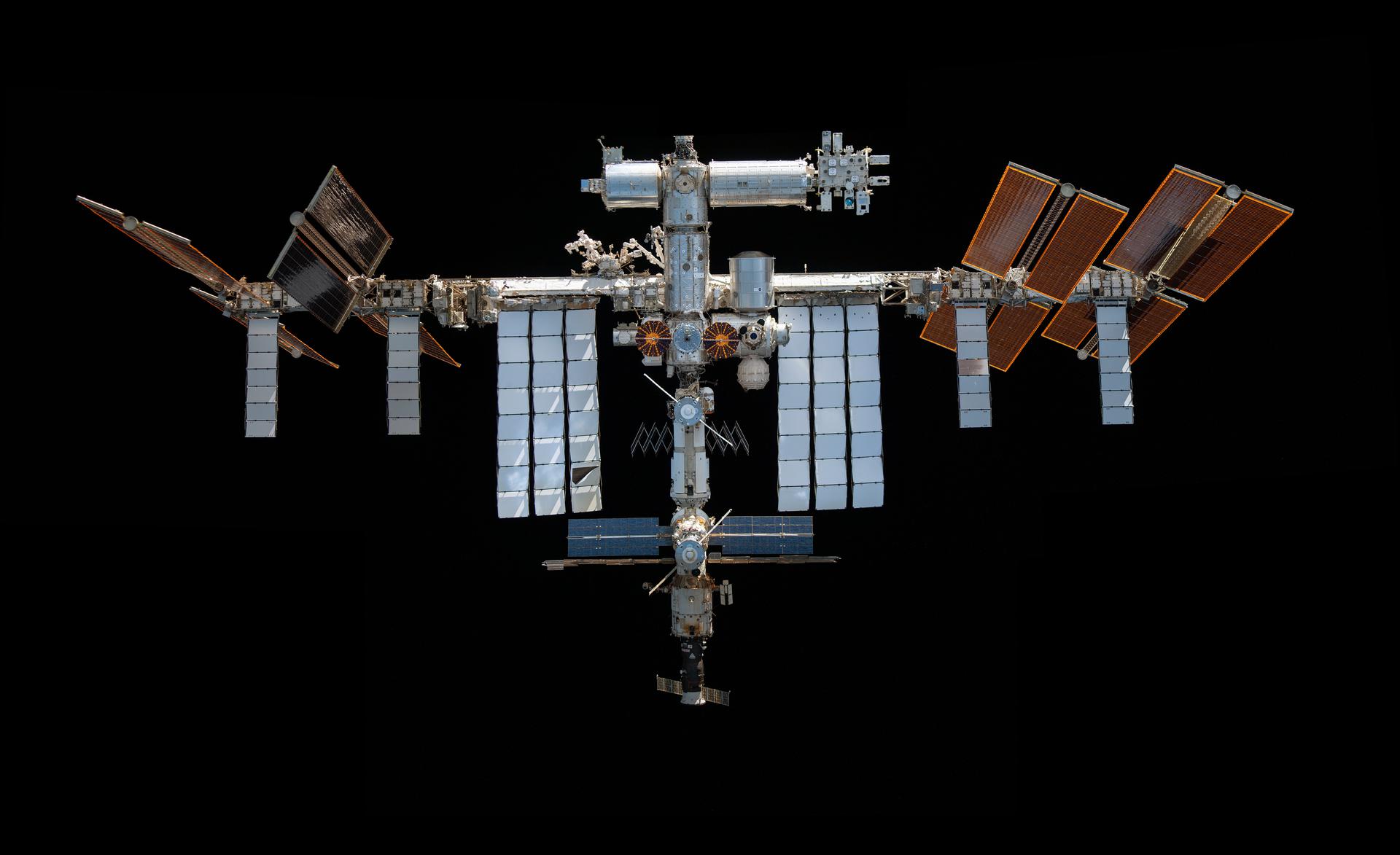
DS9 very quickly brought in the Defiant so that its characters could escape the station and go on more traditional Star Trek adventures. The station was home base, but the crew got out a lot. It typically felt like the station was well under control, with only minor differences between it and a star-fleet vessel. (Toss Quark and Garak out an airlock and you'd pretty much have a standard starship.)
B5 did send its characters on excursions, but they were fewer and far between. The station was not a safe home base. It was a bigger and wilder place than DS9 ever was. It always felt like some crisis or another was ready to spiral out of control and the staff generally needed all hands on deck to deal with whatever was happening. DS9 had the occasional crowd scene, but B5 had bigger crowds (in record shattering amounts of alien makeup) every episode. DS9 felt like a sleepy frontier fort. B5 felt like a city.
Then there's the continuity. There just wasn't a lot of continuity in anything other than soap operas in the mid 90's. TNG occasionally had multi-part episodes and sometimes referenced earlier episodes, but it was always careful to explain things so you could jump in anywhere and not be lost. DS9 was initially episodic, but had some larger arcs in later seasons, perhaps as a response to what B5 was doing. B5 broke the mold. The first season seemed episodic at first glance, but each episode advanced the central story-line. You could jump into Season 1 at any point and be a little confused, but figure things out. That swiftly changed. Later seasons became completely continuous, and frequently relied on bits of story that happened in earlier seasons without any kind of hand-holding. This caused big problems that probably prevented B5 from being as well received as it should have been.
This is for the young whippersnappers out there who grew up with the internet, streaming, and home video: Today, if you decide to jump into a show, you can call up every episode on demand. If it's not on a streaming service, it's on DVD or VHS. Failing that, there's always piracy. When B5 came out, it was not a given that a TV series would be released on VHS or DVD. The internet was there, but it wasn't yet up to distributing video. There was no such thing as streaming. The era of Netflix mailing you physical discs was years in the future. If you wanted to watch a TV show, you had to tune in when it was broadcast. It was, essentially, live TV.
The kicker is that most broadcasters were utterly irresponsible in how they aired shows. Episodes would frequently be pre-empted or aired out of order. Broadcasters were used to purely episodic content. Who cared if people saw episode 5 before episode 2, or missed episode 3 until it got reran the following year? This royally fubar'd people's ability to follow B5. My personal memory of B5 when it first aired was fragmentary and frustrating. I'd watch an episode and really enjoy it, try to tune in next week only for it to be pre-empted by golf, and then be lost when an episode from much later in the season was aired the week after that. It wasn't until B5 came out on DVD (years later) that I was finally able to watch the show in order and finally appreciate how special it was.
Continuity between episodes is normal now. Everyone is used to shows that play out as one long narrative instead of hitting the reset button every week. B5 blazed the trail for them before TV distribution was really ready for continuity. There are a lot of warts to overlook. CG was in its infancy back then. DS9 was still using physical models in its first few seasons. B5 looks like it came out of somebody's Amiga because it literally came out of somebody's Amiga. There probably won't ever be a quality up-scaling of the special effects because a lot of the files from that Amiga were lost. The set design is clever, but stagy. The budget of B5 doesn't even add up to half a shoestring by modern standards for a show with 10 episodes a season, and B5 had 22 episodes a season! The story is so grand and detailed that it still feels rushed at times. (They thought the show would be cancelled at the end of S4, so they crammed most of S5's plot into S4. The result is fantastically dense and frenetic!)
In the end, DS9 was a fantastic show but felt a lot like the station featured in it. It was always well under control and its creators got everything they needed to deliver a compelling show. They knew how far to reach and chose their battles wisely. B5 feels like a wild and overreaching fever dream by comparison. It nearly span out of control, much like its titular station was always threatening to. If they decided to re-make B5 today, they'd probably simplify it immensely. It's story still seems too ambitious for a single TV series to tell. If you can get past the warts, B5 is still a unique and rewarding series to experience. Nothing quite like it has come along since.
reply